
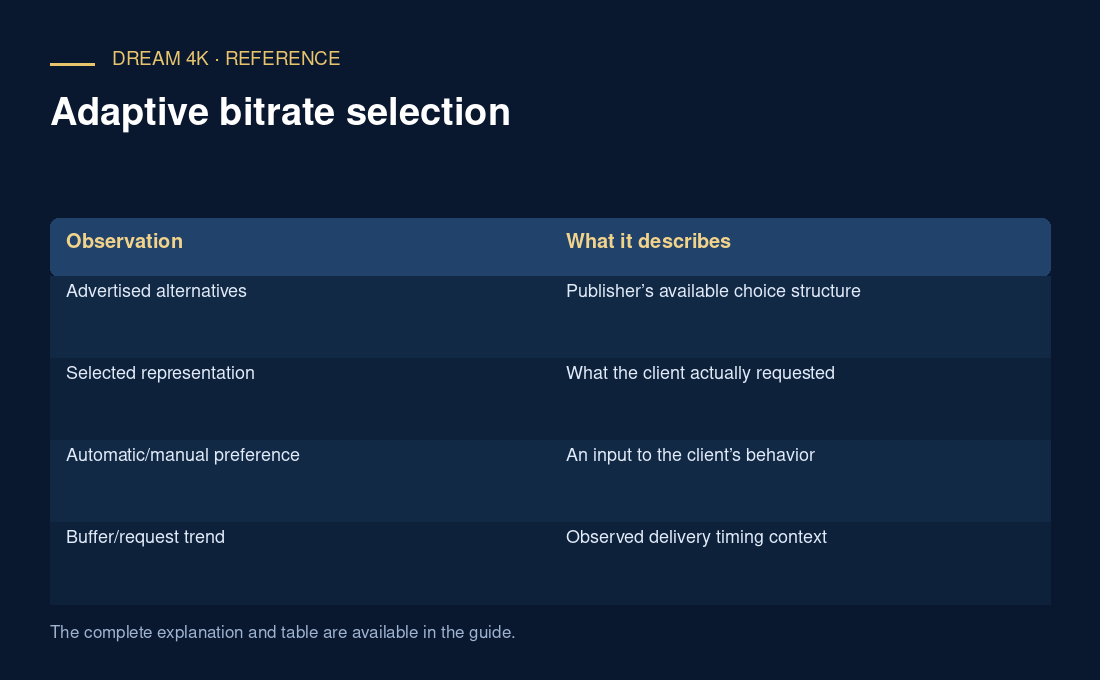
Adaptive bitrate selection
Understand how a player can choose among compatible encoded alternatives without creating new source detail.
Read the guideClear explanations of media delivery, playlists, codecs and network evidence.

80 guides in this collection.
Understand how a player can choose among compatible encoded alternatives without creating new source detail.
Read the guide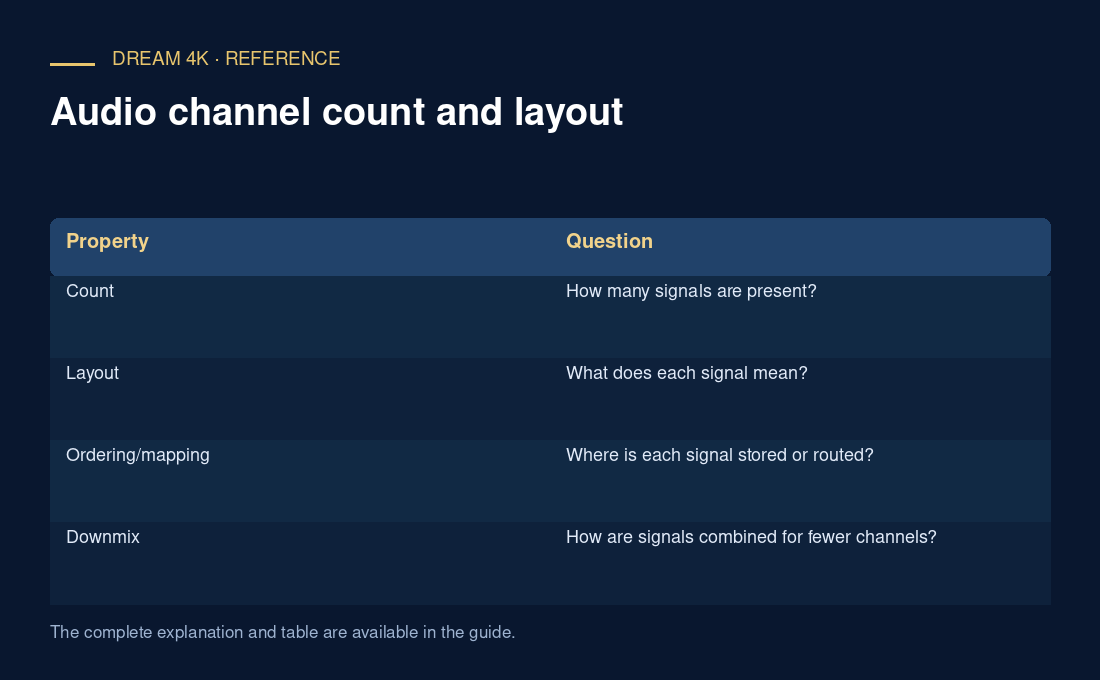
Understand why the number of channels does not fully describe their positions or correct speaker mapping.
Read the guide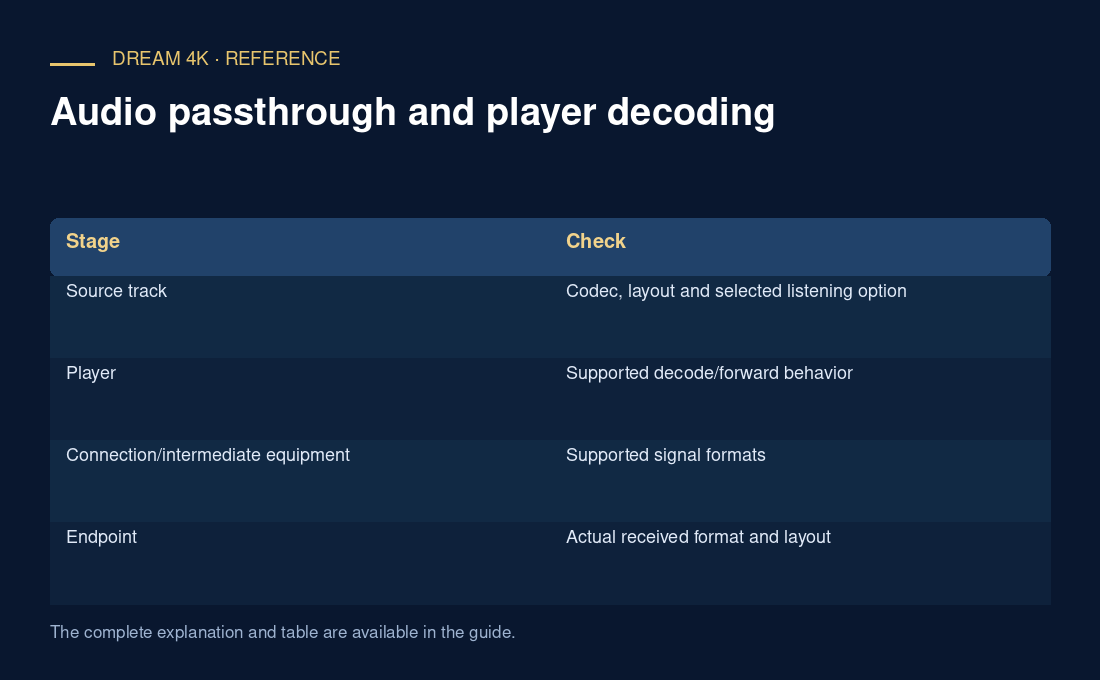
Understand the difference between forwarding supported encoded audio and sending decoded PCM to an endpoint.
Read the guide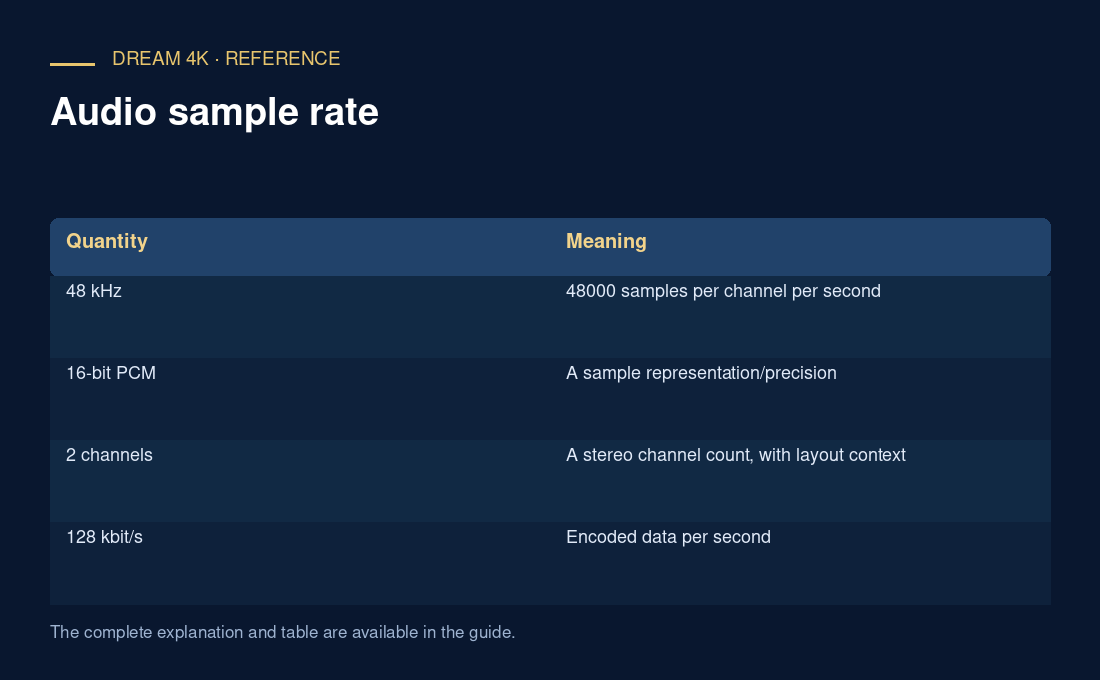
Understand samples per second, resampling and why hertz are different from a compressed audio bit rate.
Read the guide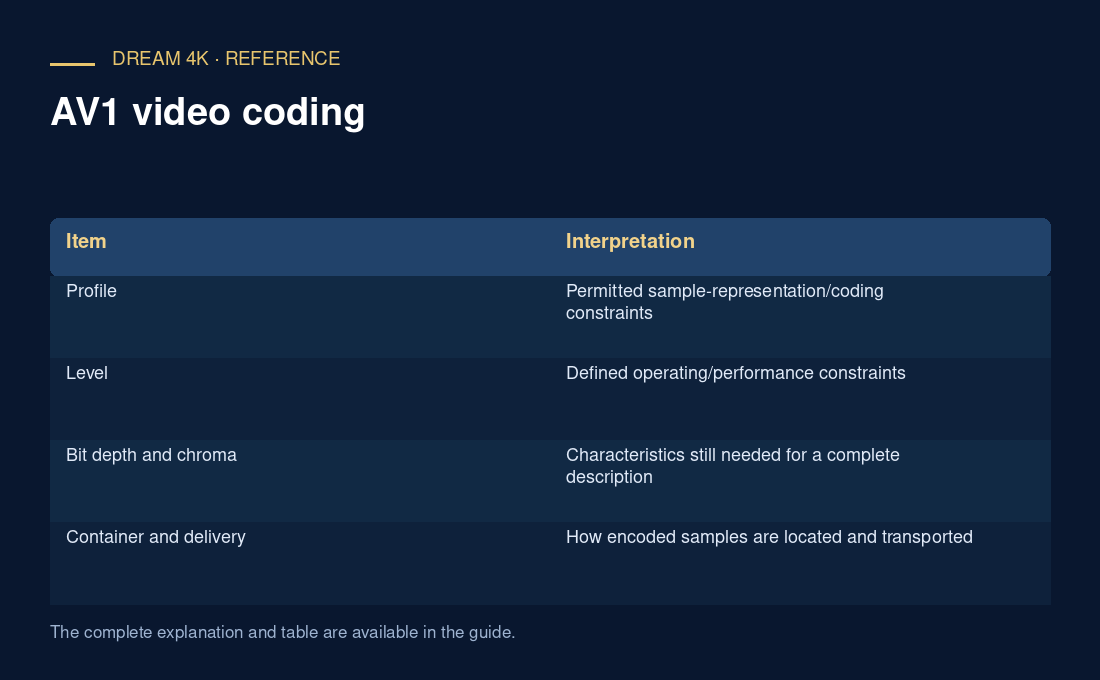
Understand AV1 configuration, profiles and the difference between an open specification and actual playback support.
Read the guide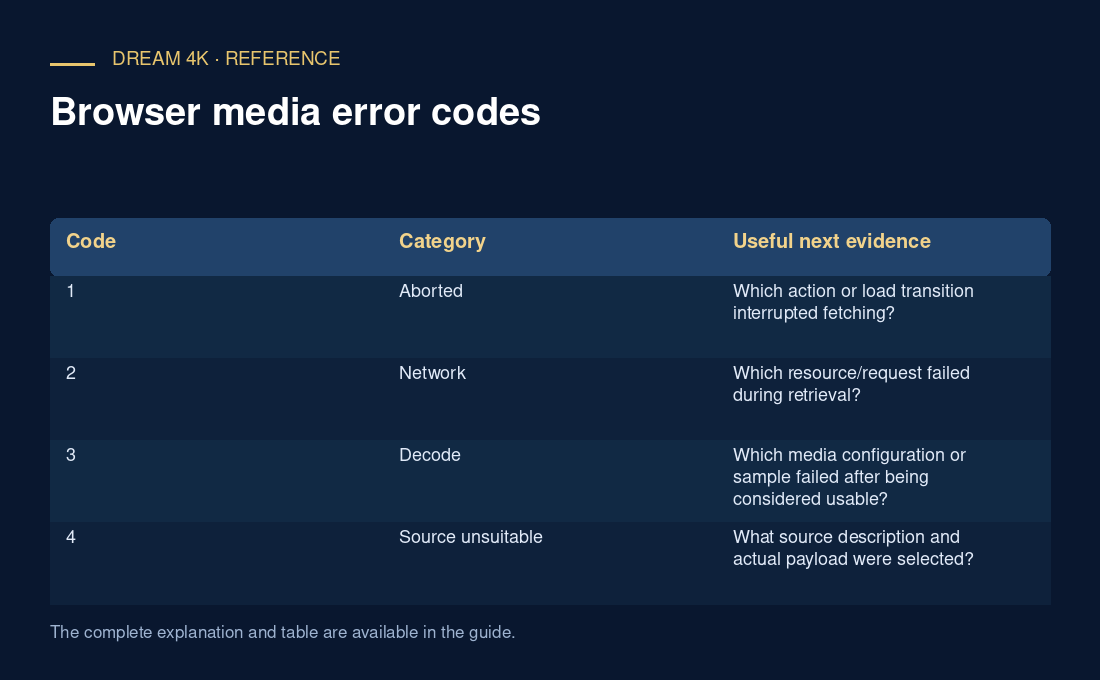
Read the four MediaError categories without treating them as exact root-cause diagnoses.
Read the guide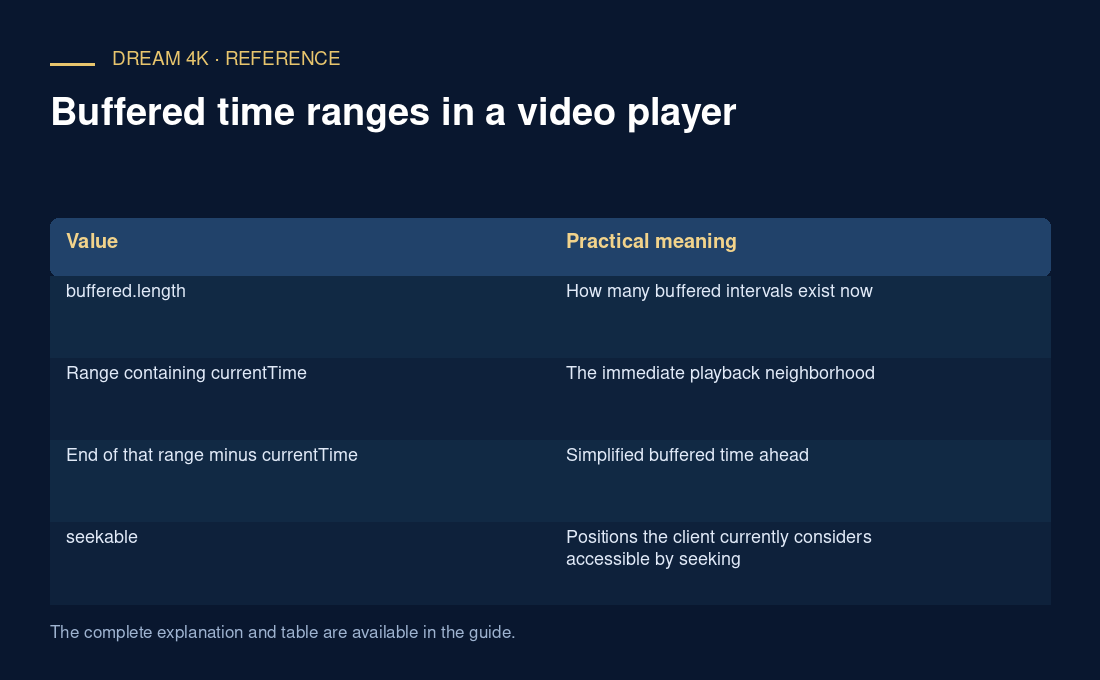
Understand why buffered media can consist of several separate intervals and how to find the playable range ahead.
Read the guide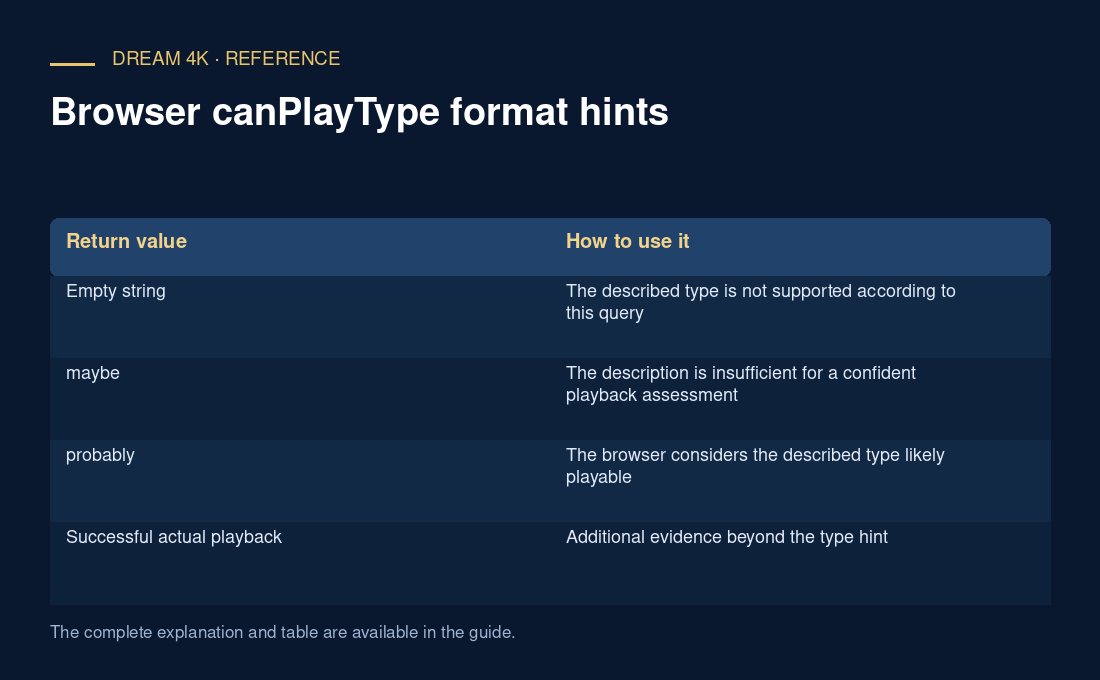
Understand what canPlayType can say about a MIME/codec description and why it is not a complete playback test.
Read the guide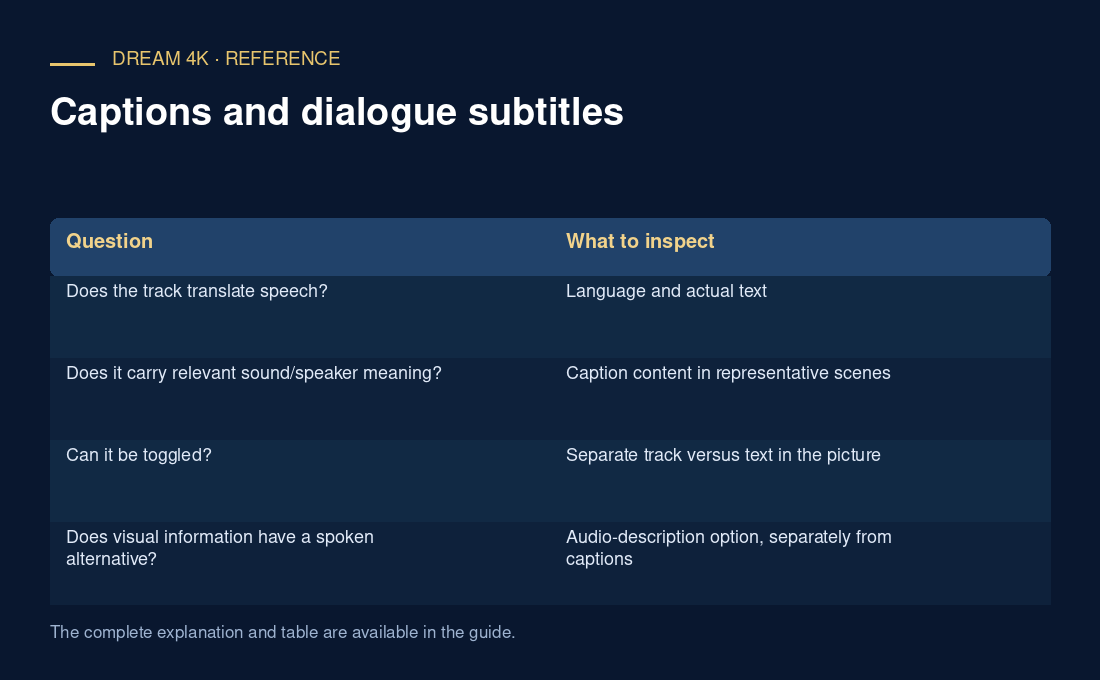
Understand the information carried by accessibility captions compared with dialogue-only subtitles.
Read the guide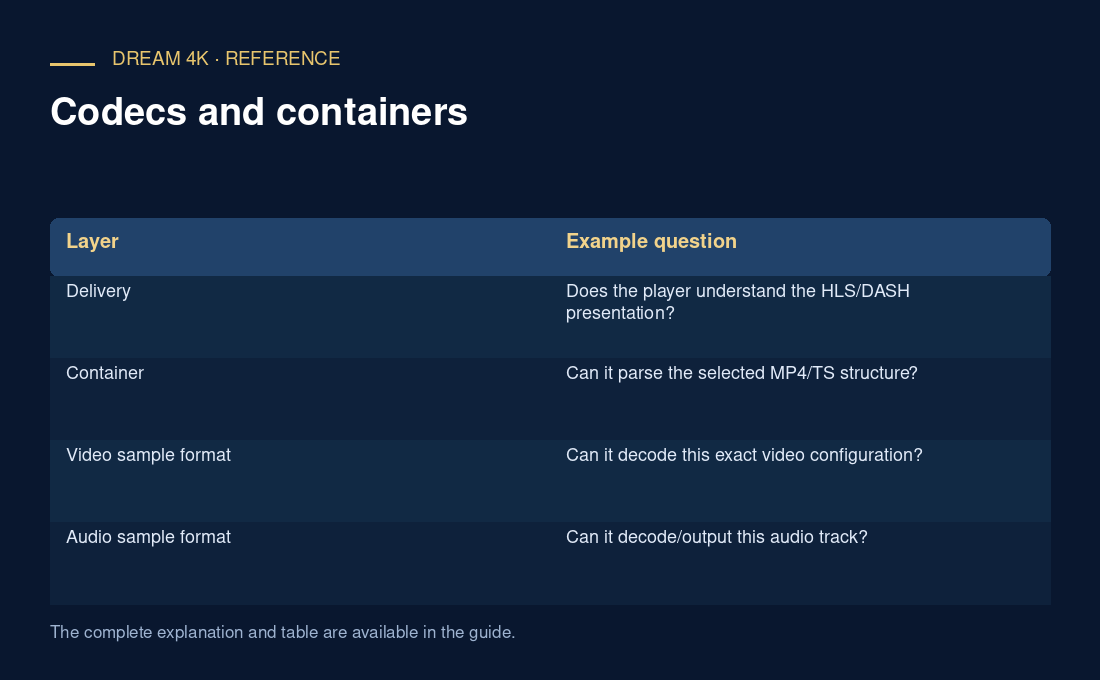
Distinguish compressed audio/video formats from the file or segment structure that carries them.
Read the guide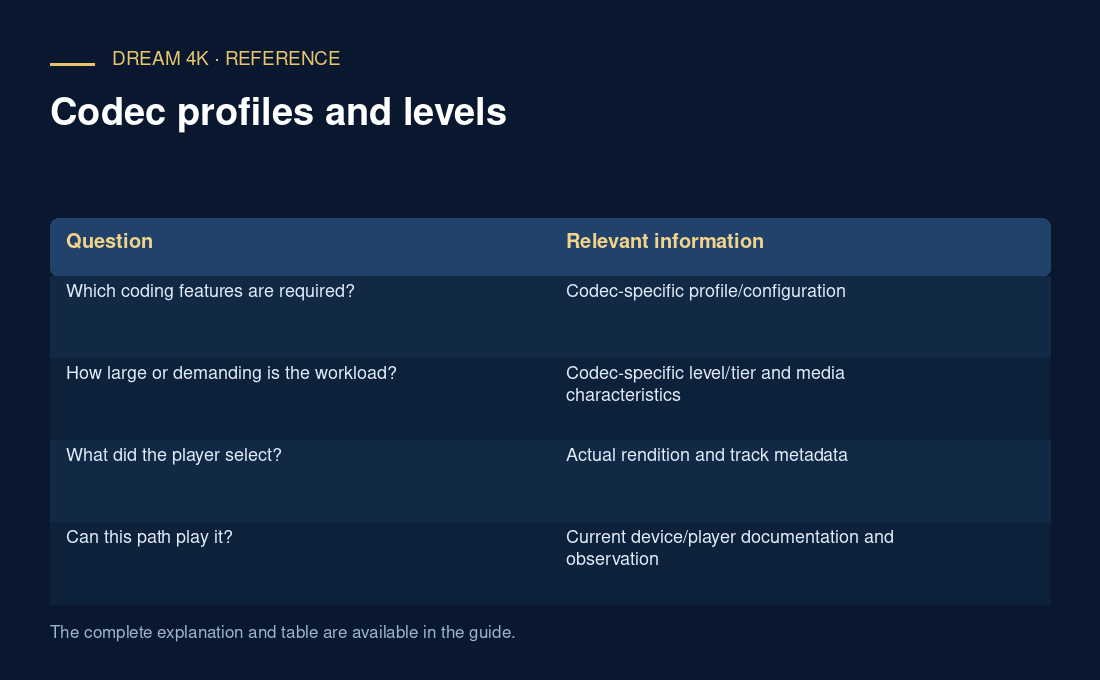
Understand feature-set and operating-limit declarations without treating a codec family as one uniform decoder requirement.
Read the guide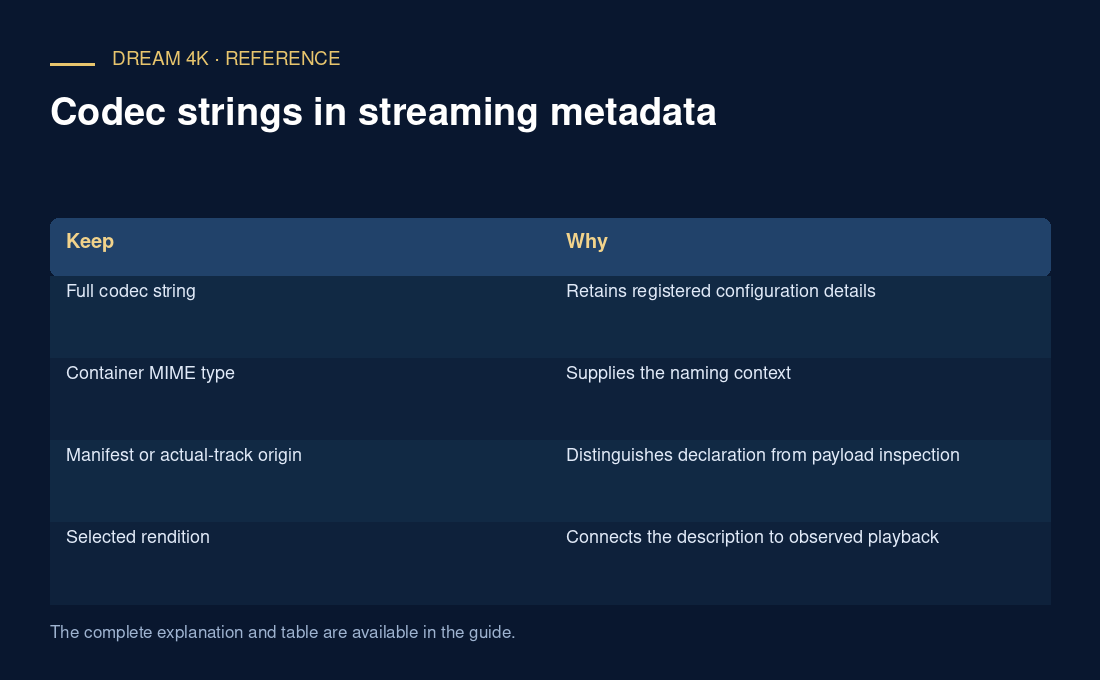
Understand why avc1, hvc1, av01 and related declarations need to be preserved exactly in a compatibility report.
Read the guide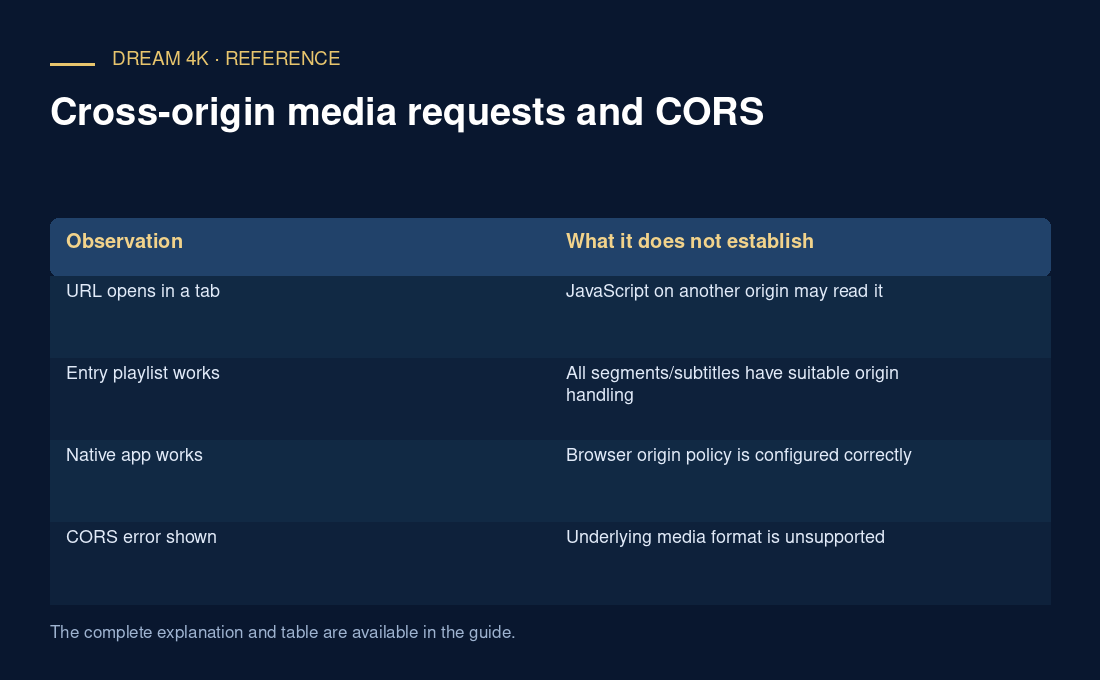
Understand why a URL opening directly does not prove a web player may read it through JavaScript.
Read the guide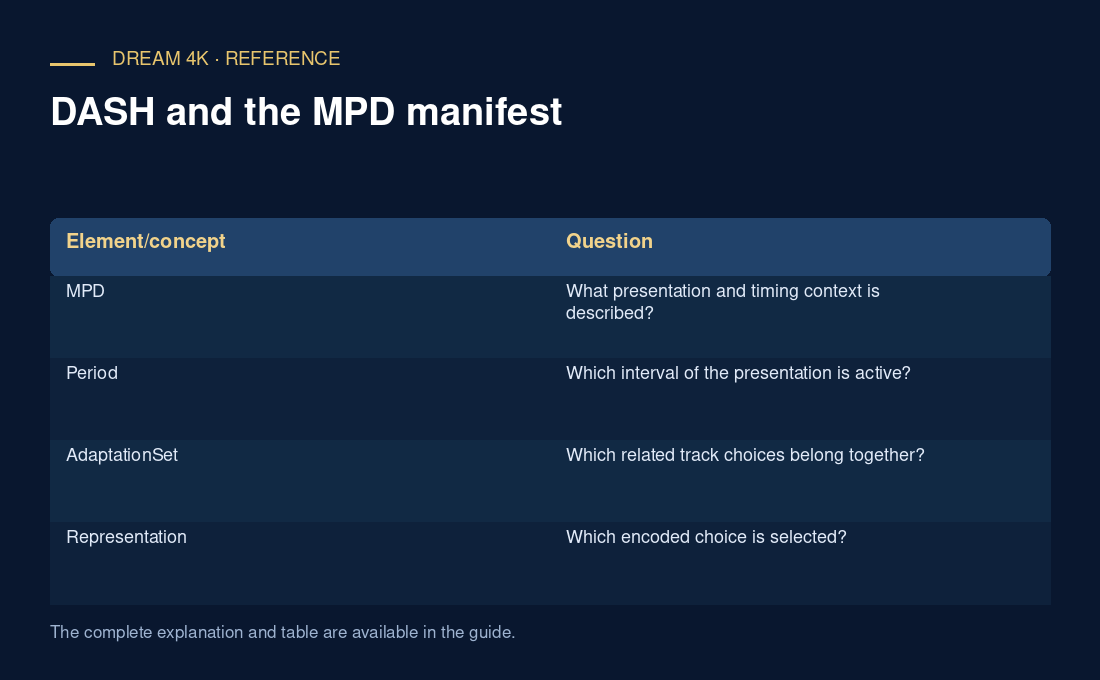
Understand the presentation hierarchy in a DASH manifest and the separate resources needed for playback.
Read the guide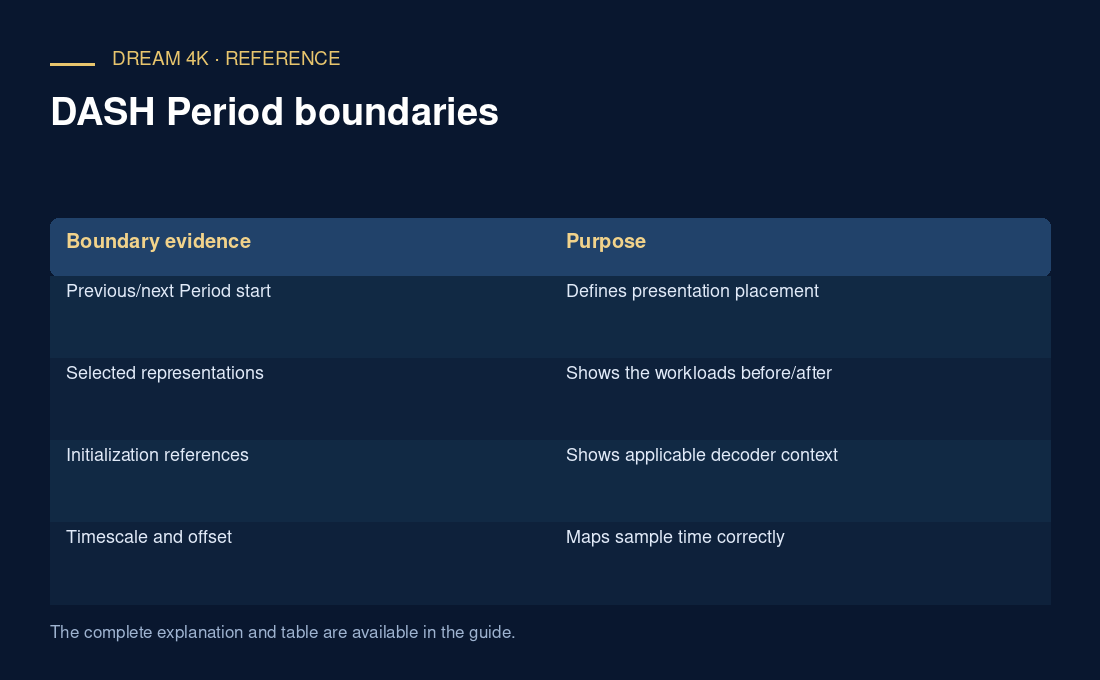
Understand presentation intervals and the context a player must handle when moving between DASH Periods.
Read the guide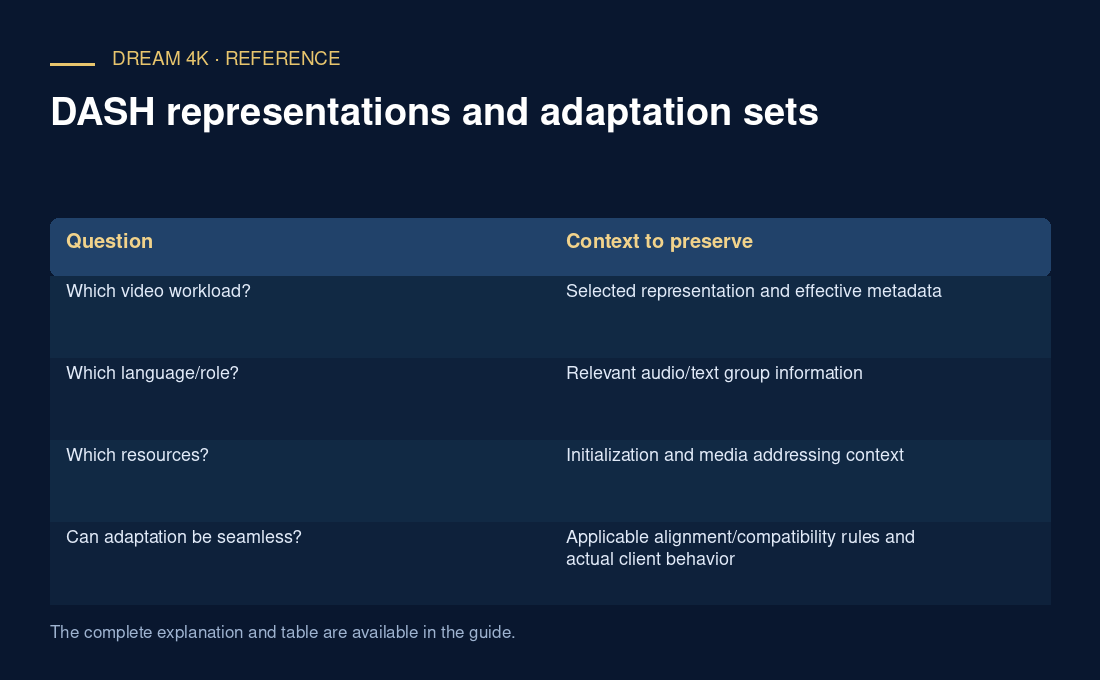
Distinguish an encoded representation from the group that organizes related track choices.
Read the guide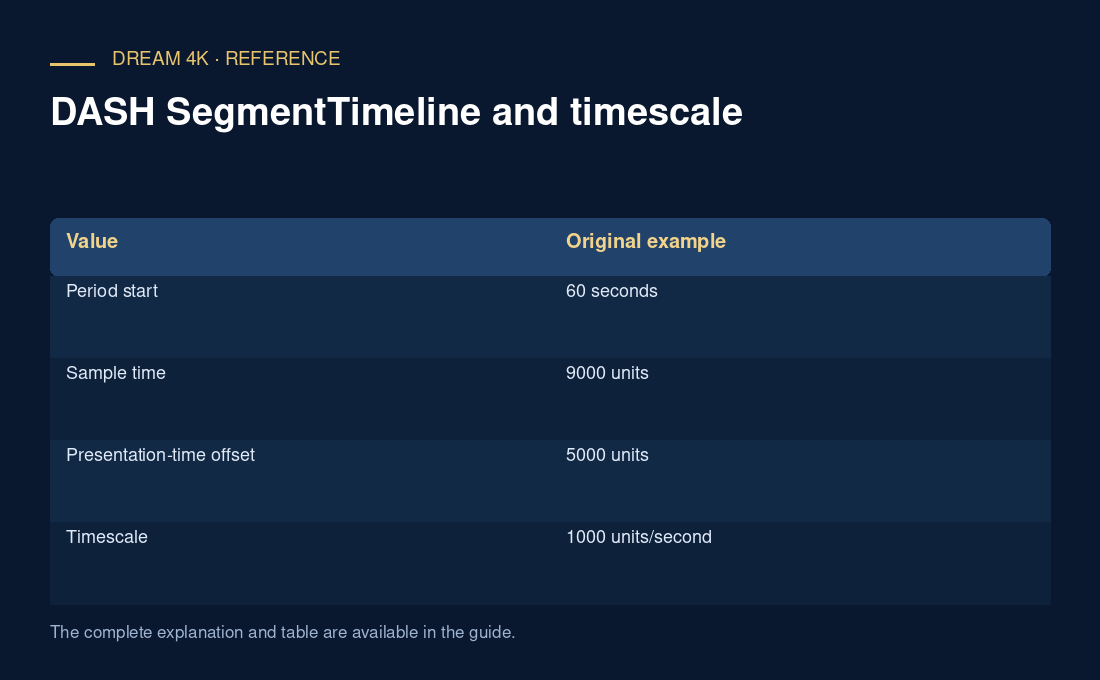
Understand integer sample-time units and their mapping to the presentation timeline.
Read the guide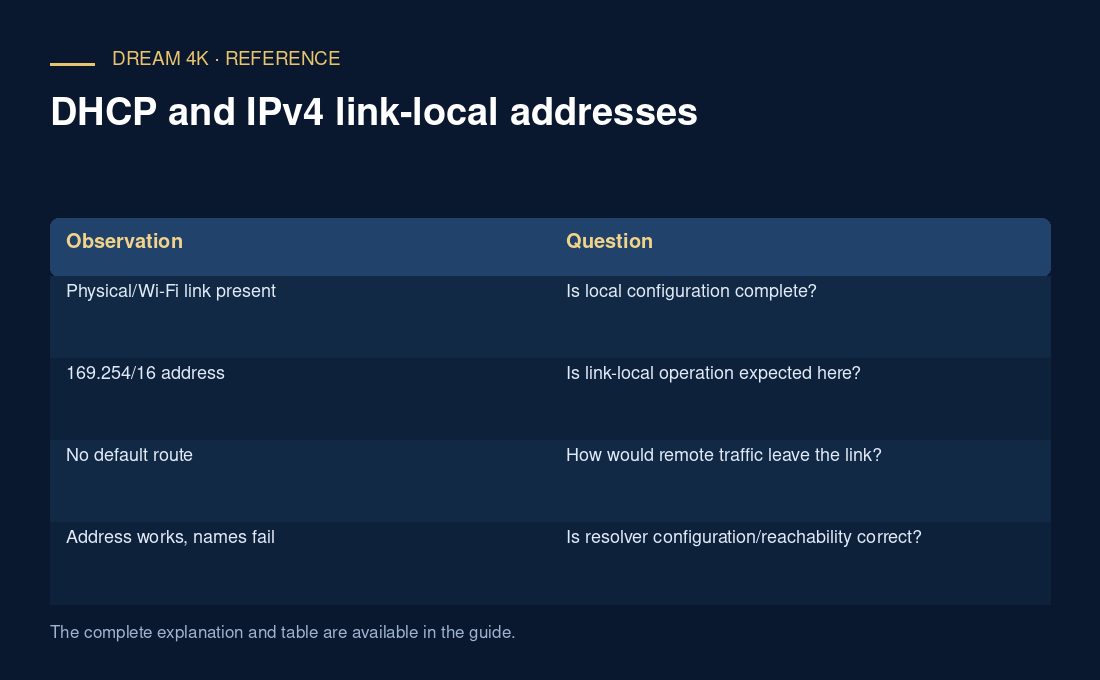
Understand automatic configuration and what a 169.254 address does and does not show.
Read the guide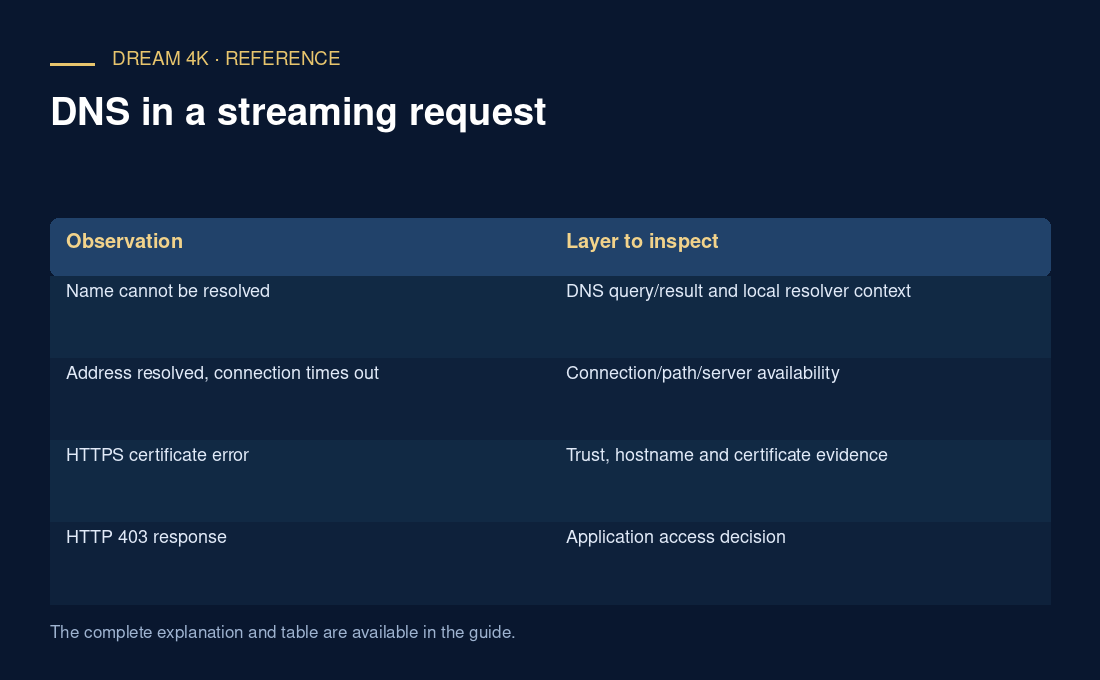
Understand name resolution, cached answers and why changing DNS is not a universal buffering repair.
Read the guide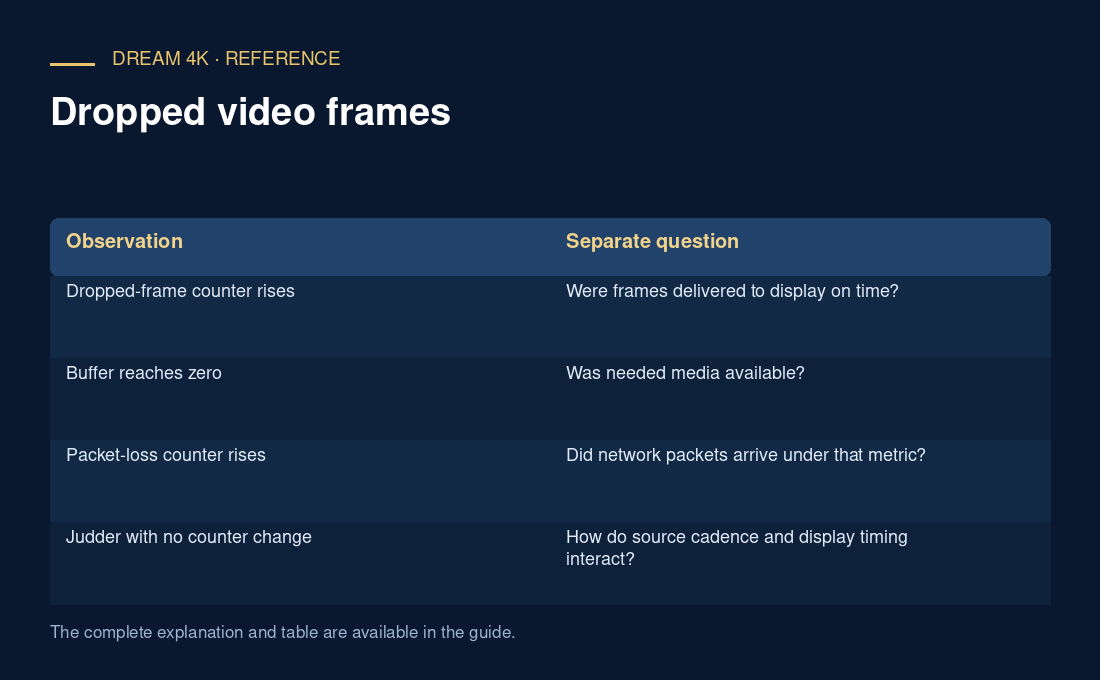
Understand render counters, interval measurements and why frame drops are different from a media buffer running empty.
Read the guide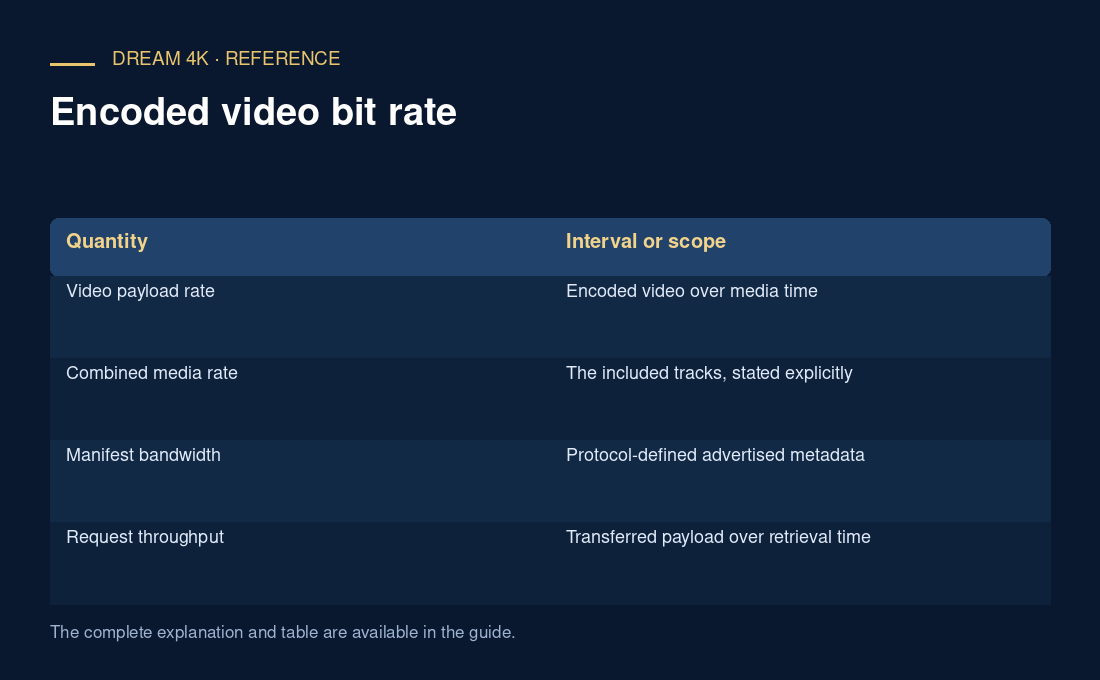
Understand encoded data per unit of media time and distinguish average rate, peaks and delivery throughput.
Read the guide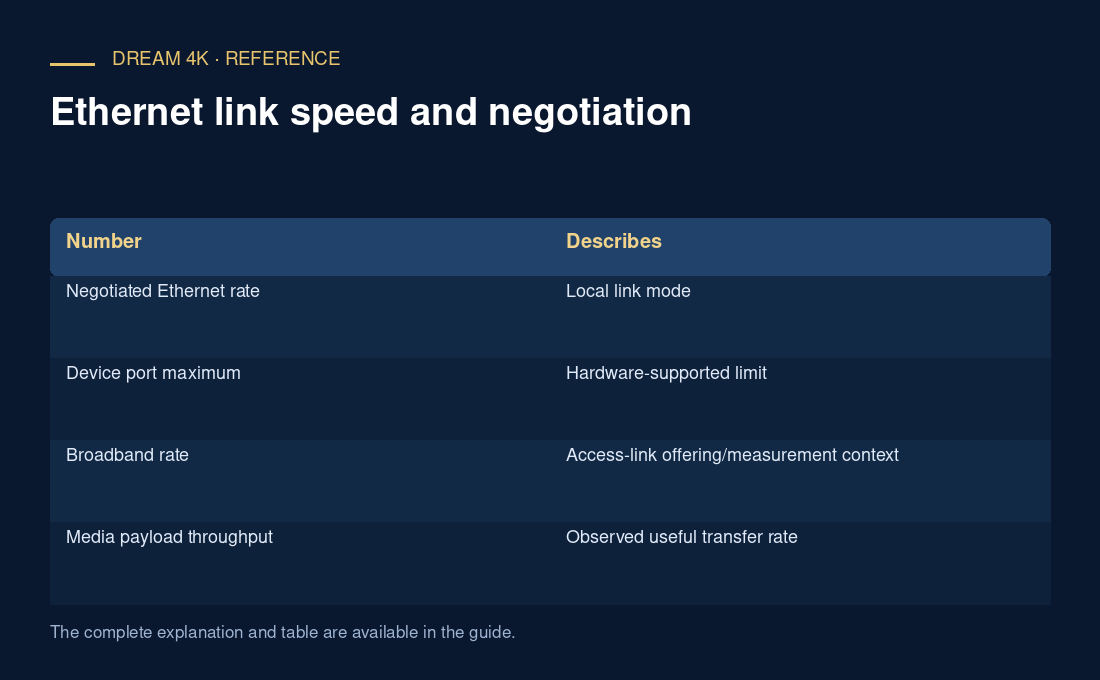
Understand a negotiated local link rate without treating it as a complete internet or video-quality measurement.
Read the guide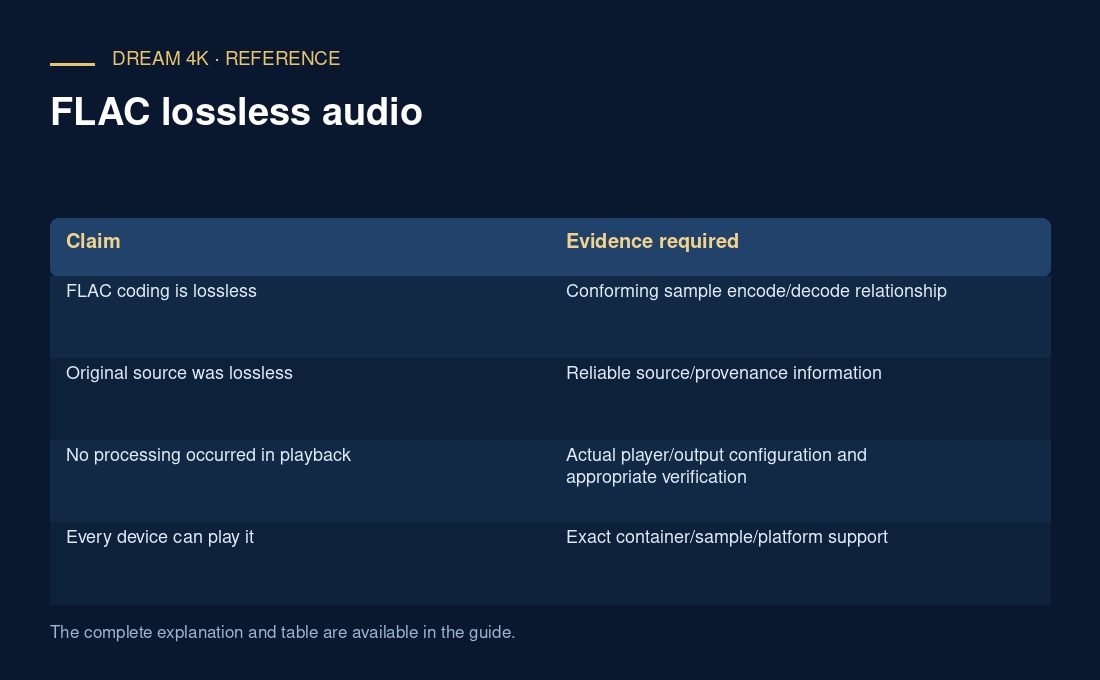
Understand lossless sample preservation without assuming the source was perfect or every playback path is bit exact.
Read the guide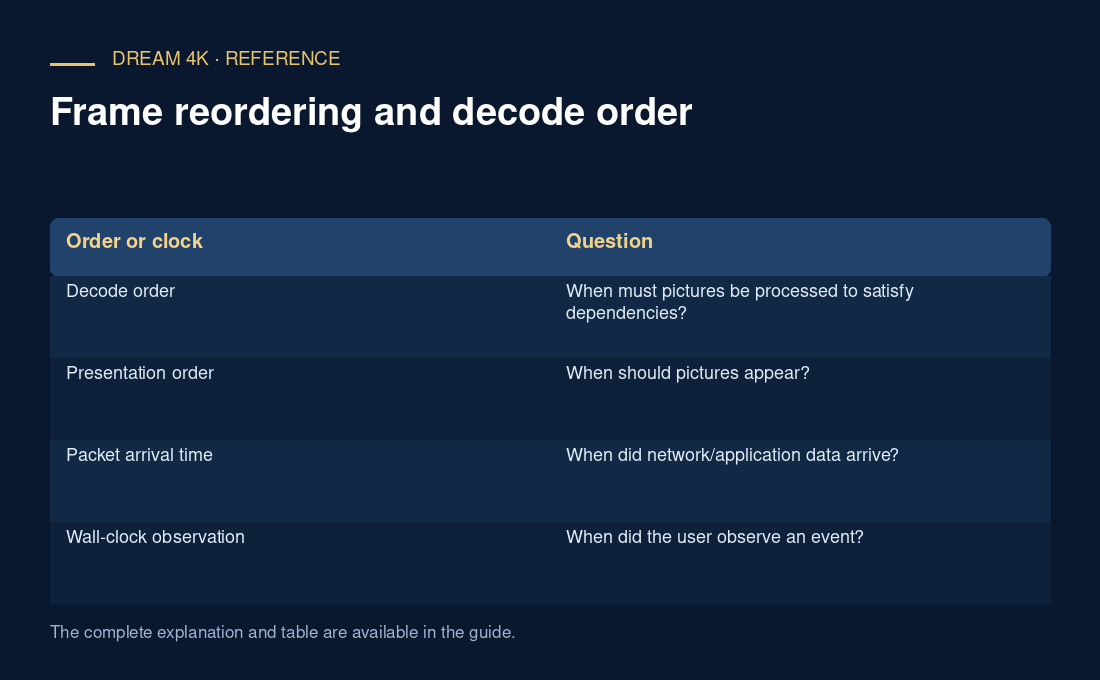
Understand why encoded packet order can differ from the order in which pictures are presented.
Read the guide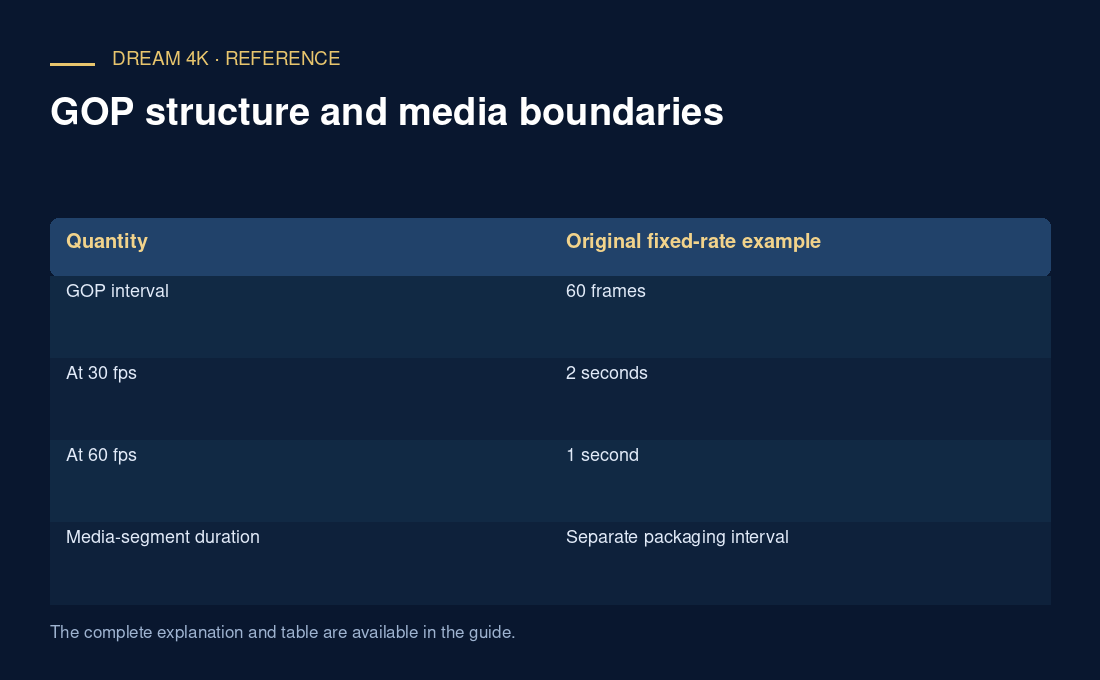
Understand encoded picture grouping without equating GOP length with segment duration or live delay.
Read the guide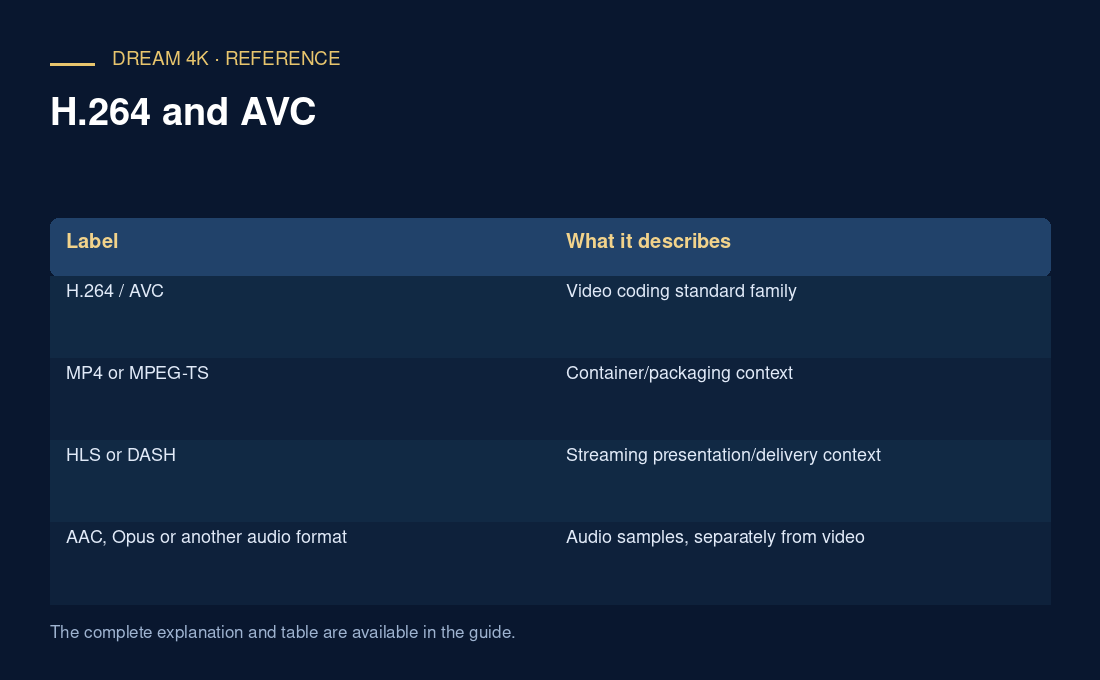
Understand H.264 as a video coding family and identify the information needed beyond its familiar name.
Read the guide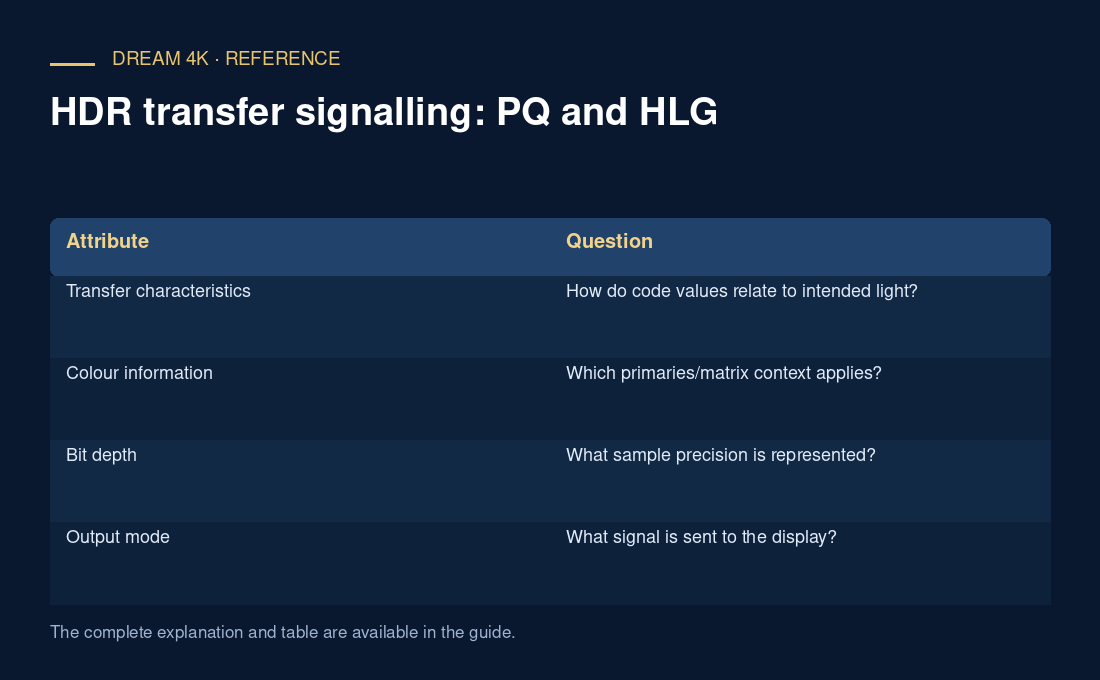
Understand why HDR requires a correctly interpreted image system rather than only a bright picture or codec label.
Read the guide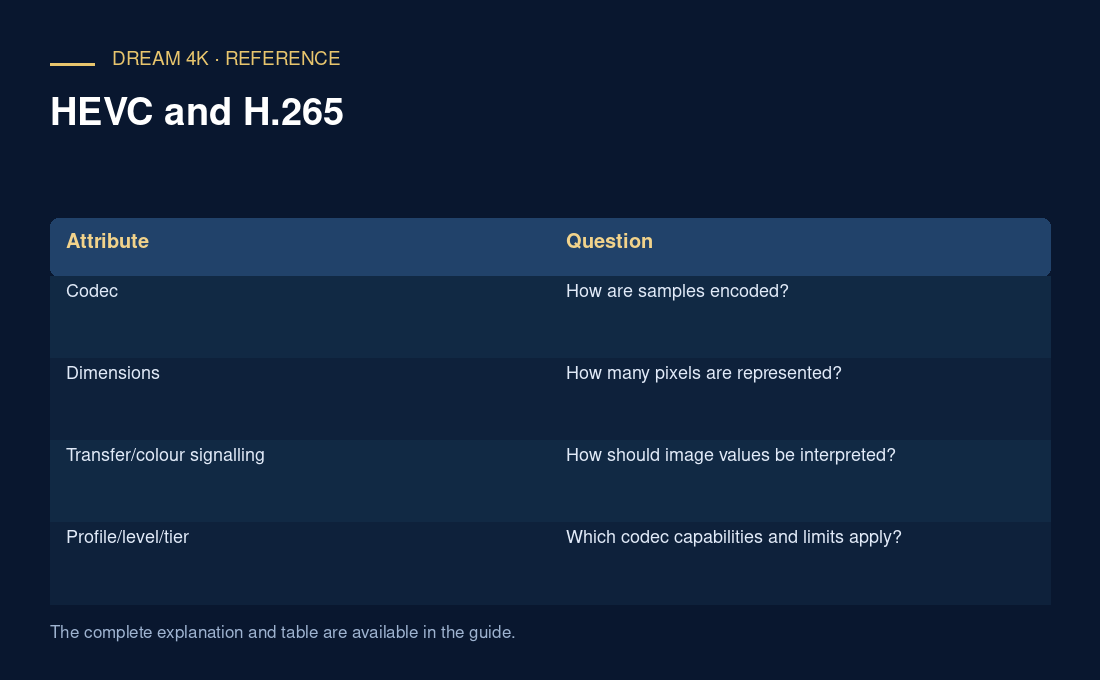
Understand HEVC as a codec family without confusing it with 4K resolution, HDR or a universal device capability.
Read the guide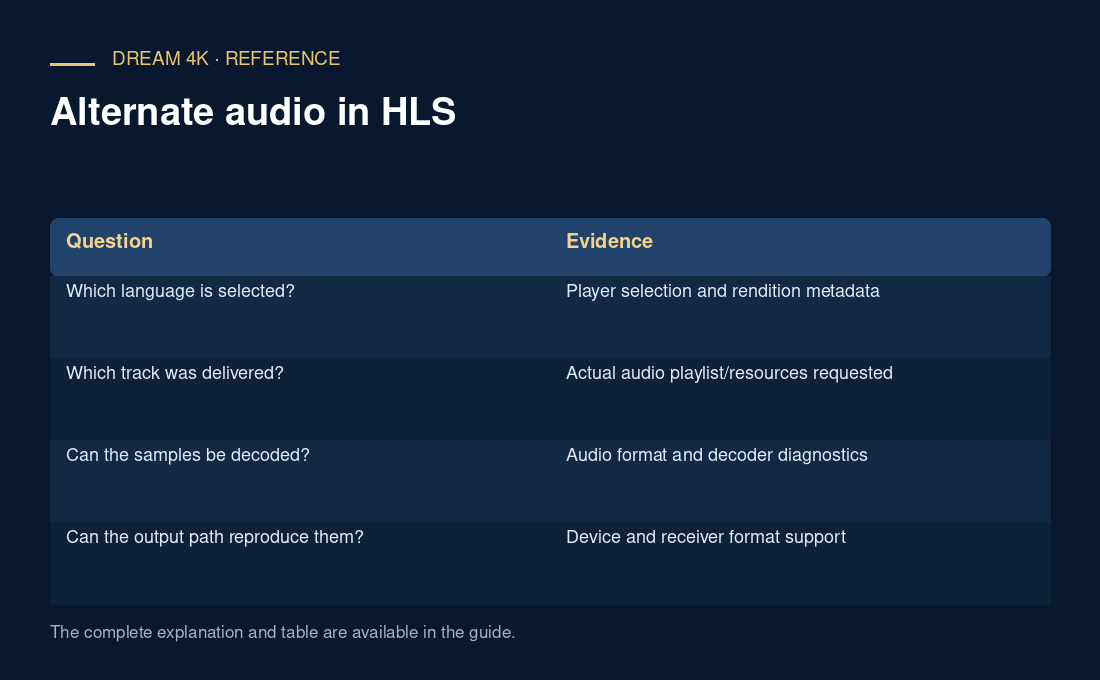
Understand audio rendition groups, language metadata and why the selected video variant does not fully describe sound.
Read the guide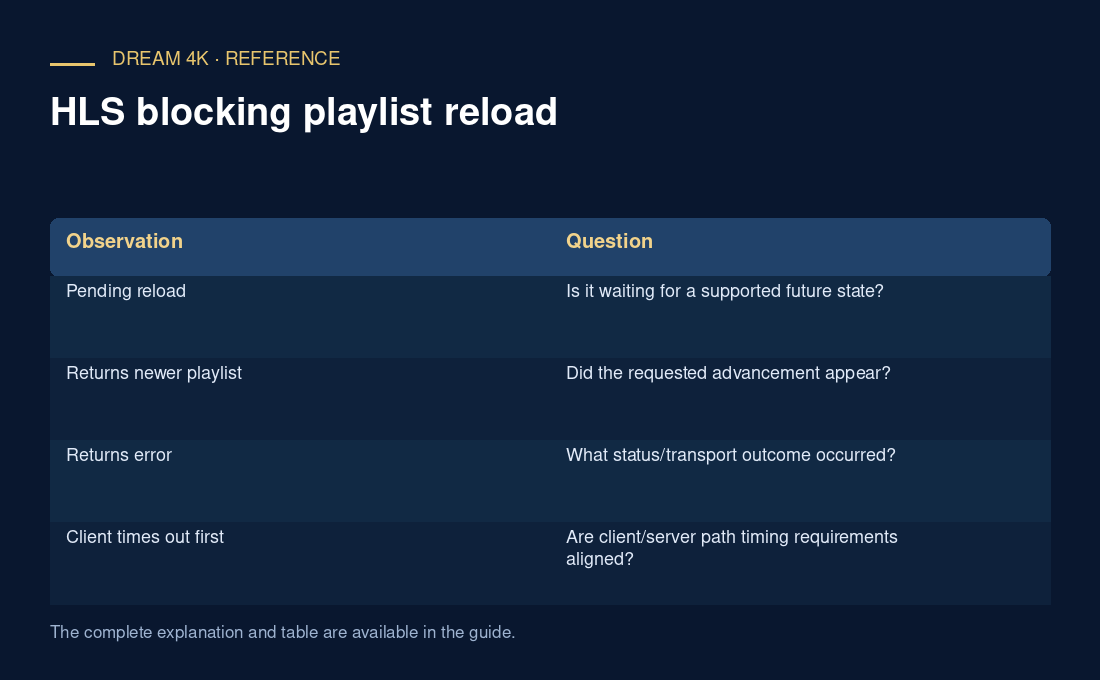
Understand a request held for a newer playlist state and why pending can be intentional.
Read the guide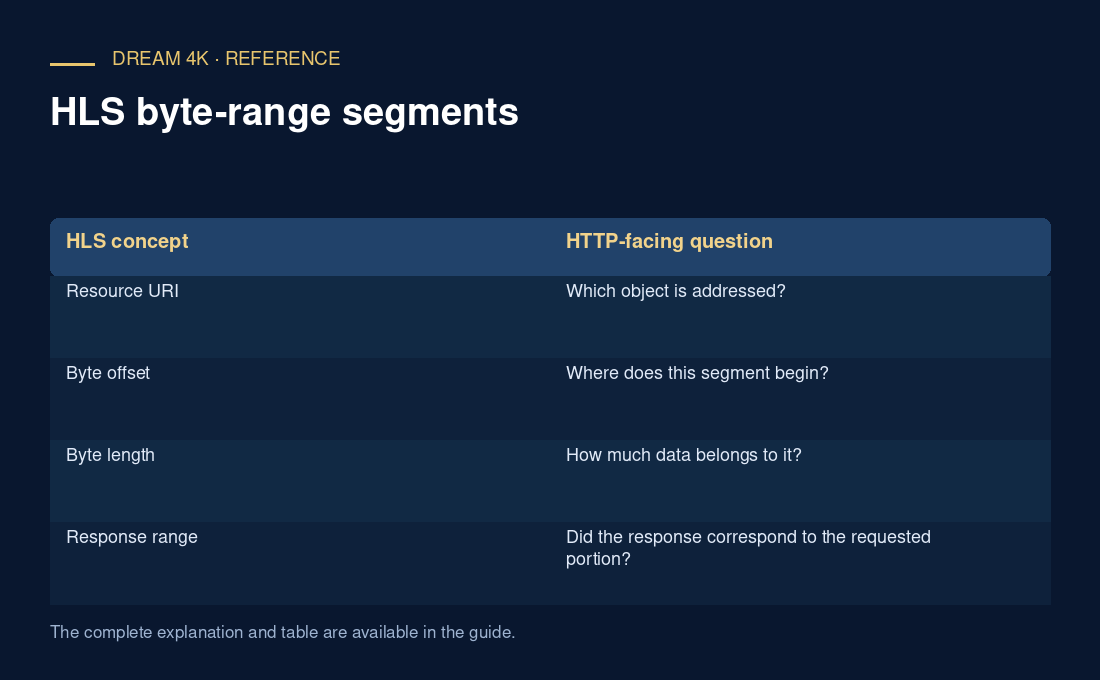
Understand how several HLS segments can occupy different byte ranges of one HTTP resource.
Read the guide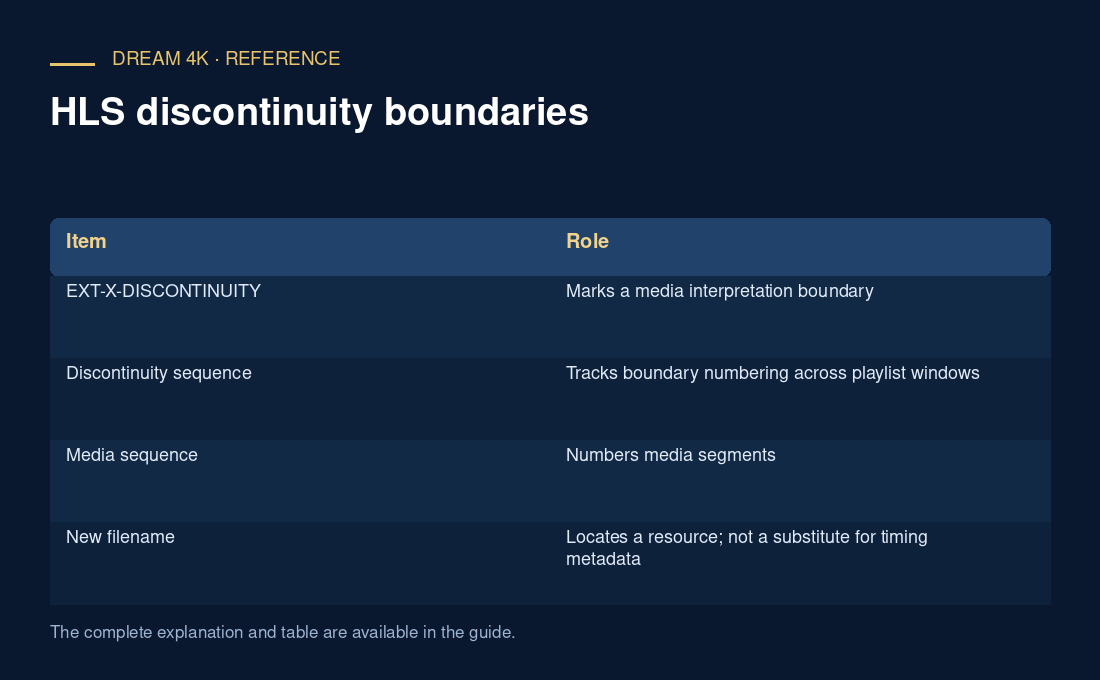
Understand why an HLS timeline can need an explicit boundary when timestamps, formats or track structure change.
Read the guide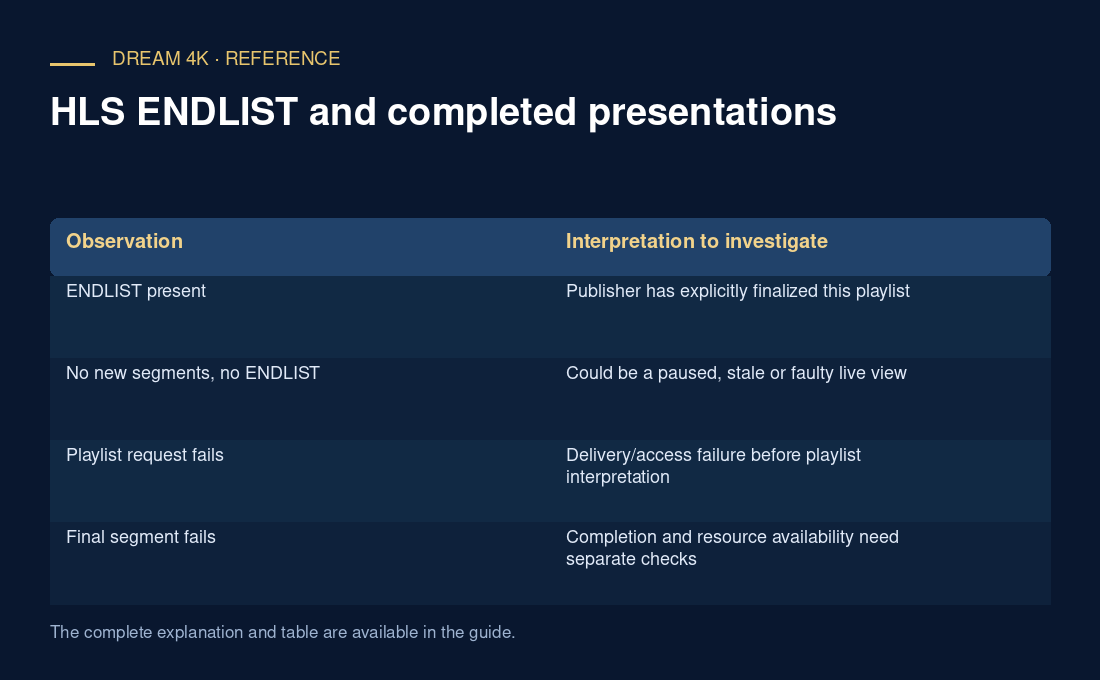
Understand what EXT-X-ENDLIST says about future segments and why completion differs from a delivery error.
Read the guide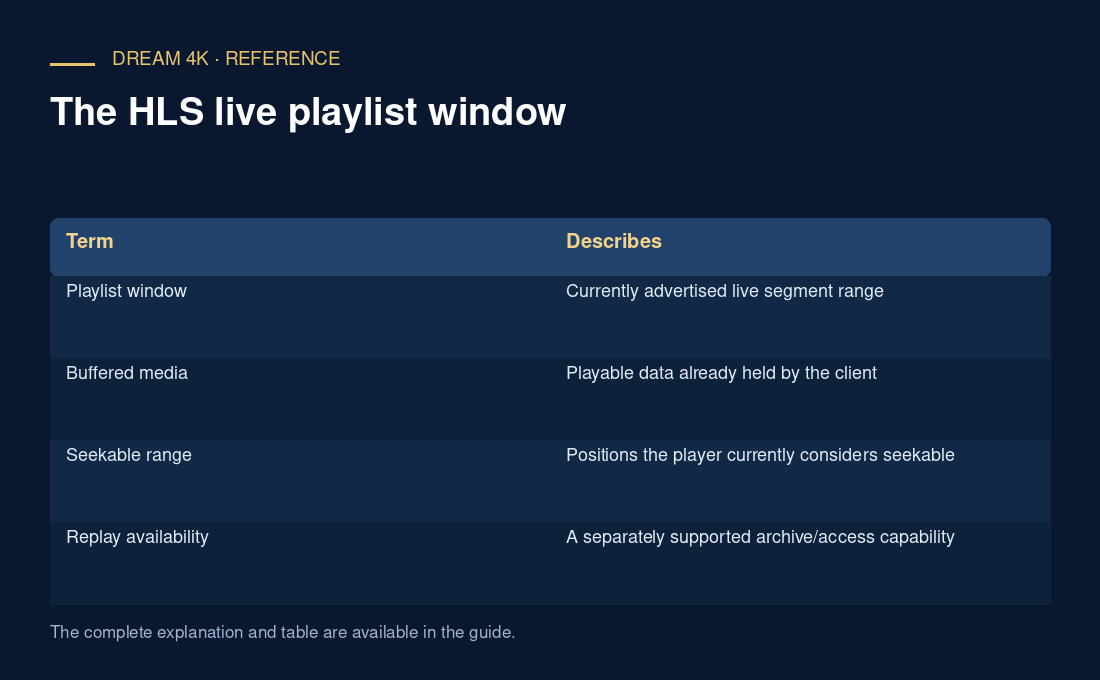
Understand the difference between currently advertised live media, a playback buffer and a replay entitlement.
Read the guide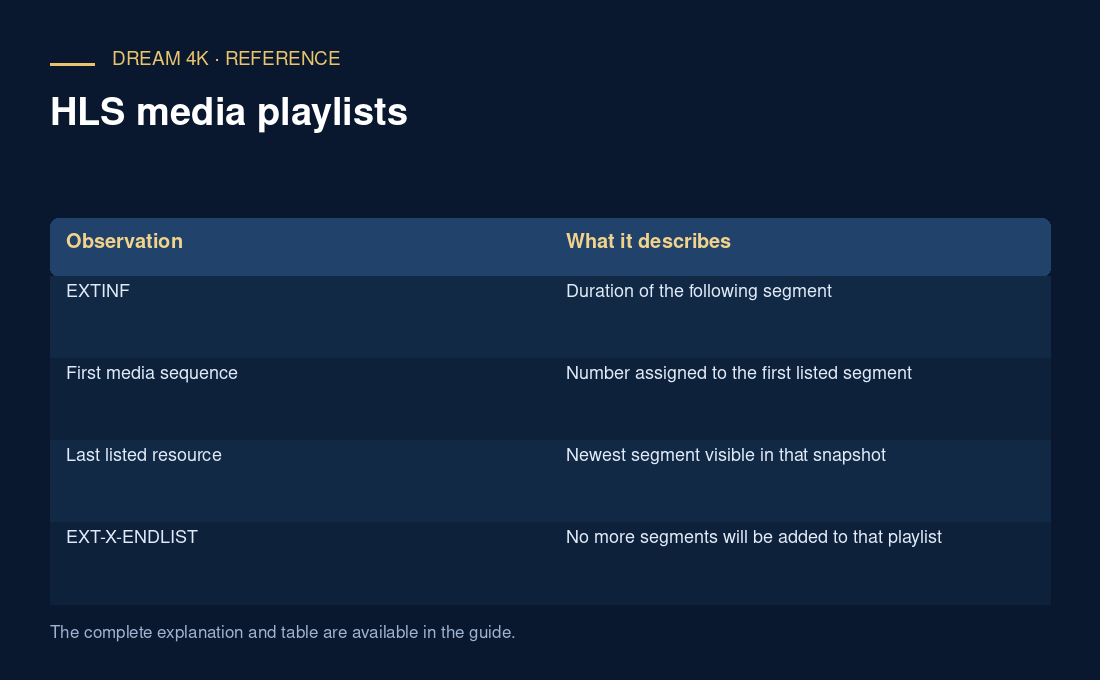
Understand how an HLS media playlist describes a timeline, including durations, sequence numbers and resource locations.
Read the guideUnderstand segment duration, payload resources and the difference between media time and transfer time.
Read the guideUnderstand segment numbering, playlist updates and why sequence numbers are not timestamps.
Read the guide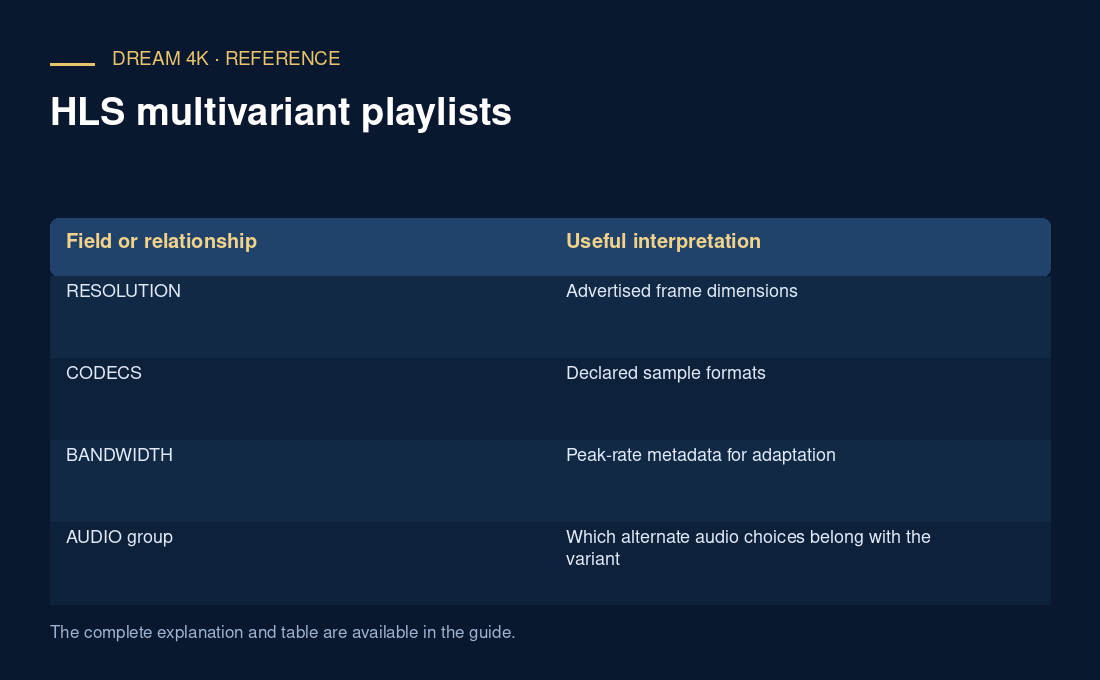
Read an HLS variant menu without confusing resolution, audio groups or advertised bandwidth with a playback measurement.
Read the guide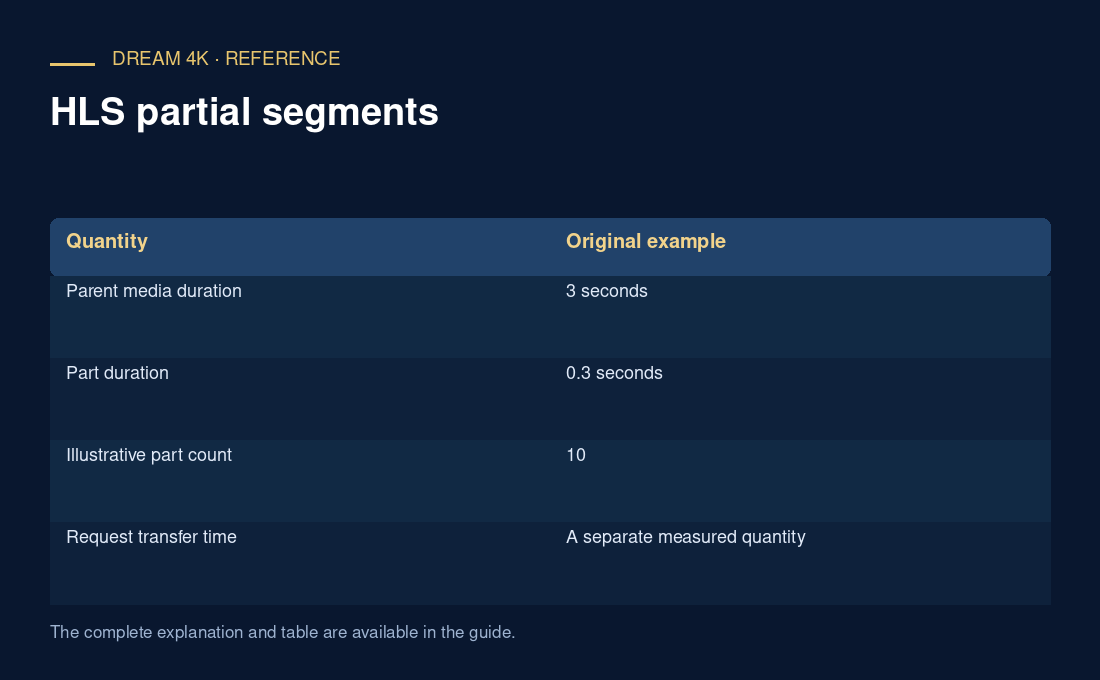
Understand smaller live-edge media units and their relationship to a completed parent segment.
Read the guide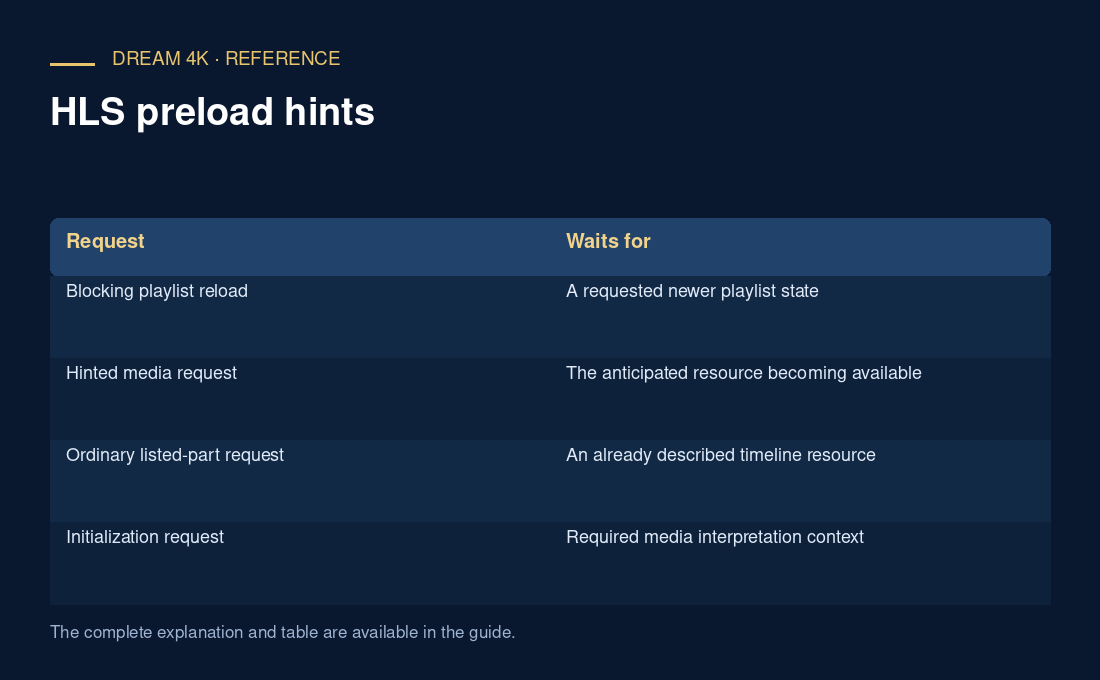
Understand anticipated resources and why a hint is different from a confirmed partial-segment entry.
Read the guide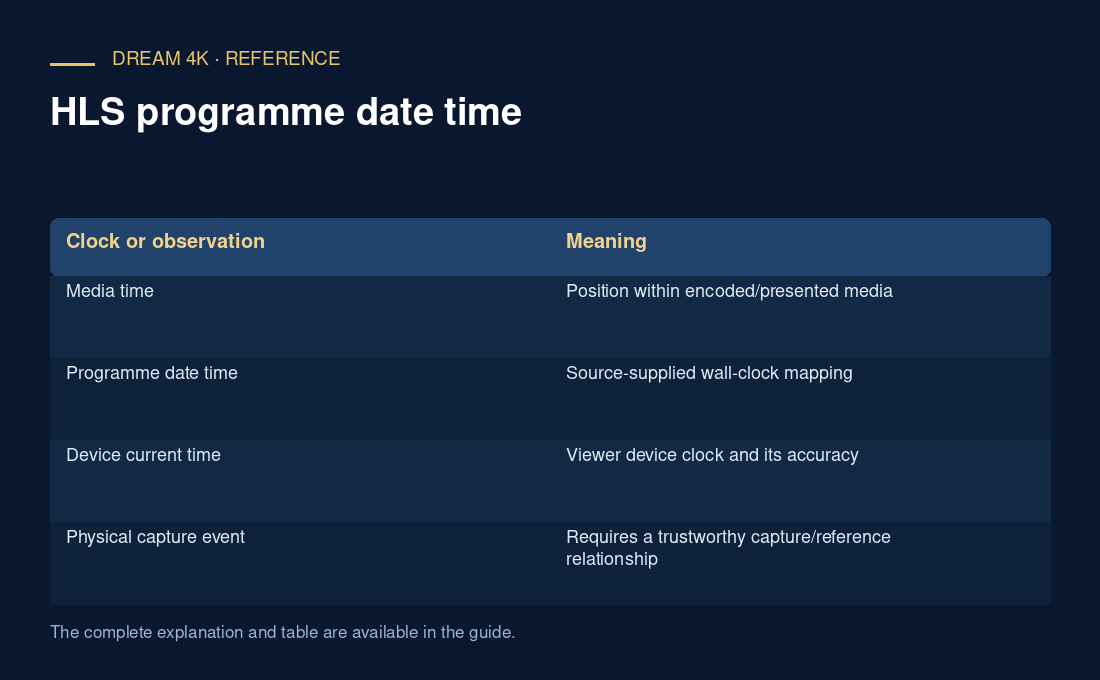
Understand the informative wall-clock mapping in EXT-X-PROGRAM-DATE-TIME without assuming it records camera capture.
Read the guide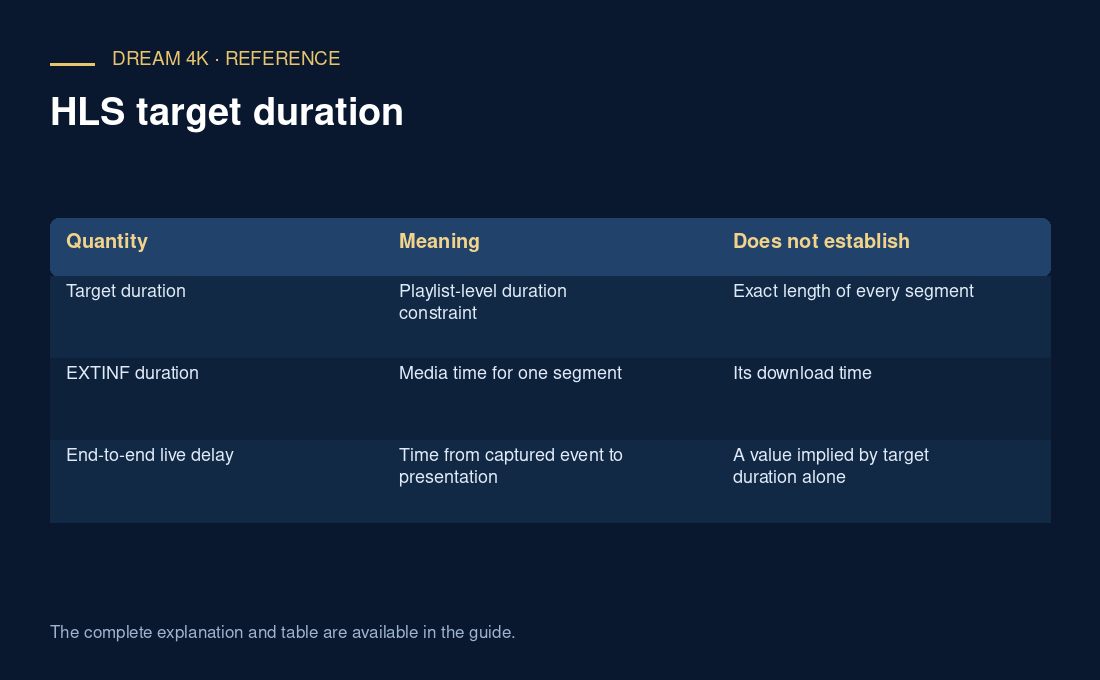
Understand EXT-X-TARGETDURATION as a playlist constraint rather than a latency promise.
Read the guide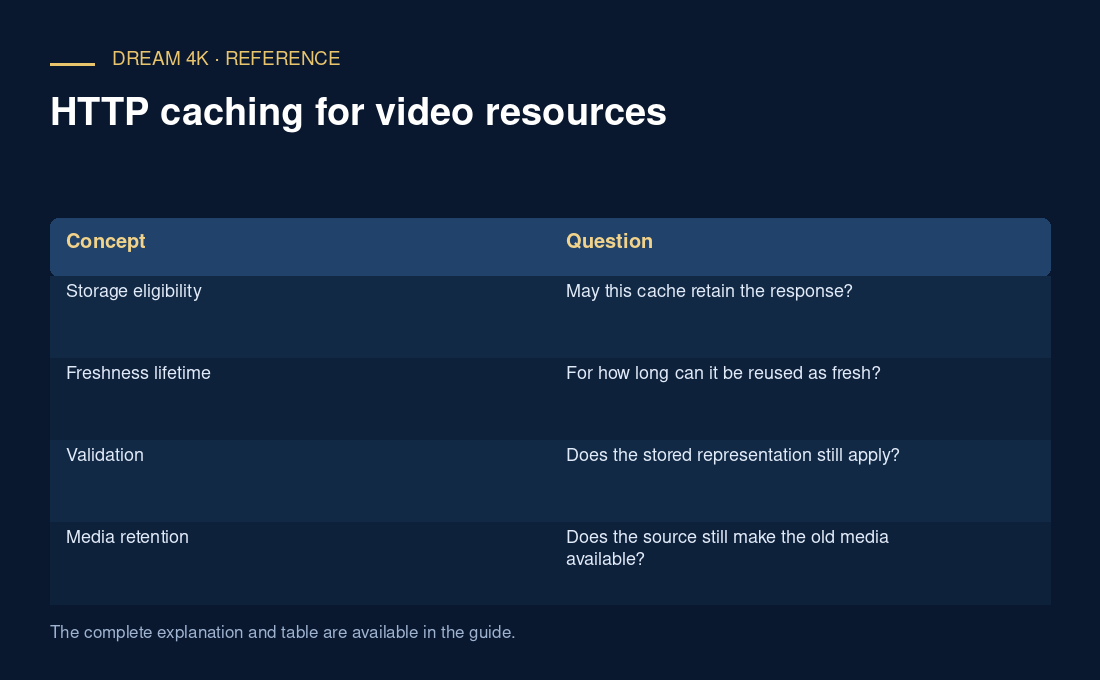
Understand stored responses, freshness and validation without confusing cache lifetime with media retention.
Read the guide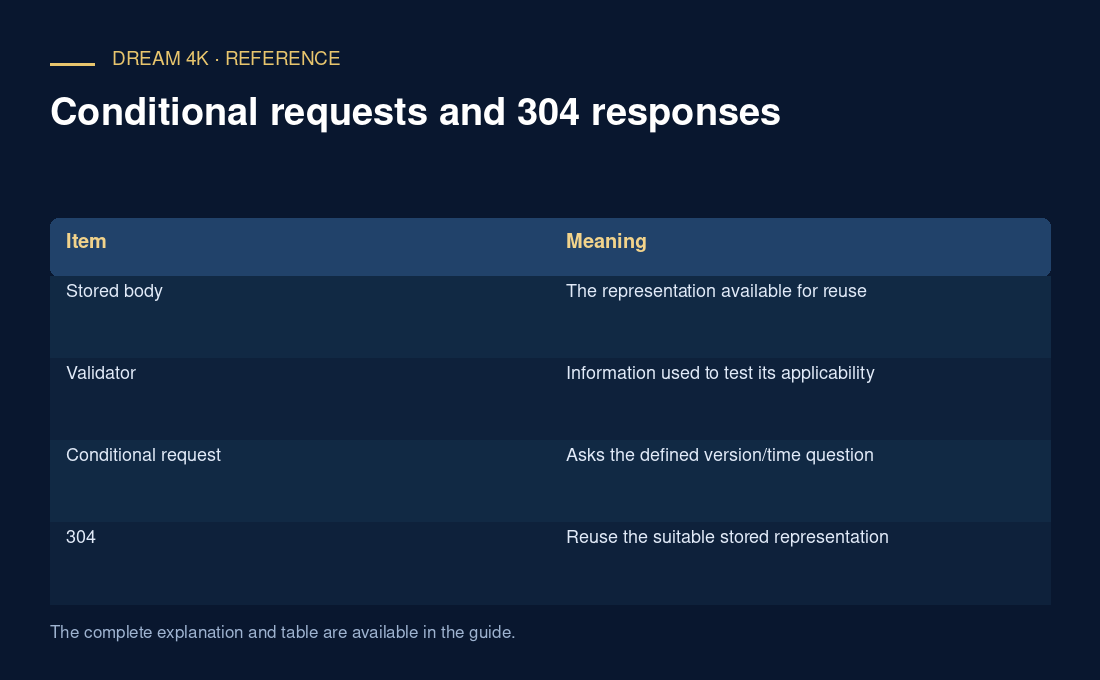
Understand validators and why Not Modified can be a successful cache-validation outcome.
Read the guide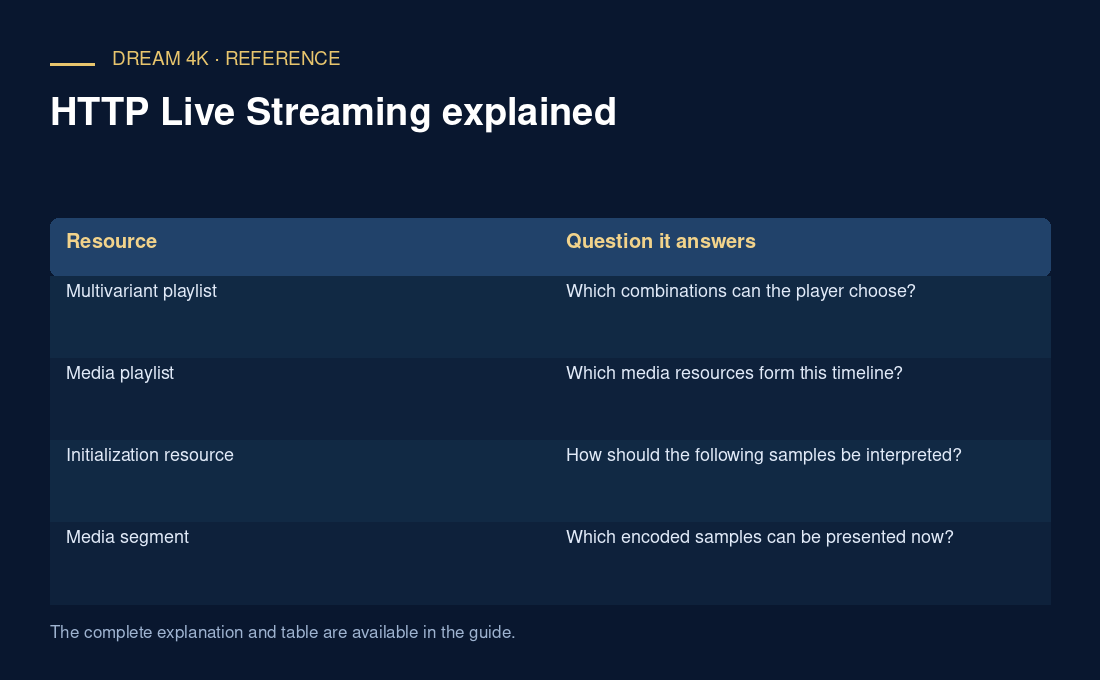
Understand the HLS request chain, adaptation choices and the boundaries of an HLS compatibility claim.
Read the guide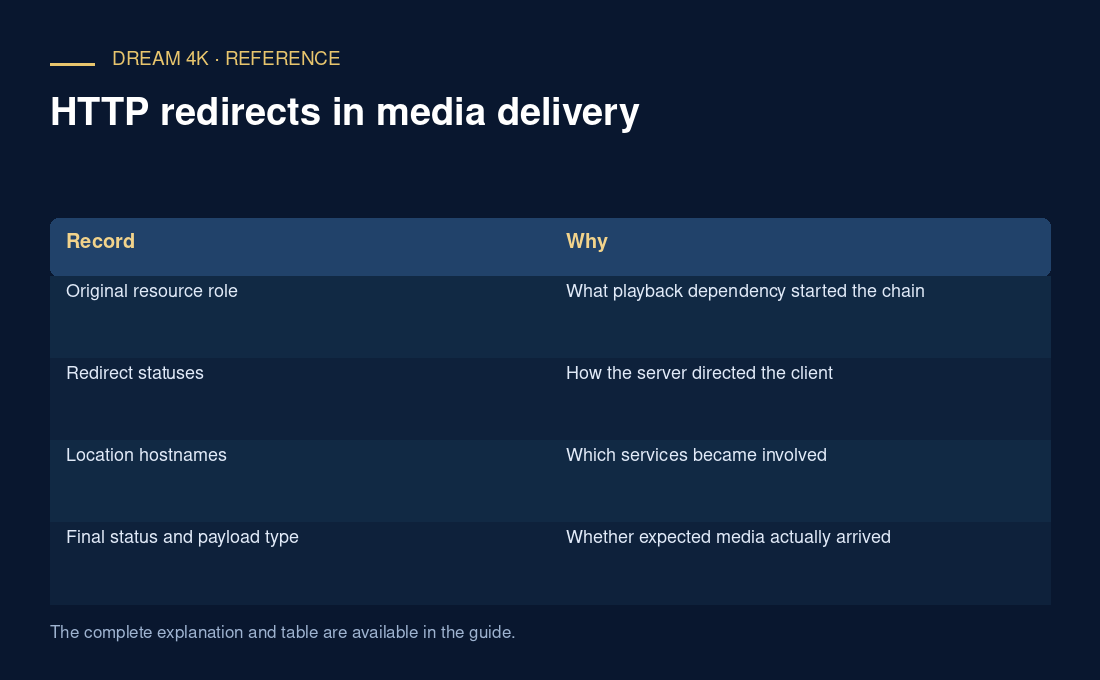
Understand intermediate responses, final destinations and why a successful redirect is not the same as a successful media response.
Read the guide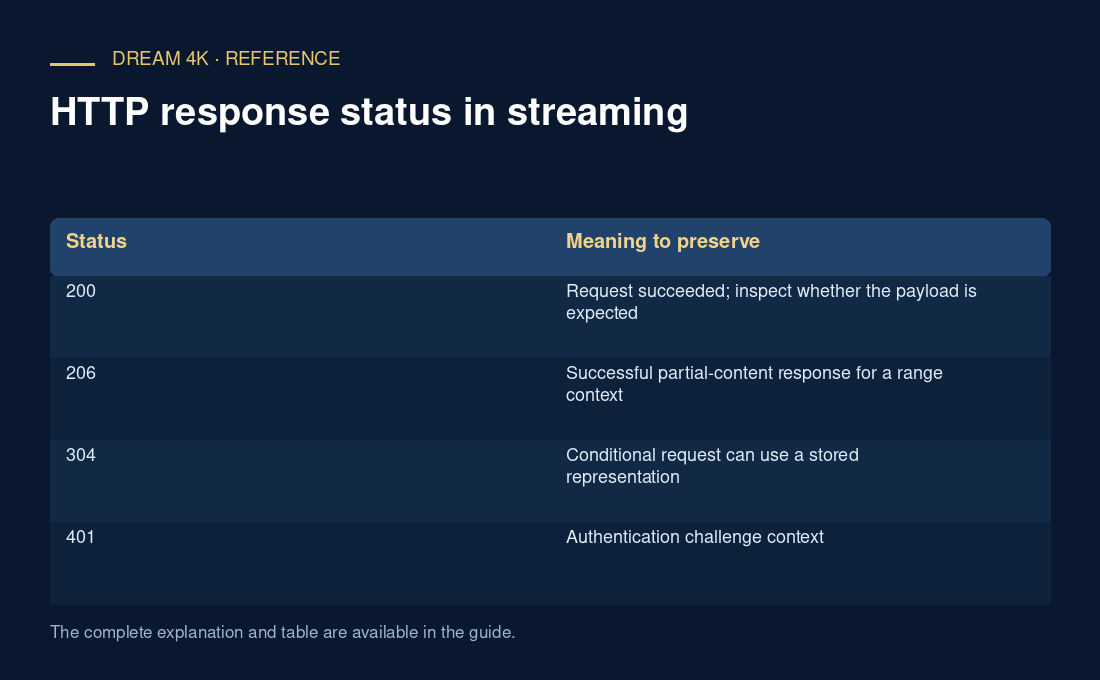
Use response codes to distinguish access, resource, rate-limit and availability outcomes without treating every failure as a server outage.
Read the guide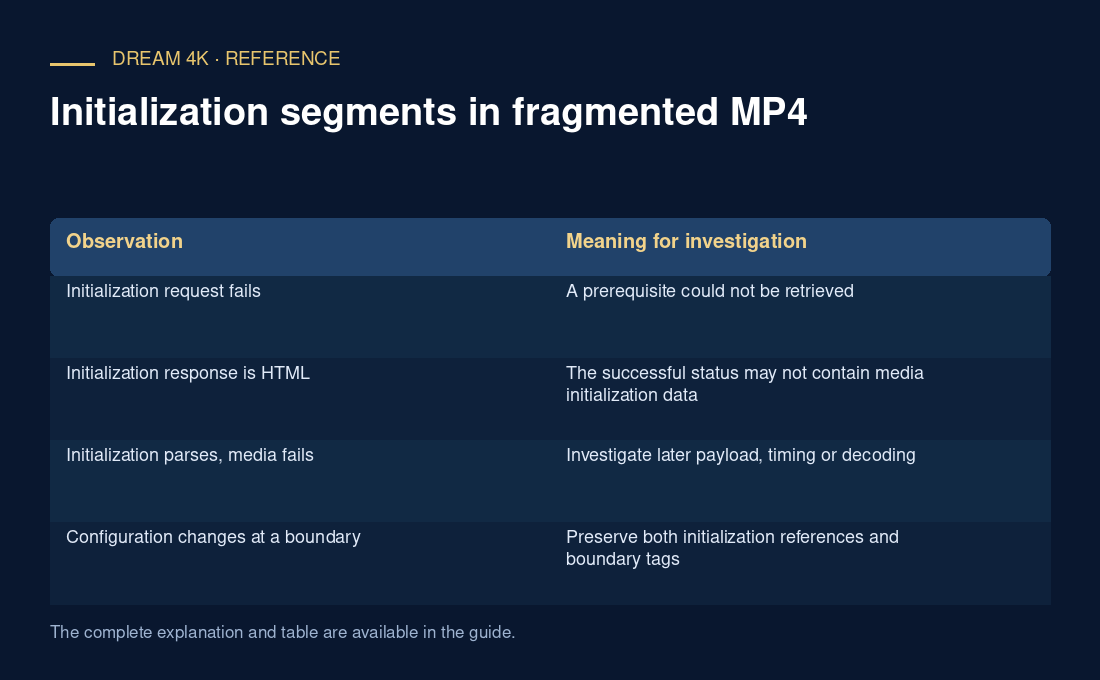
Understand why fragmented media may need initialization data before its audio or video samples can be decoded.
Read the guide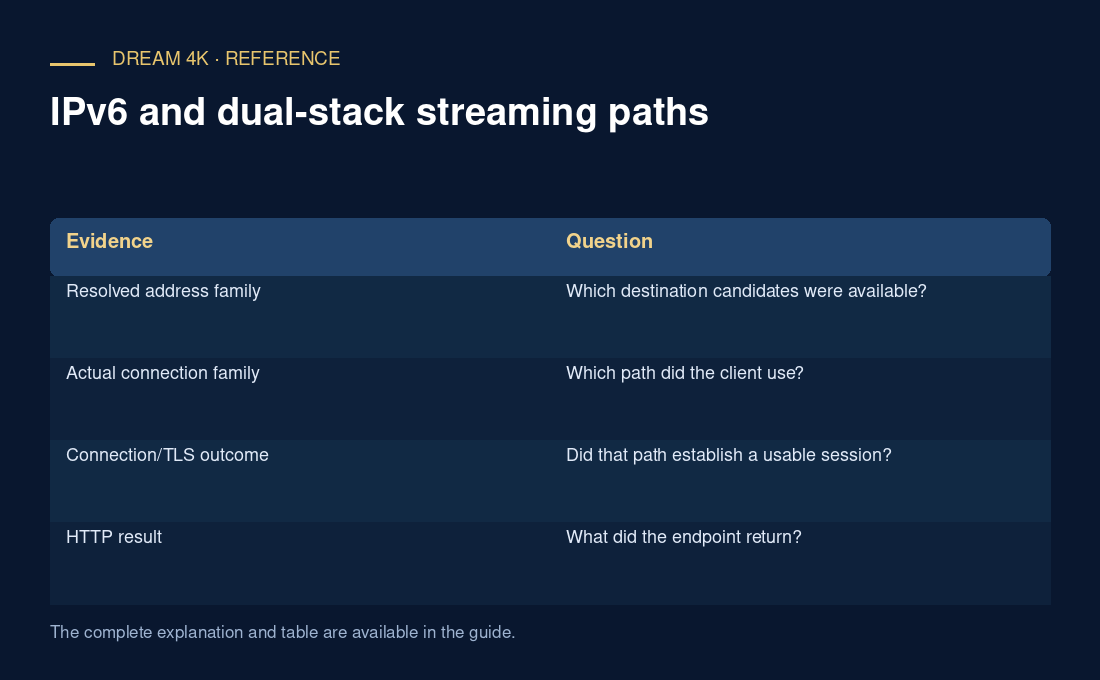
Understand why IPv4 and IPv6 reachability can differ without treating either family as a universal speed fix.
Read the guide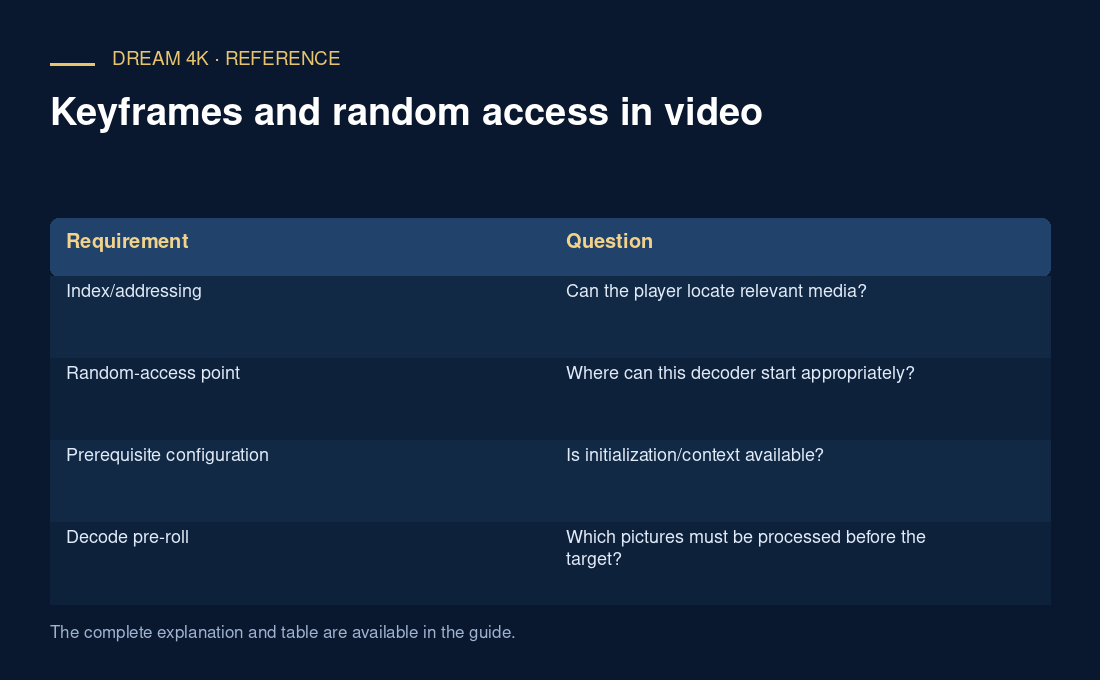
Understand decoder entry points and why an arbitrary video position may need earlier media.
Read the guide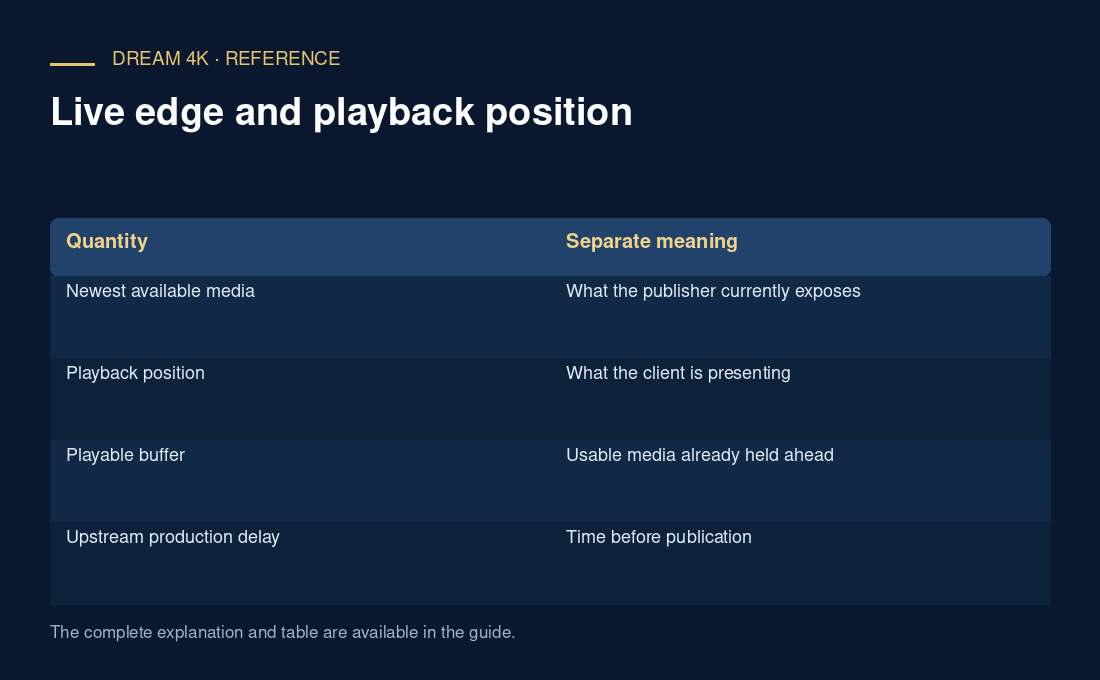
Understand how client position relates to available media and timing cushion without promising a universal latency value.
Read the guide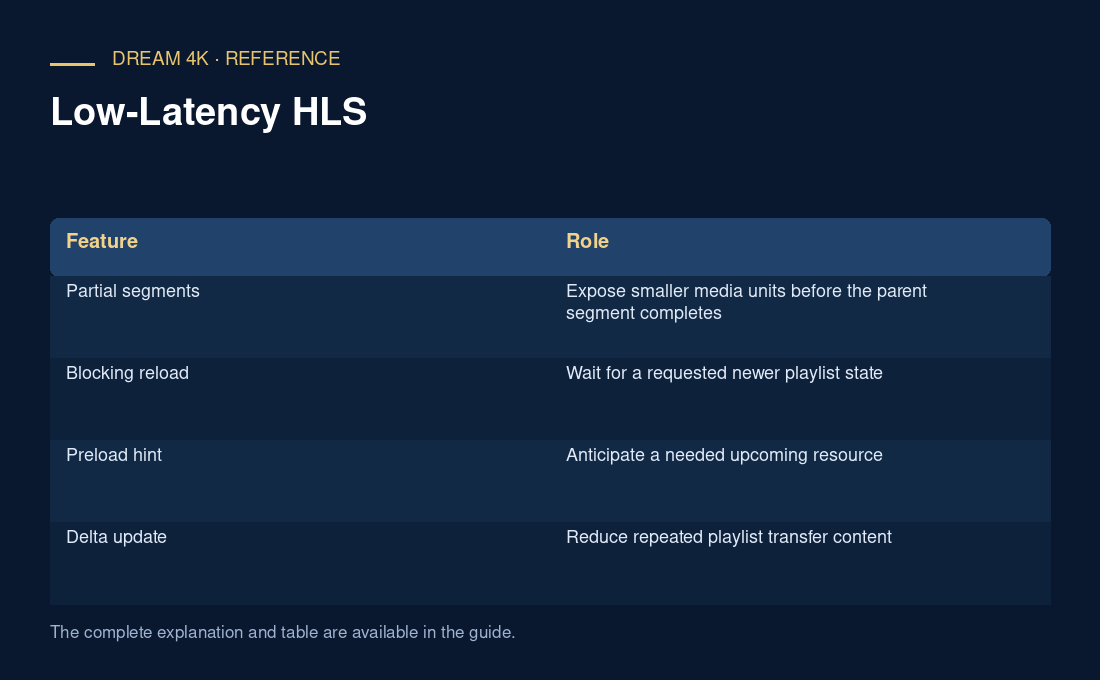
Understand LL-HLS as a coordinated publishing and delivery extension rather than a universal player speed switch.
Read the guide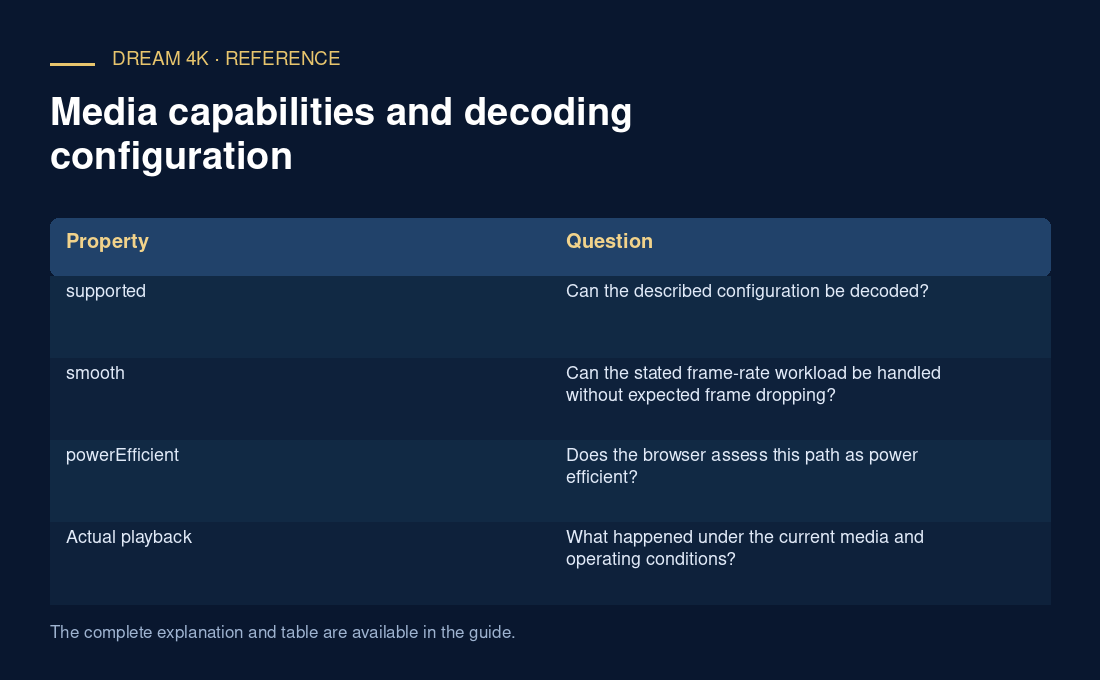
Understand supported, smooth and powerEfficient as separate browser-reported properties for a specified media configuration.
Read the guide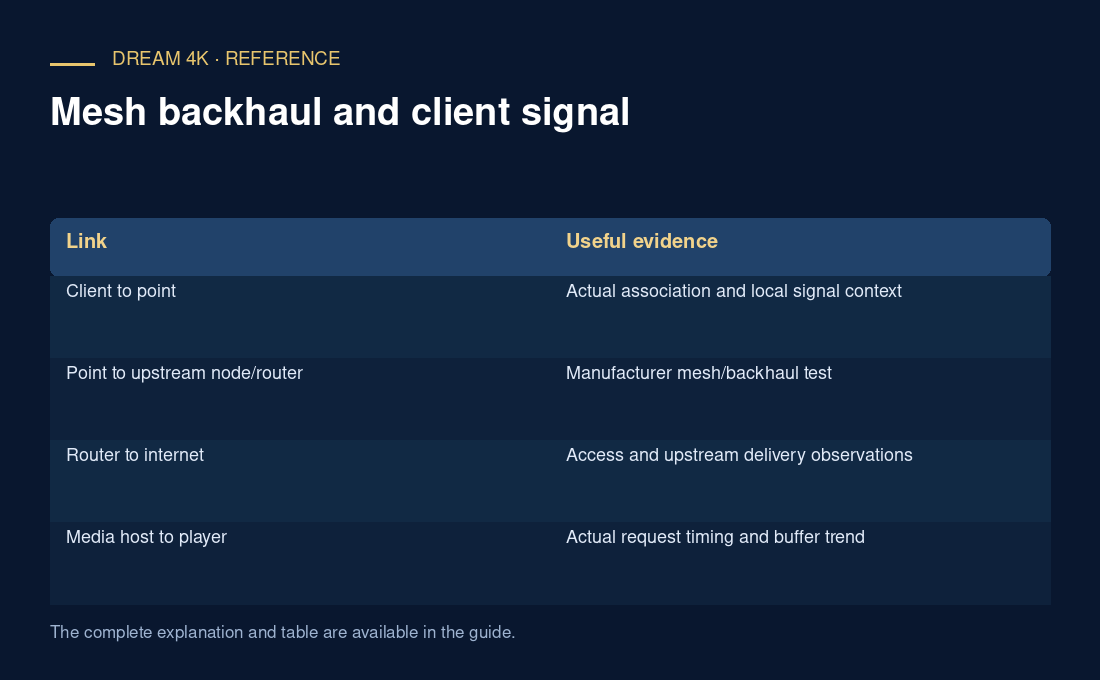
Understand the separate link from a device to a mesh point and the link that connects the point upstream.
Read the guide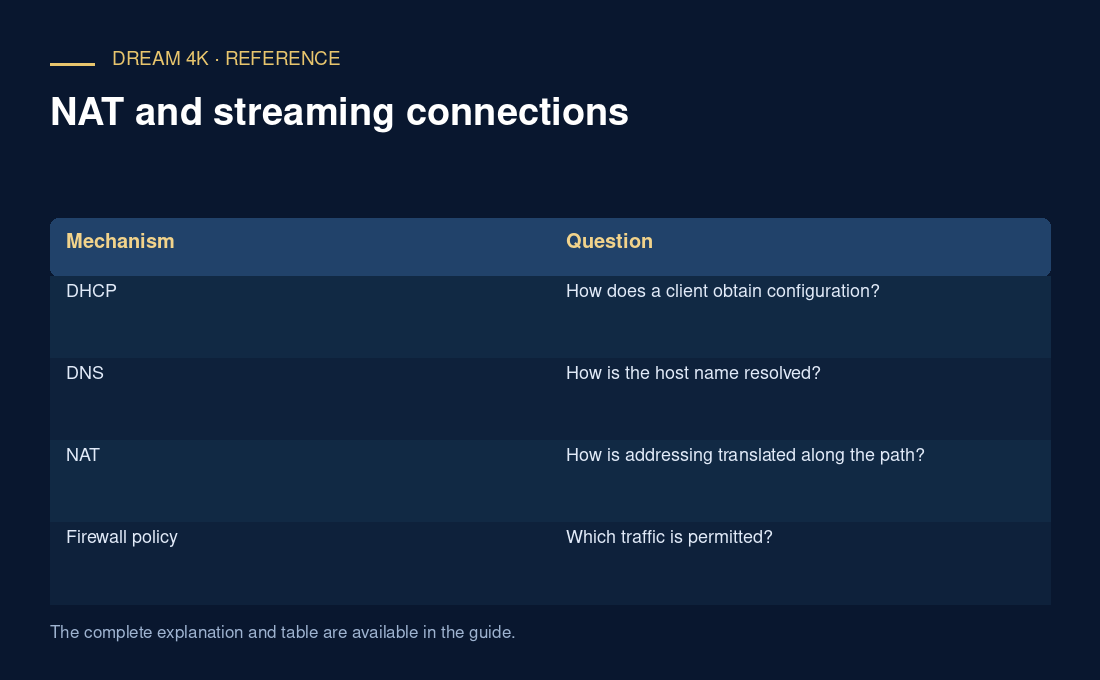
Understand address translation and distinguish ordinary outbound playback from inbound connection requirements.
Read the guide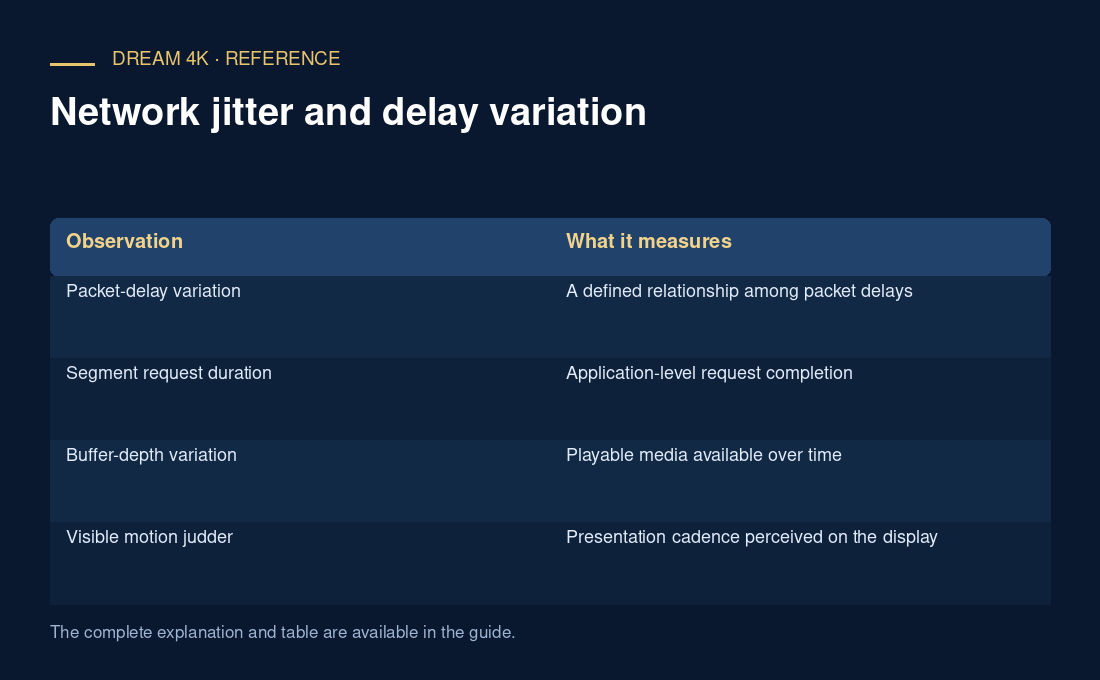
Understand arrival-time variation and why a single ping or average delay cannot describe it.
Read the guide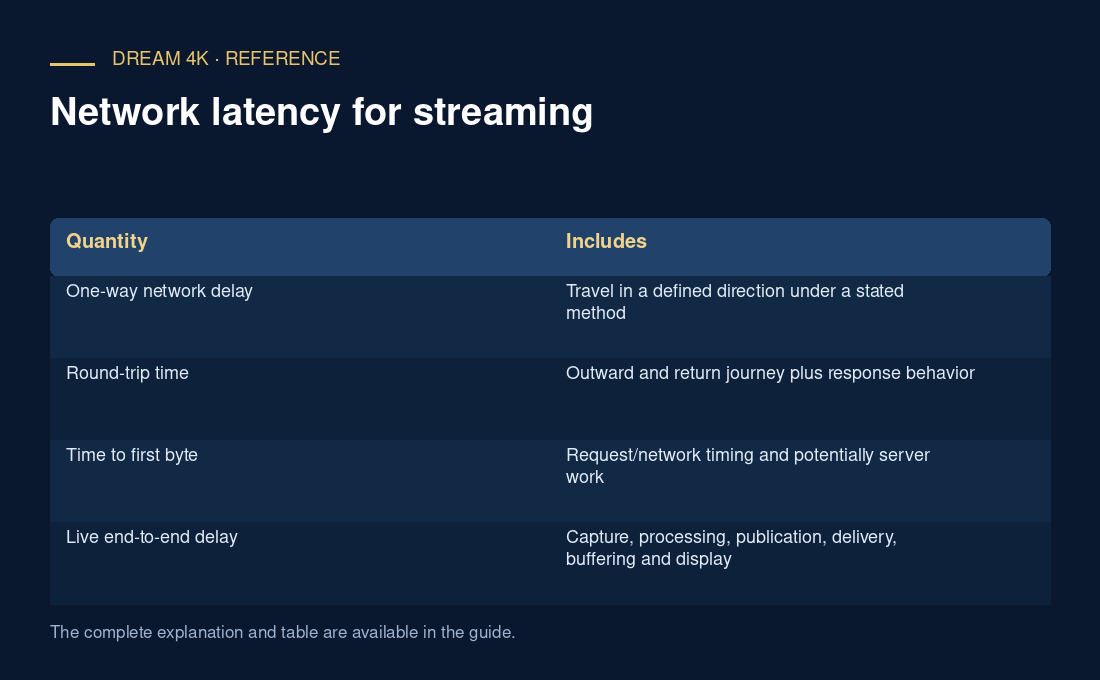
Understand one-way delay, round-trip time and why low ping does not guarantee fast video delivery.
Read the guide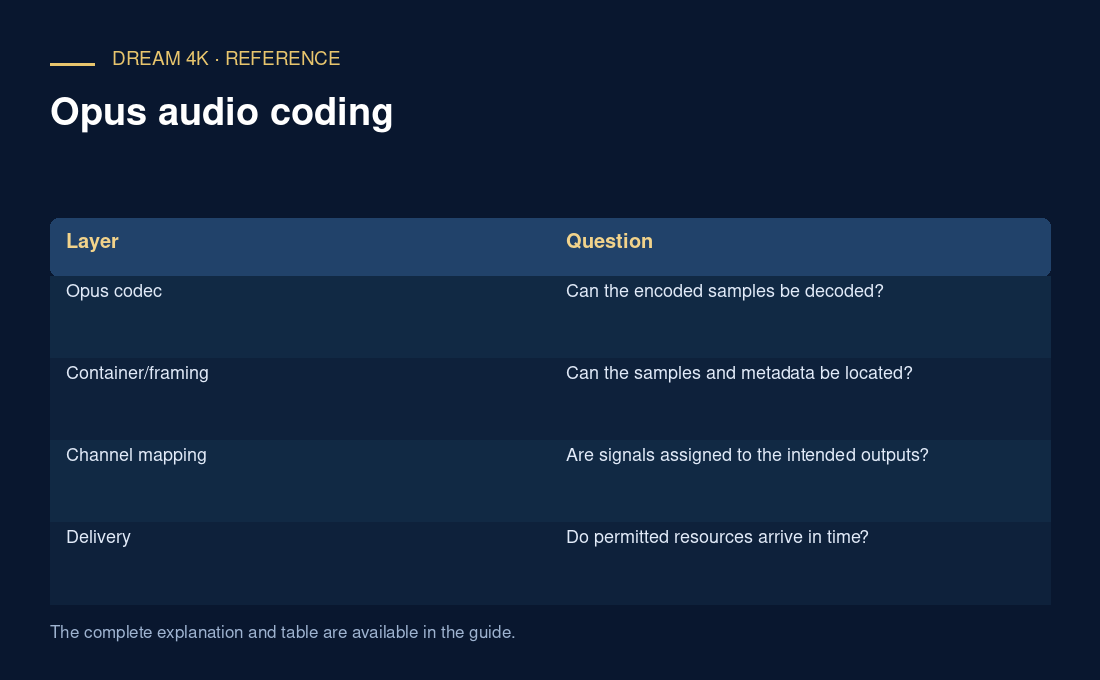
Understand Opus as a speech and music codec, separate from its container and delivery protocol.
Read the guide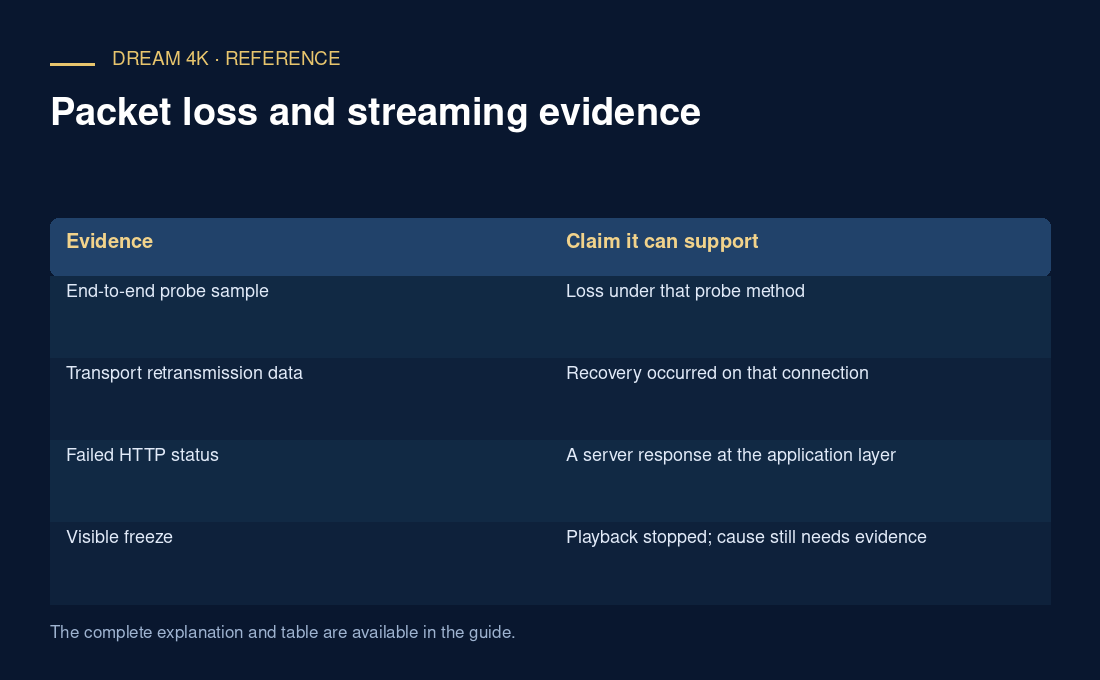
Understand what a packet-loss measurement covers and why a missing ping response does not directly diagnose a video stall.
Read the guide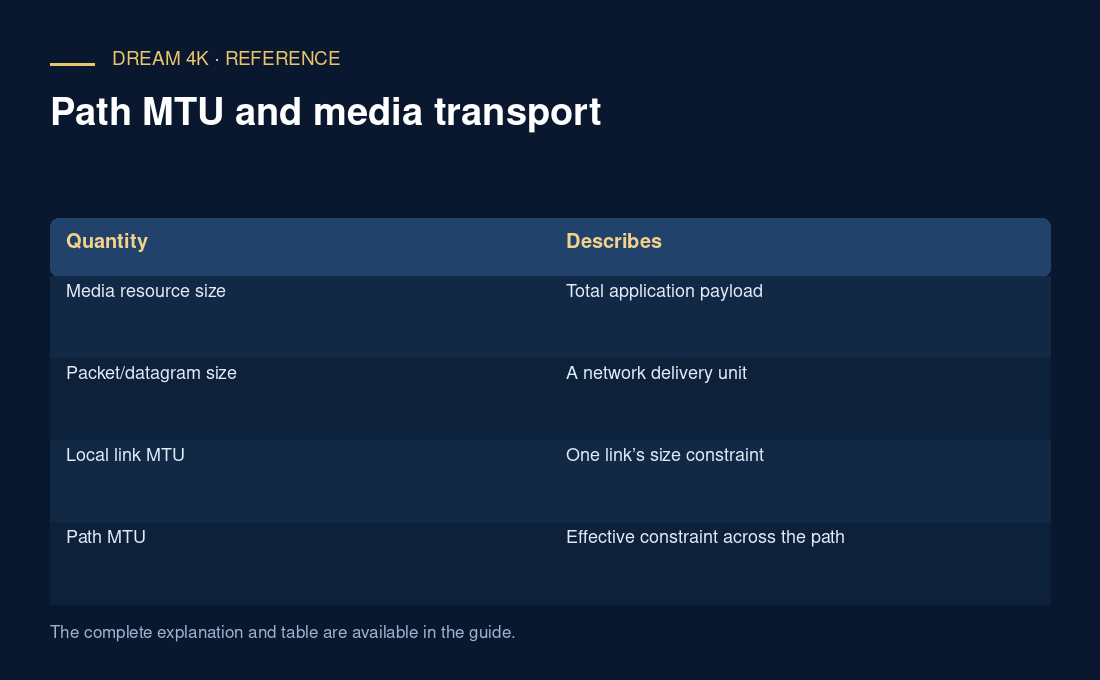
Understand packet-size limits and why small successful requests do not fully test a large-data path.
Read the guide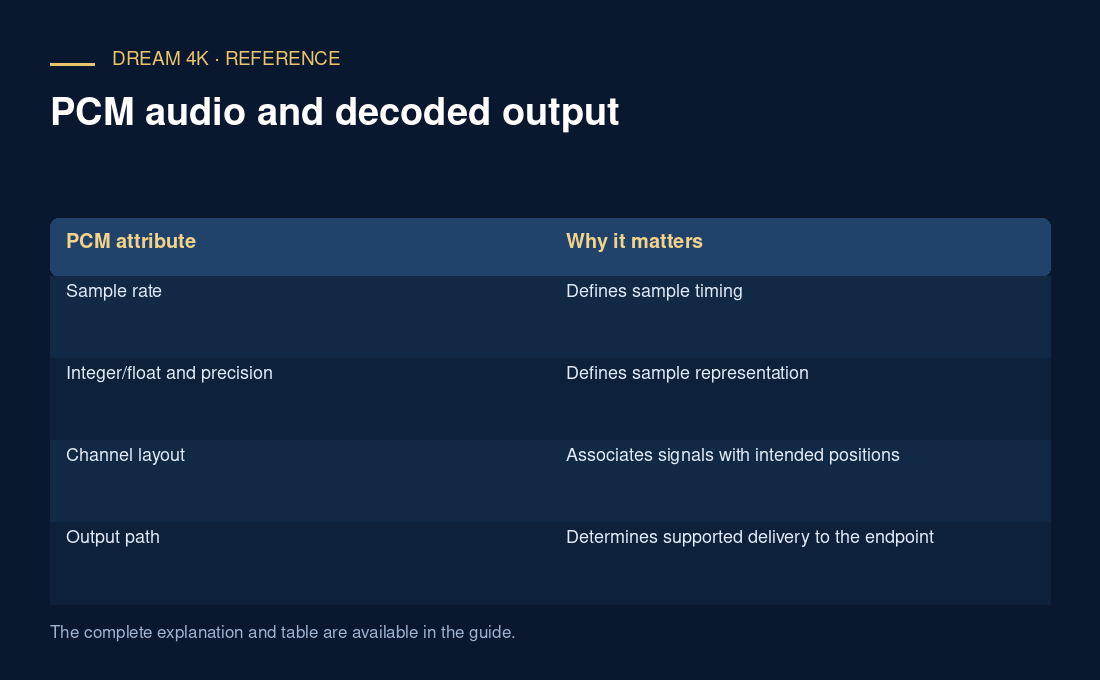
Understand pulse-code sample representation, multichannel PCM and the limits of a receiver’s format display.
Read the guide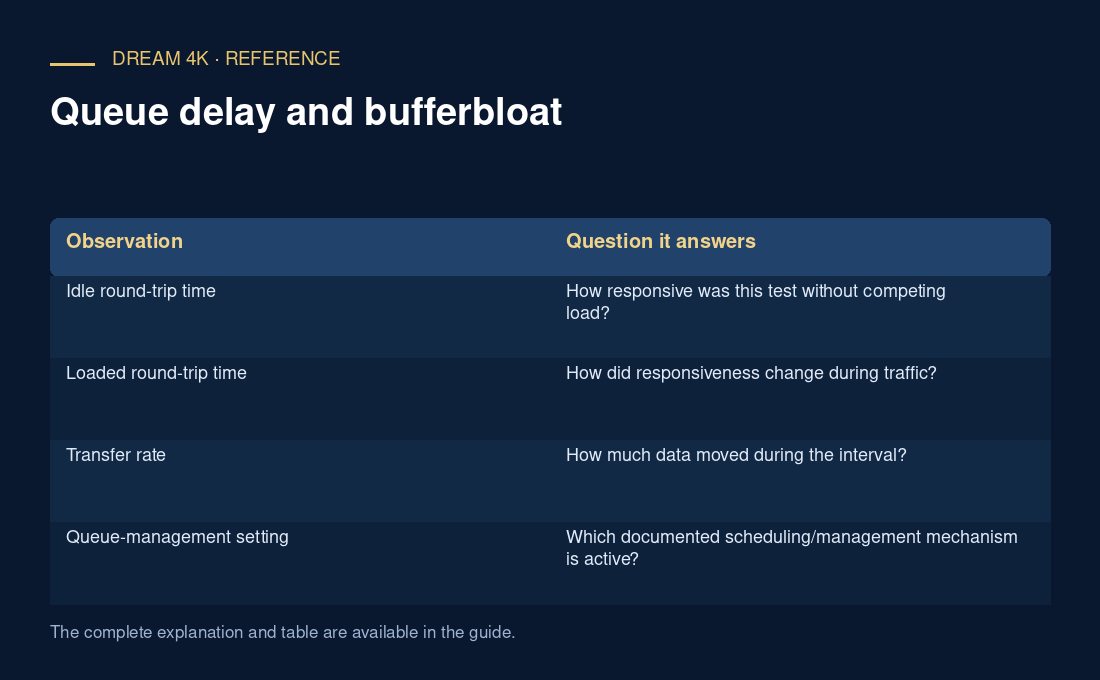
Understand how a busy connection can add delay even when data continues to transfer at a high rate.
Read the guide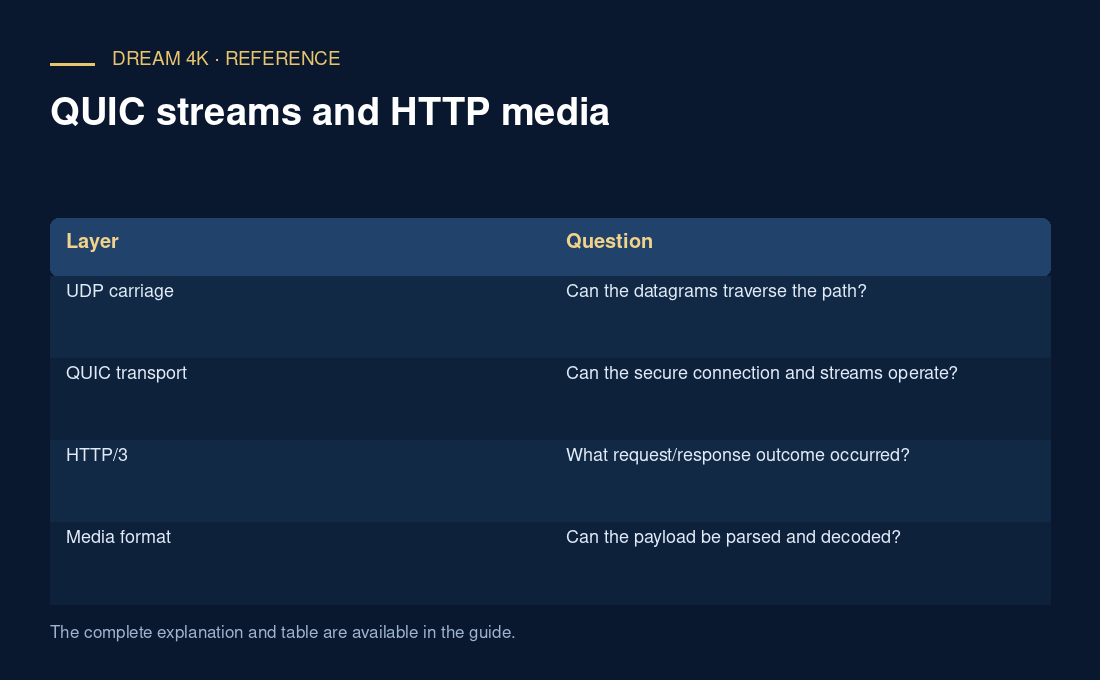
Understand reliable per-stream delivery over QUIC and why UDP-based transport does not imply unreliable HTTP video.
Read the guide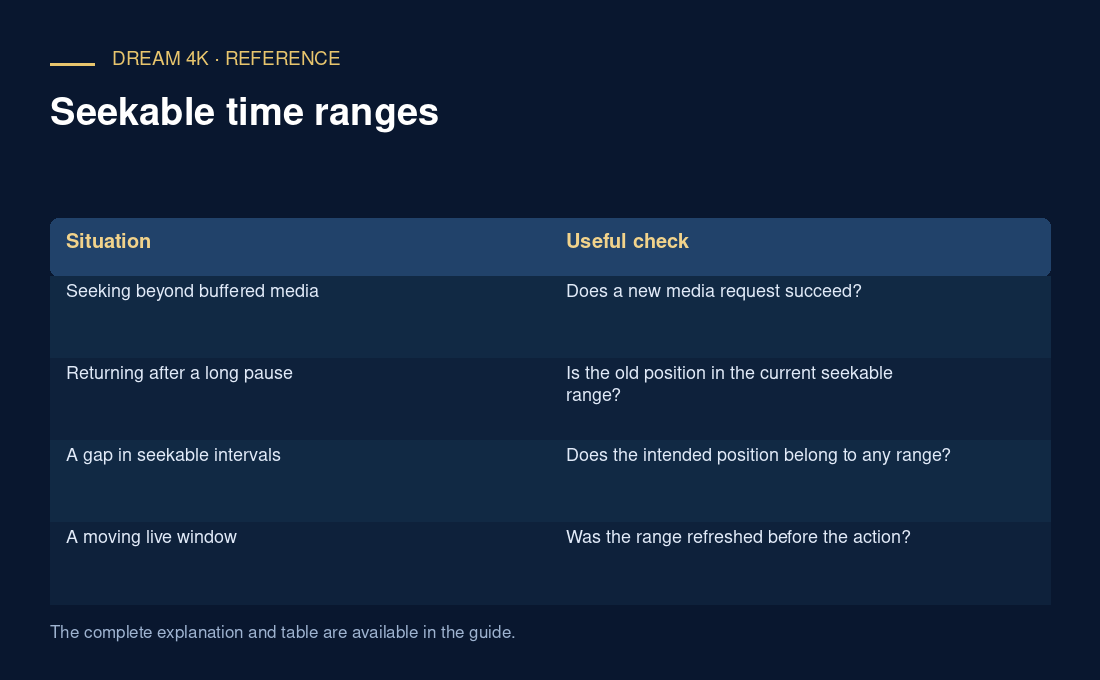
Understand the positions a player currently considers seekable and why they can differ from buffered data.
Read the guide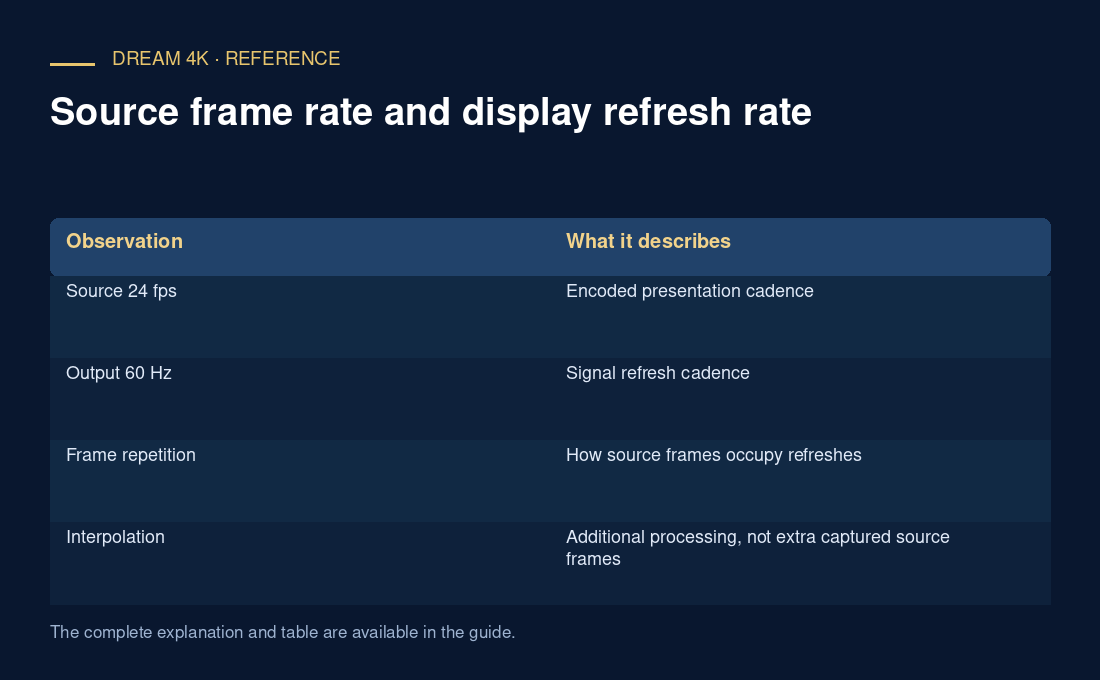
Distinguish encoded frame cadence from the display signal and understand why an integer match can matter.
Read the guide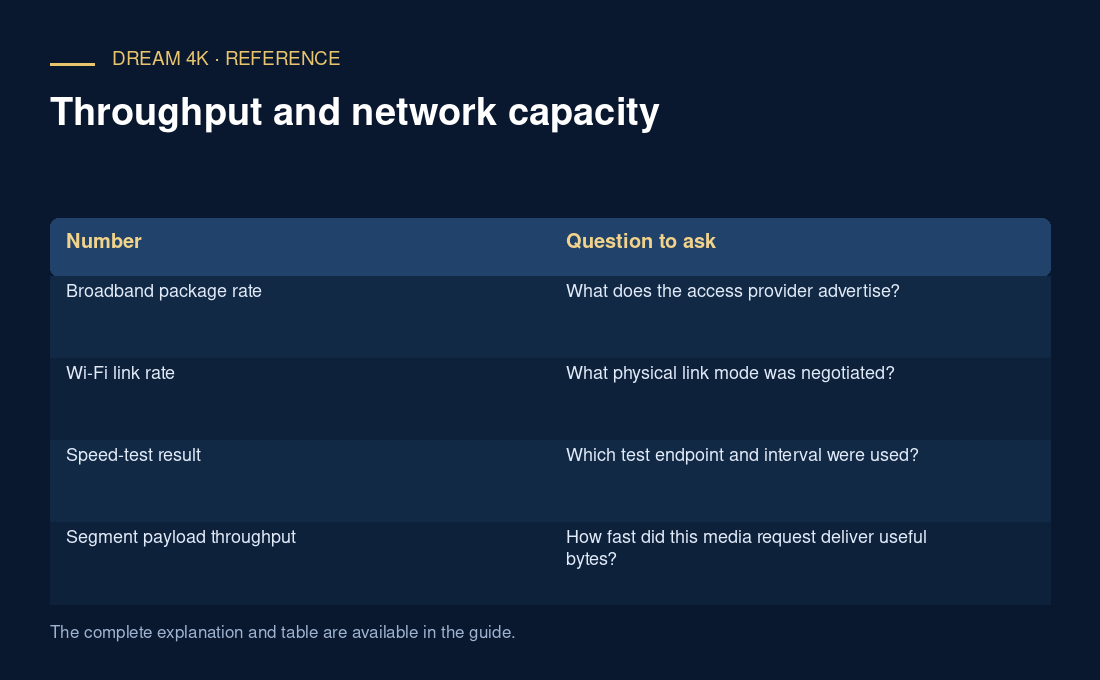
Distinguish an access-link capacity label from the useful data rate achieved by a particular media transfer.
Read the guide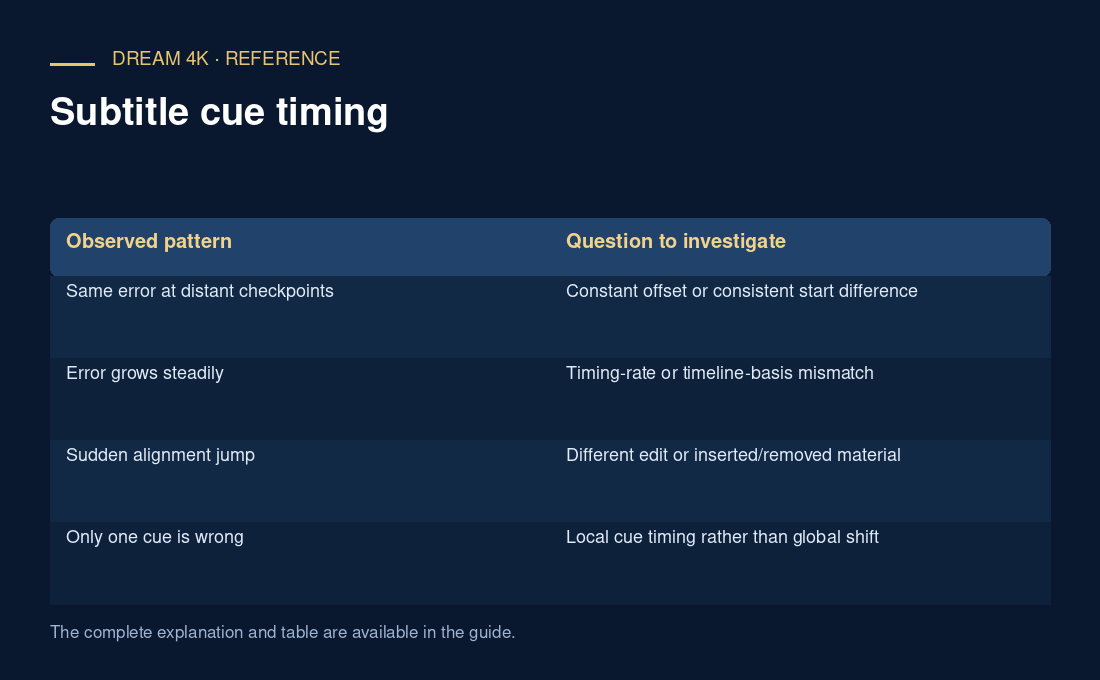
Understand cue intervals, constant offsets and accumulating drift on a media timeline.
Read the guide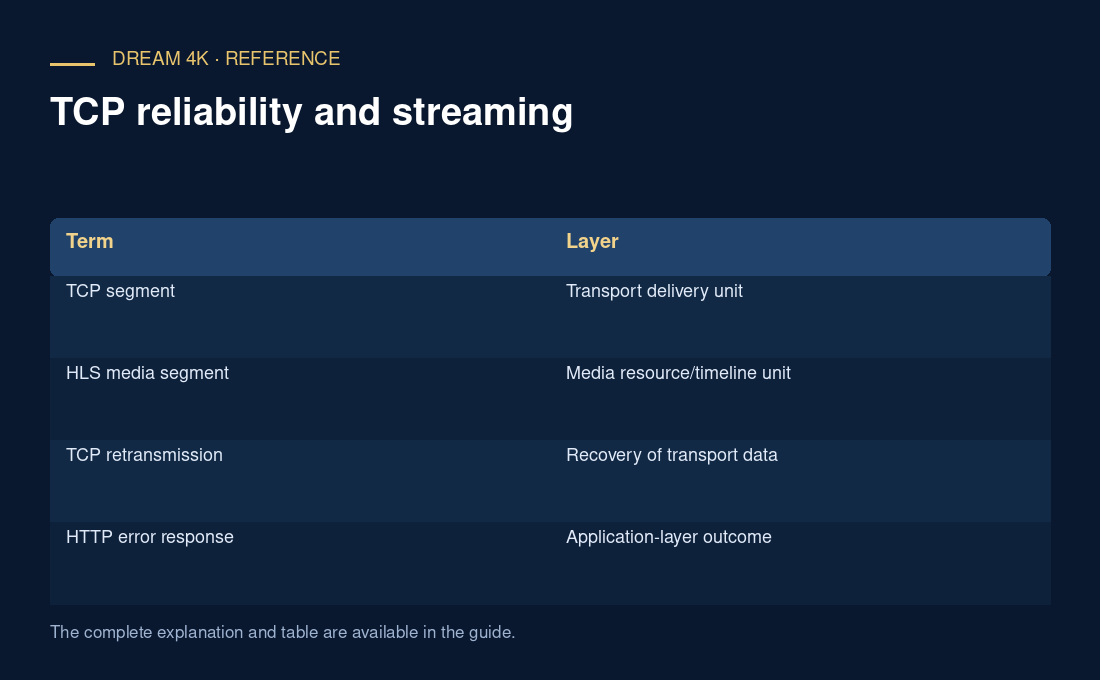
Understand reliable ordered bytes, retransmission and why recovered data can still arrive too late for smooth playback.
Read the guide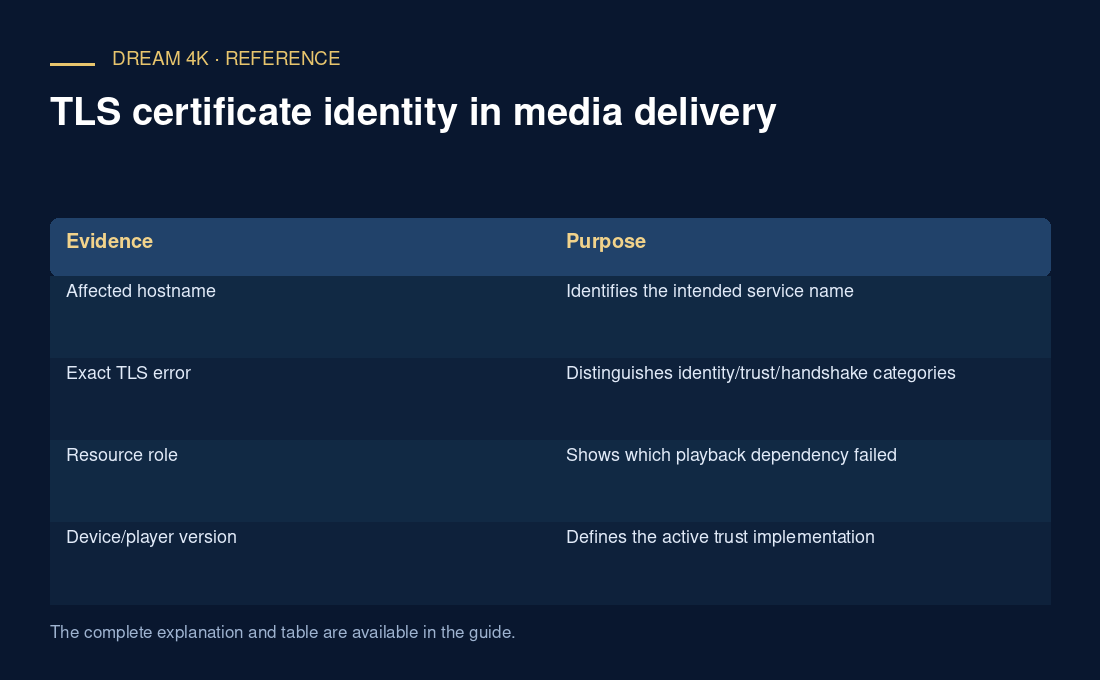
Understand hostname trust checks and why an HTTPS certificate error should be investigated rather than bypassed.
Read the guide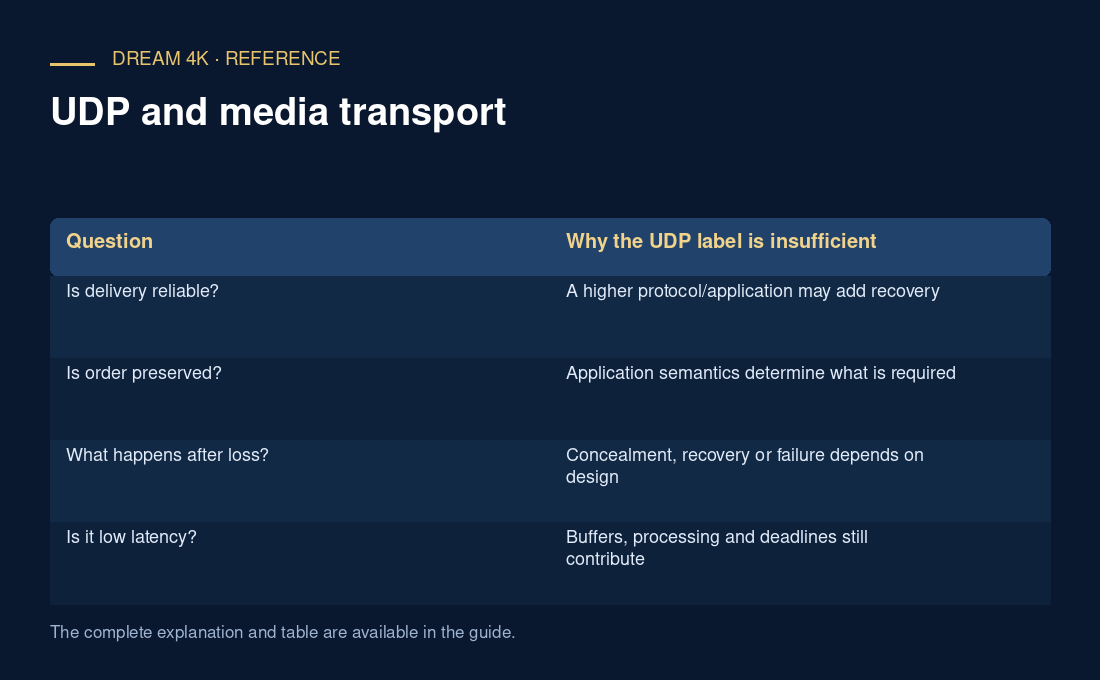
Understand datagram delivery and why applications above UDP can have different reliability and timing behavior.
Read the guideUnderstand unequal encoded segment sizes without assuming the network changed or the source is defective.
Read the guide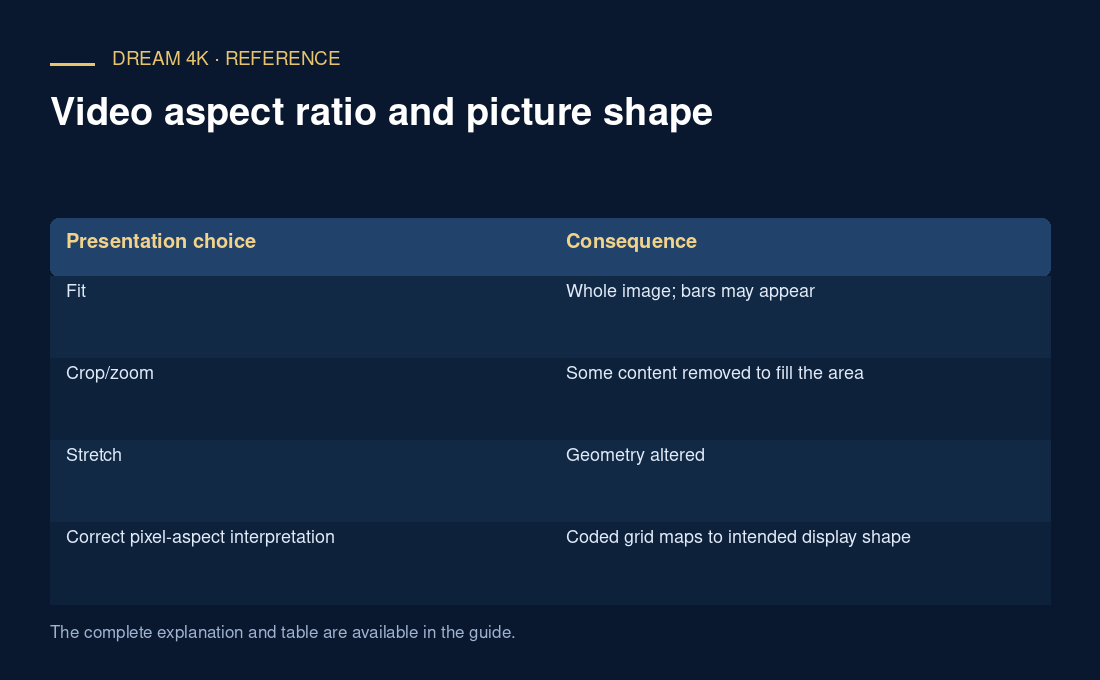
Understand display shape, pixel shape and why black bars can preserve correct geometry.
Read the guide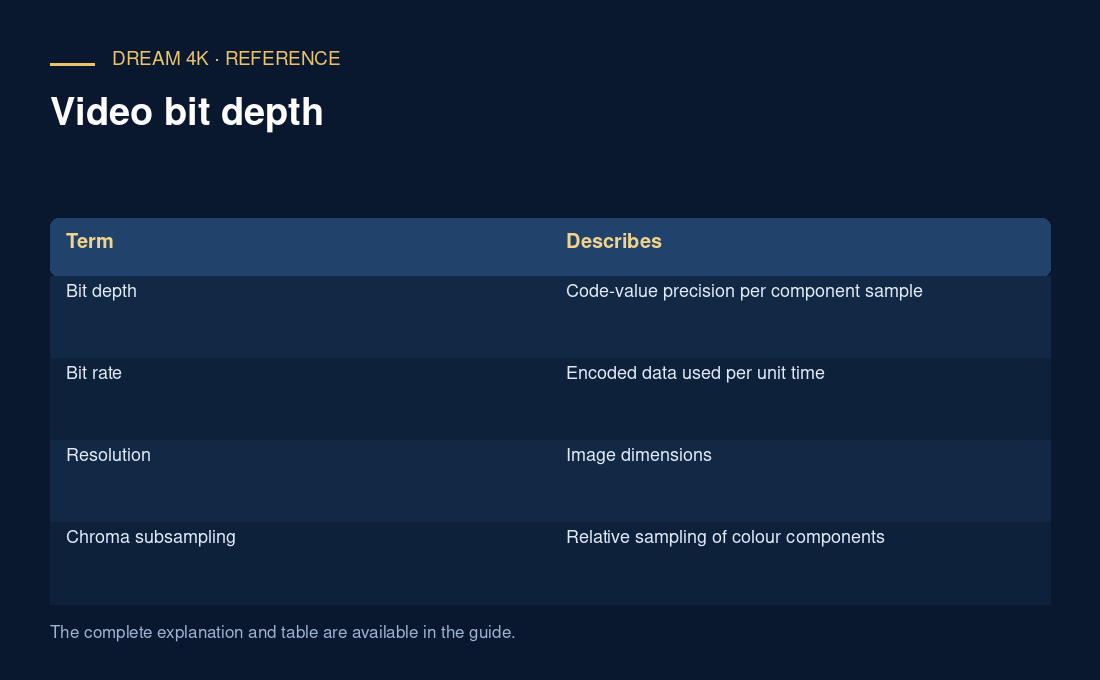
Understand quantization levels without confusing bit depth with bit rate, resolution or an HDR guarantee.
Read the guide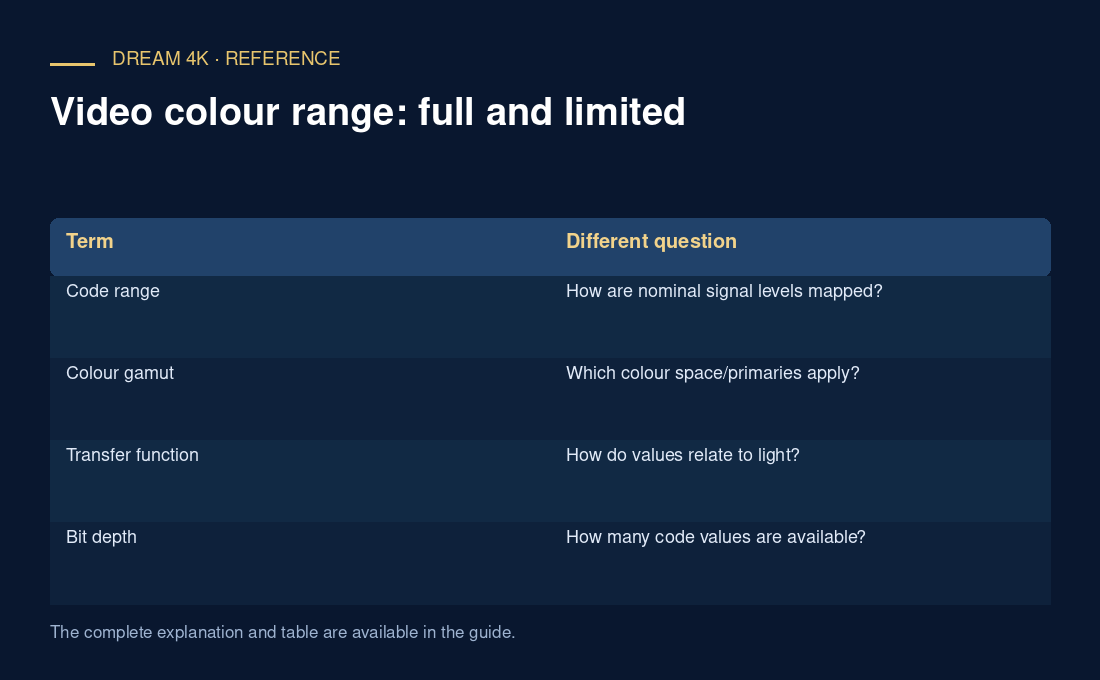
Understand code-range interpretation and why matching both ends matters more than choosing a universally superior label.
Read the guide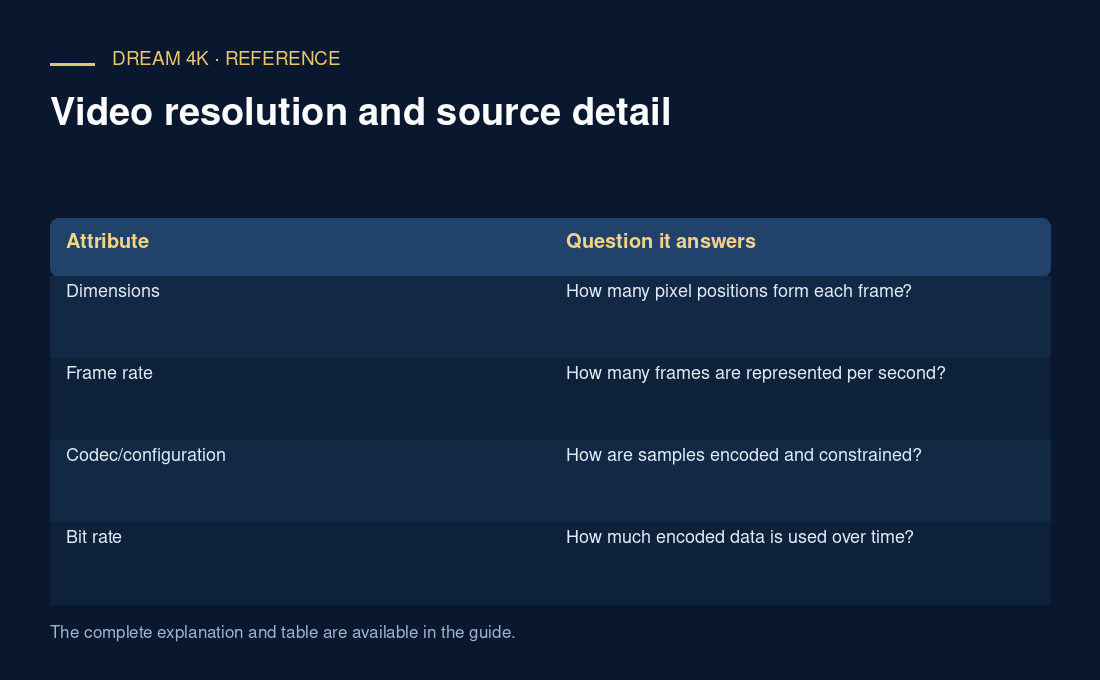
Understand pixel dimensions without treating a resolution label as a complete picture-quality measurement.
Read the guide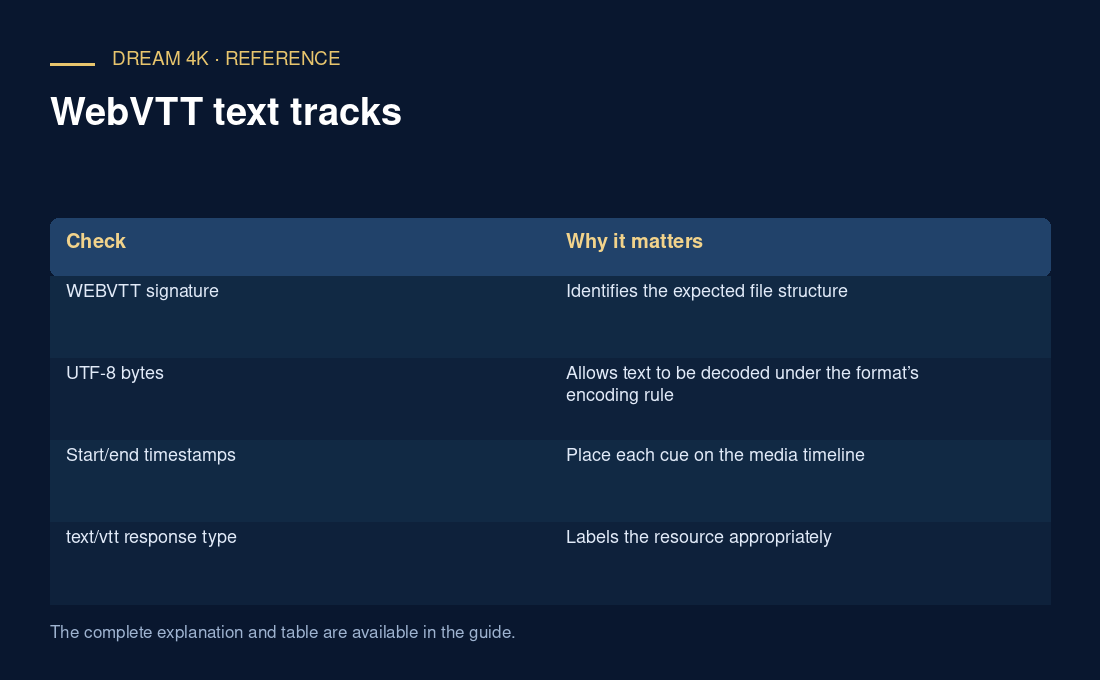
Understand WebVTT structure, UTF-8 encoding and cue-based timing in web video.
Read the guide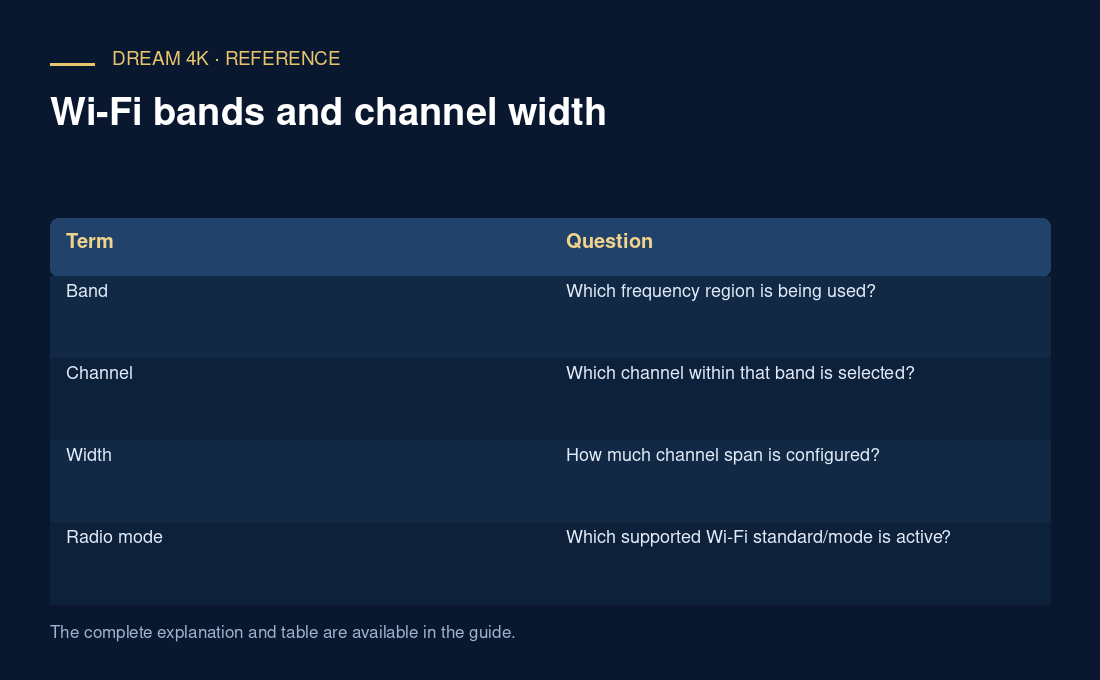
Understand frequency band, channel and width as separate settings in a supported wireless connection.
Read the guide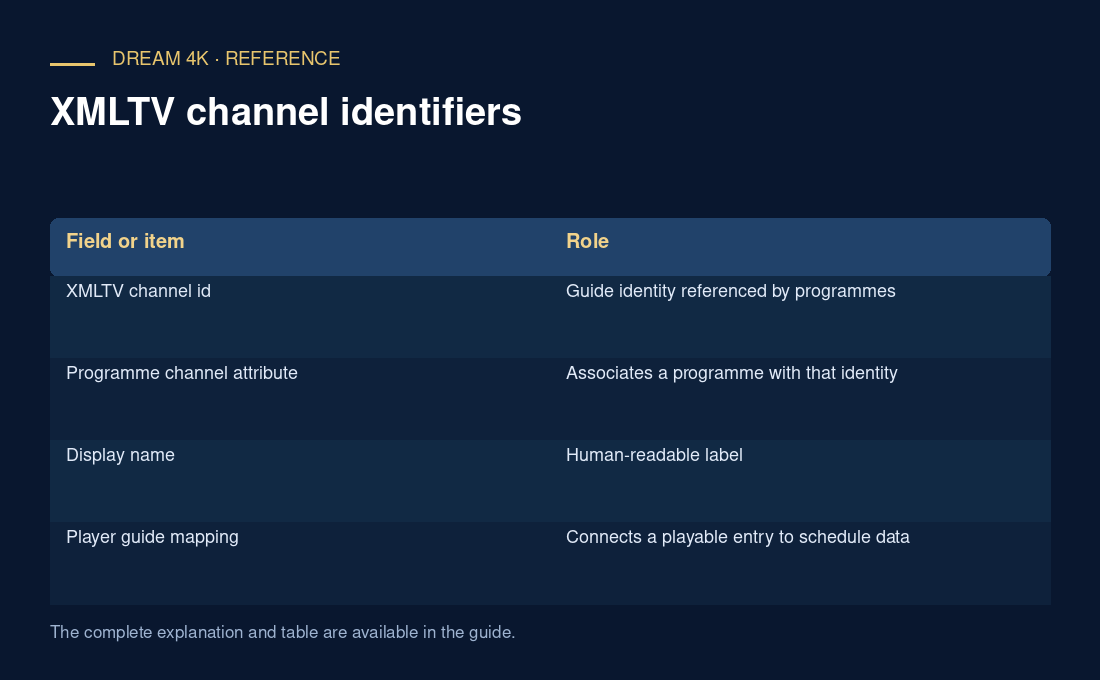
Understand why a stable schedule identifier is different from a display name, channel number or logo.
Read the guide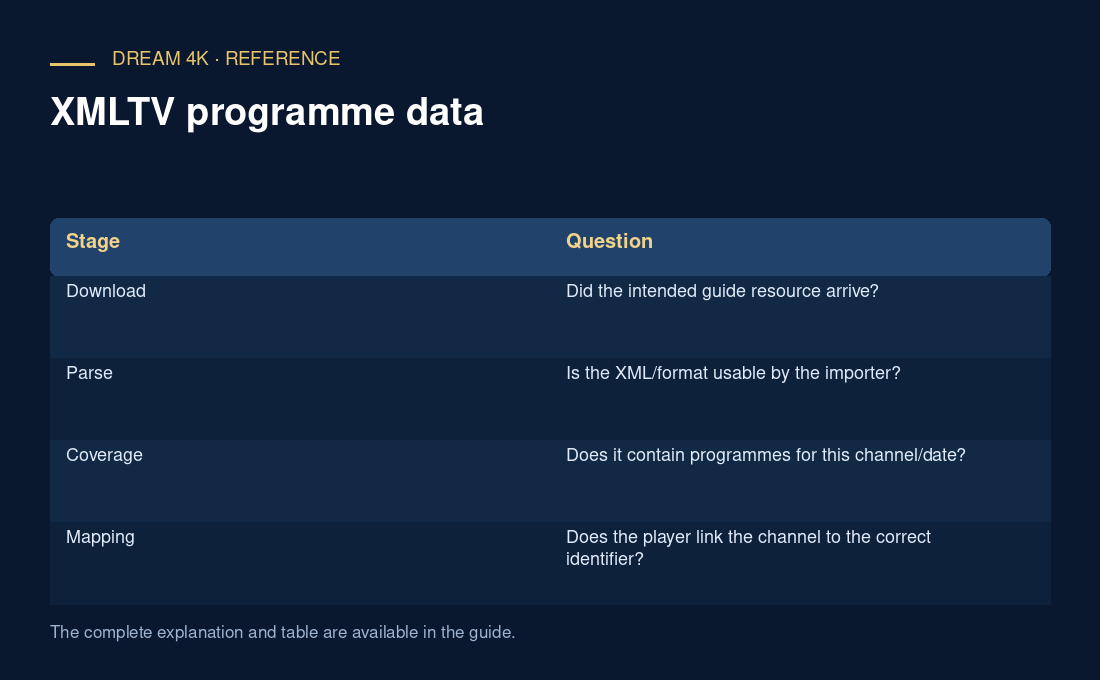
Understand the separate channel definitions, programme records and time metadata in an XMLTV guide.
Read the guide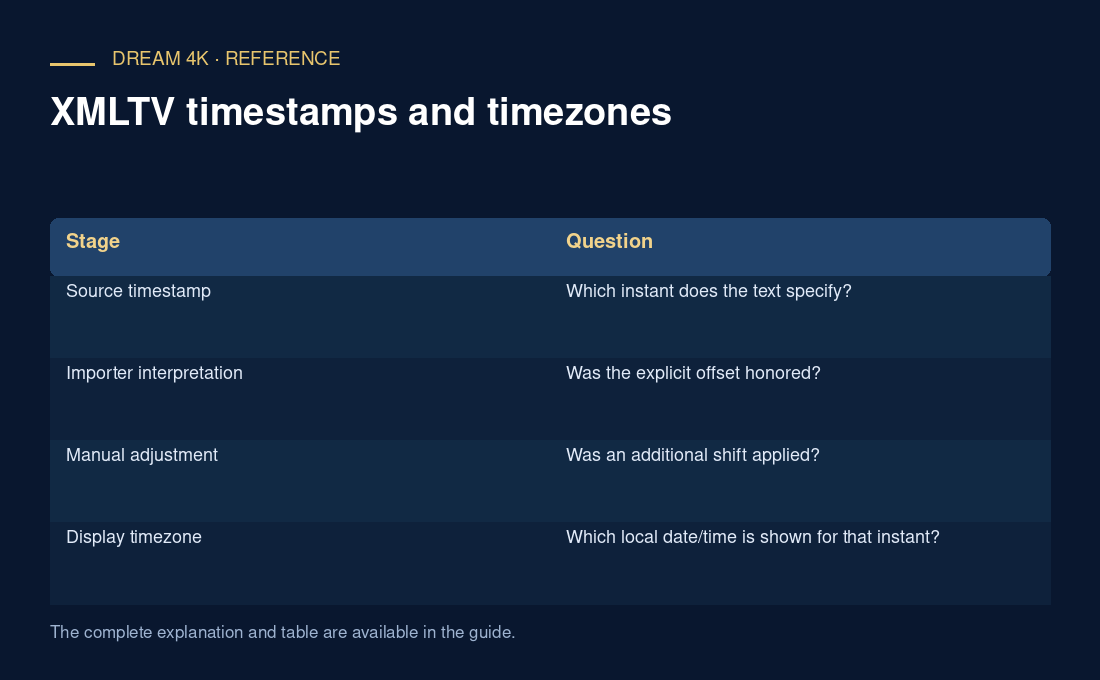
Understand explicit UTC offsets and separate source timestamps from a player’s local display time.
Read the guide