
In this guide
Channel identity links the recordsDownload, parse, coverage and mapping differOptional data is not guaranteed coverageXMLTV is an XML-based programme-listing format described by the XMLTV project’s DTD. It can contain channel definitions and programme entries referring to those channels. A guide describes schedule metadata; it does not carry the video stream itself.
A successful guide download therefore does not prove that a channel plays, and a working channel does not prove that its schedule metadata is present or correctly mapped.
Channel identity links the records
A channel definition has an identifier and one or more display names. Programme entries refer to a channel identifier and include a start time, title and other optional information. The display name is intended for people; the identifier supplies a stable relationship within the data.
An original hypothetical guide defines channel id city.news and a programme whose channel attribute is city.news. A player entry using a different mapping key may show no schedule even when the title and times in the XML are correct.
Download, parse, coverage and mapping differ
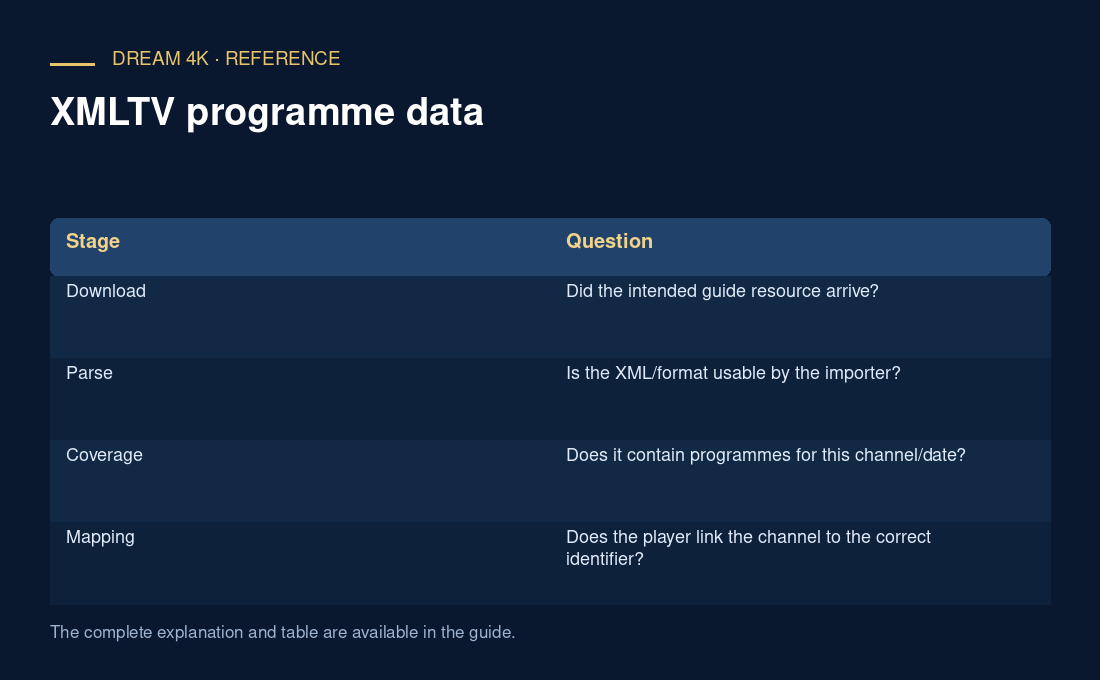
| Stage | Question |
|---|---|
| Download | Did the intended guide resource arrive? |
| Parse | Is the XML/format usable by the importer? |
| Coverage | Does it contain programmes for this channel/date? |
| Mapping | Does the player link the channel to the correct identifier? |
| Display time | Are timestamps interpreted and shown appropriately? |
Optional data is not guaranteed coverage
Guide files can vary in supplied descriptions, stop times, episode metadata, icons and other fields. A parser accepting a file does not establish that every expected day or channel is included. Nor does an icon prove a schedule’s identity or a stream’s rights and availability.
When diagnosing an empty guide, inspect one channel and a small date range first. Record the guide retrieval time, the relevant identifier and whether programme records exist for that interval. A global refresh is useful only if newer or corrected data is available; it does not create missing schedule records.
The project DTD also specifies date/time representation and timezone assumptions. Preserve original timestamps before applying player-specific offsets so that a display problem is not confused with a missing-data problem.