
In this guide
A range mismatch changes interpretationRange is separate from gamut and HDRUse a matched documented pathVideo range describes how code values are assigned to the intended signal range. Common digital-video contexts distinguish limited-range and full-range interpretations. The correct choice depends on the representation and the expectations of the receiving stage.
A mismatch can alter black and white appearance or clip information. Full is not automatically better, and a name such as RGB High or RGB Low must be interpreted through the manufacturer’s documentation.
A range mismatch changes interpretation
In a common eight-bit limited-range luma context, nominal black and white correspond to code values 16 and 235. Full-range interpretation uses a different mapping. Chroma and higher bit-depth contexts have their own rules, so do not apply those two numbers indiscriminately to every component.
An original simplified example treats limited-range black at code 16 as though it belonged to a full 0–255 mapping. Black can appear elevated instead of reaching the intended black point. In the opposite mismatch, values outside a receiver’s assumed range can be clipped.
Range is separate from gamut and HDR
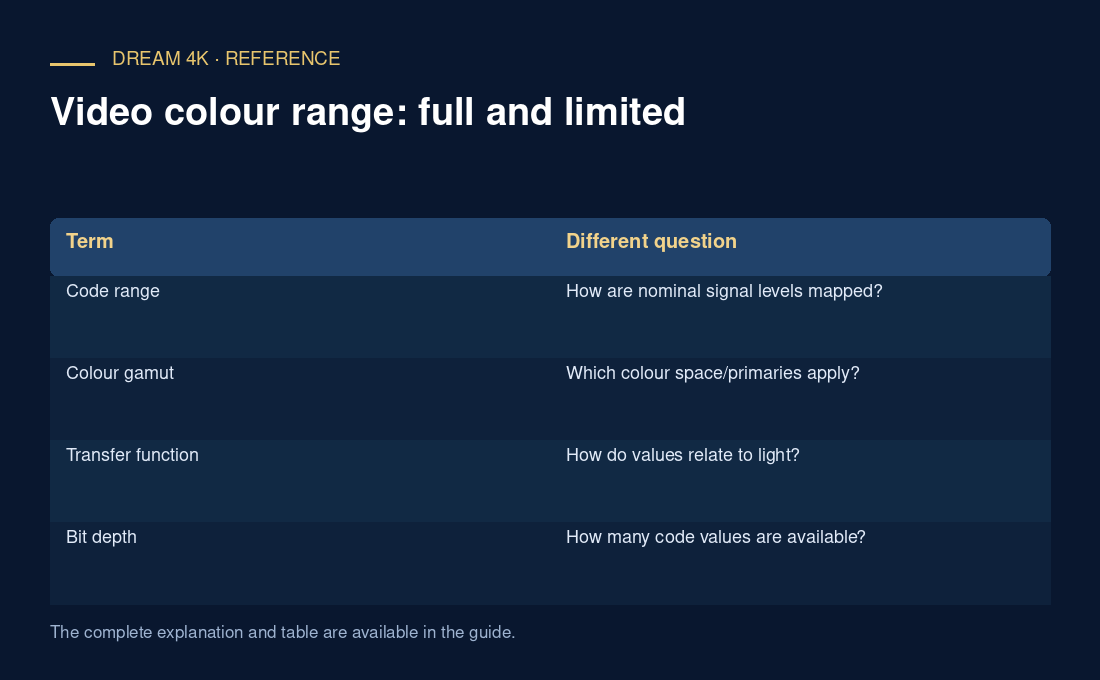
Colour gamut concerns representable colour primaries/range in another sense; transfer characteristics concern code values and light; bit depth concerns precision. The everyday word range can therefore hide different technical attributes. Record the exact setting and signal type.
| Term | Different question |
|---|---|
| Code range | How are nominal signal levels mapped? |
| Colour gamut | Which colour space/primaries apply? |
| Transfer function | How do values relate to light? |
| Bit depth | How many code values are available? |
| Output format | Which representation is sent through the connection? |
Use a matched documented path
Follow exact-device guidance for automatic or manual output and receiving settings. Apple explicitly says its RGB output choices should be matched to the television’s settings. Do not switch both ends blindly and judge from one uncertain programme.
A known permitted test pattern can help identify elevated blacks or clipping, but its source and intended interpretation must be established. Preserve original settings and report the signal path rather than promising one global range choice for every app and display.