
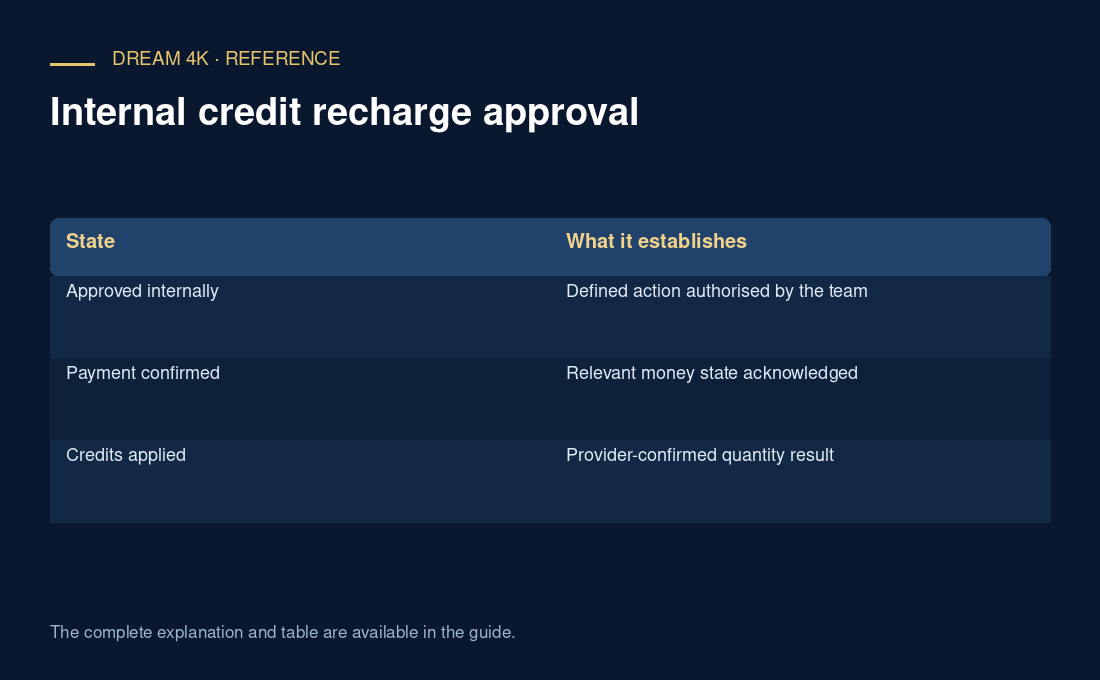
Approve a defined credit recharge
Put the target account, quantity, currency and total in front of the person authorising an internal recharge.
Read the guideWork through credit arithmetic, customer records, handovers and operational decisions.

38 guides in this collection.
Put the target account, quantity, currency and total in front of the person authorising an internal recharge.
Read the guide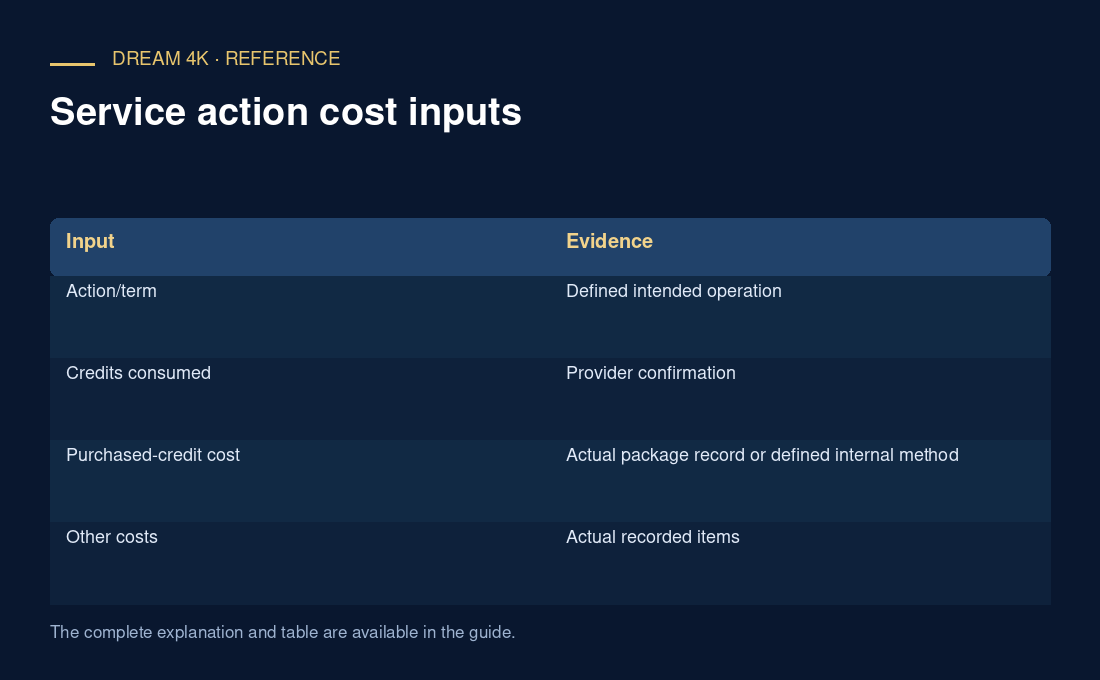
Keep confirmed consumption, purchased-credit cost and actual additional costs as separate inputs.
Read the guide
Combine differently priced credit purchases without averaging package rates incorrectly.
Read the guide
Compare package arithmetic on the same credit quantity without inventing a subscription conversion.
Read the guide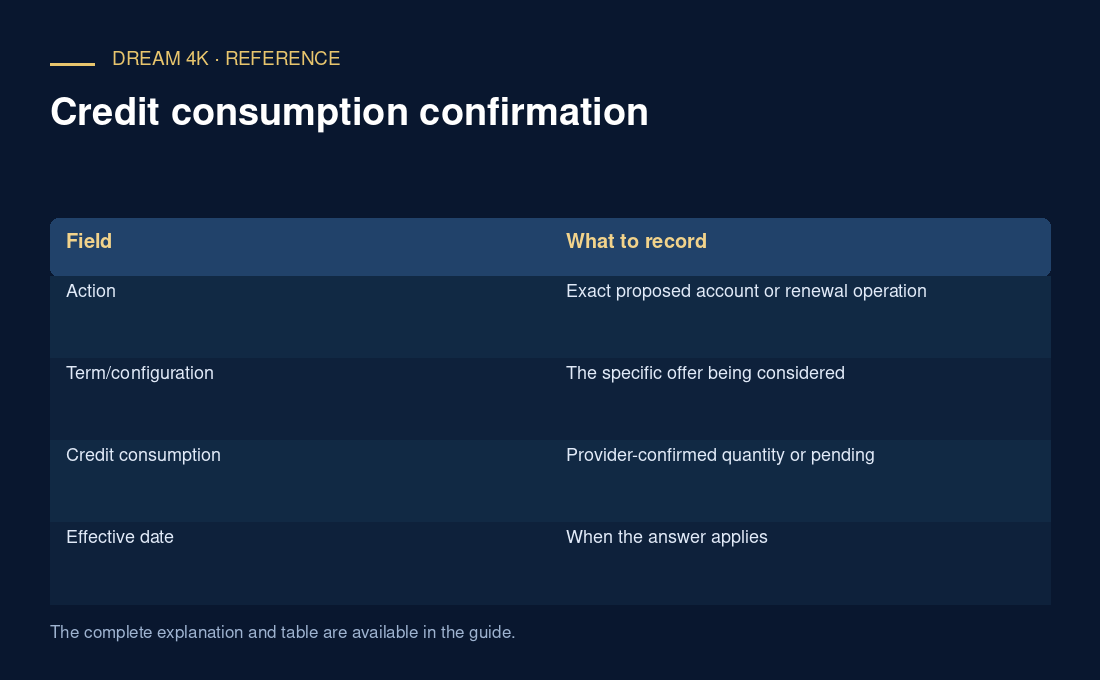
Ask for the missing mapping between credit quantity and the exact account action you intend to sell or perform.
Read the guide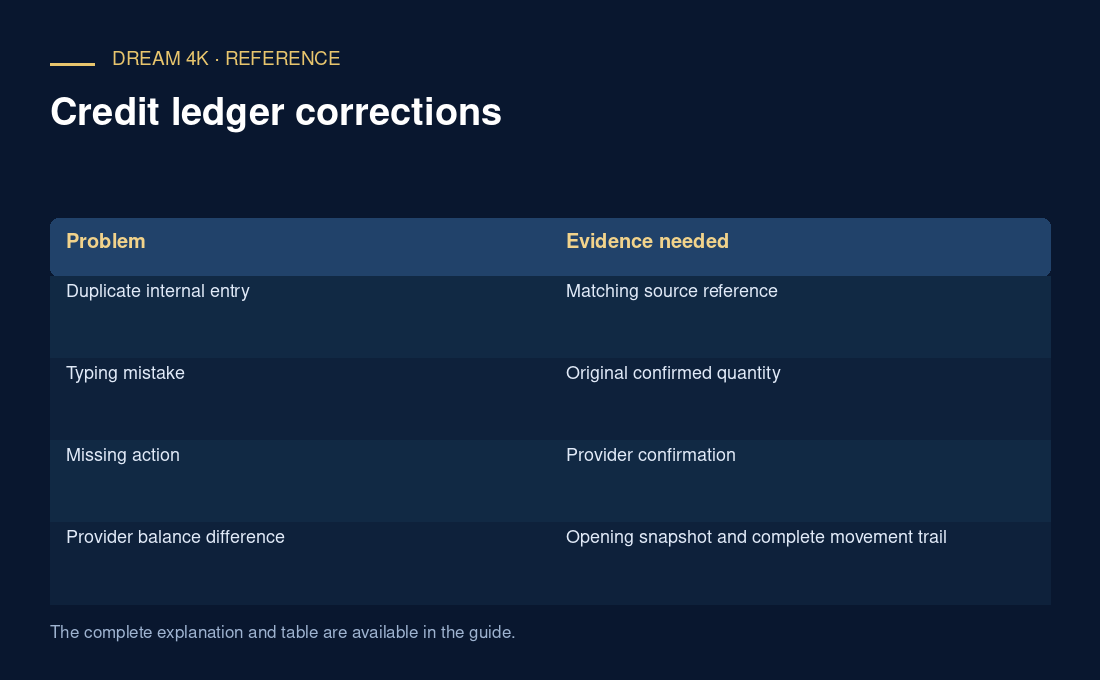
Preserve the explanation when an internal credit record needs a confirmed correction.
Read the guide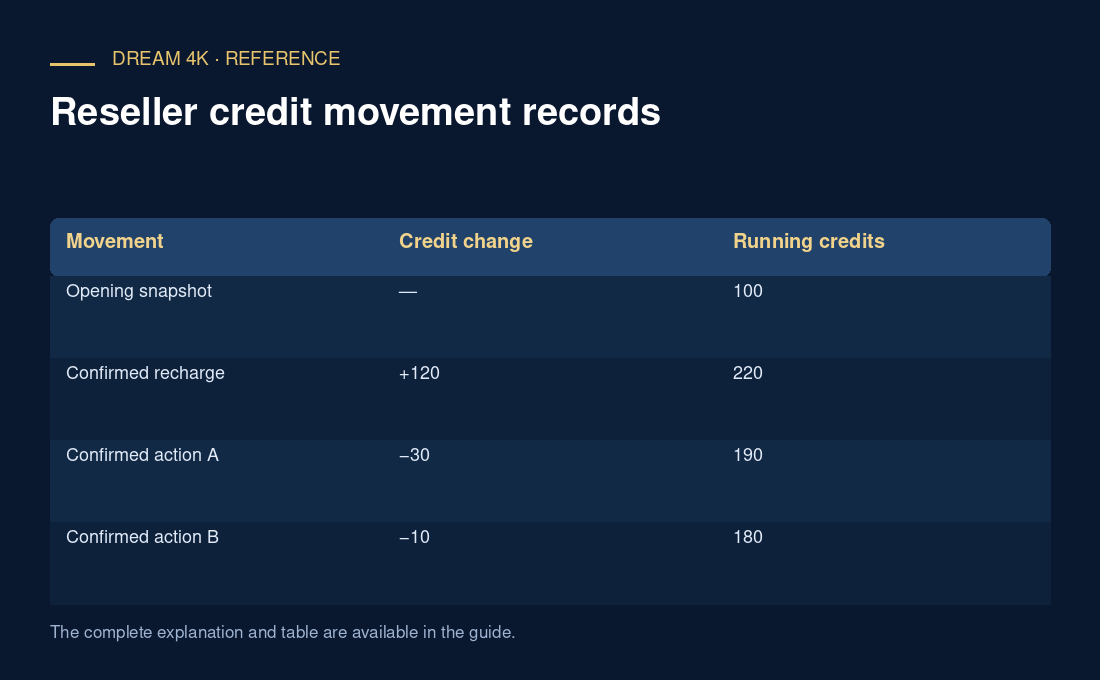
Track confirmed credits in, credits out and adjustments without treating cash as credit quantity.
Read the guide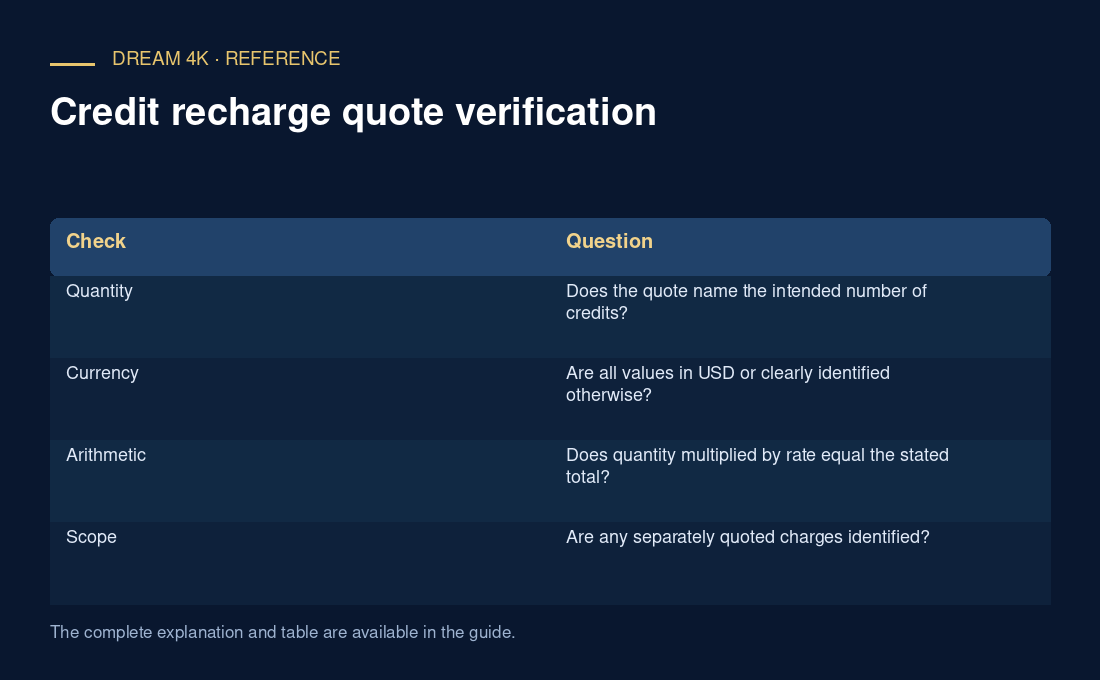
Verify quantity, rate, currency and full total before approving a recharge request.
Read the guide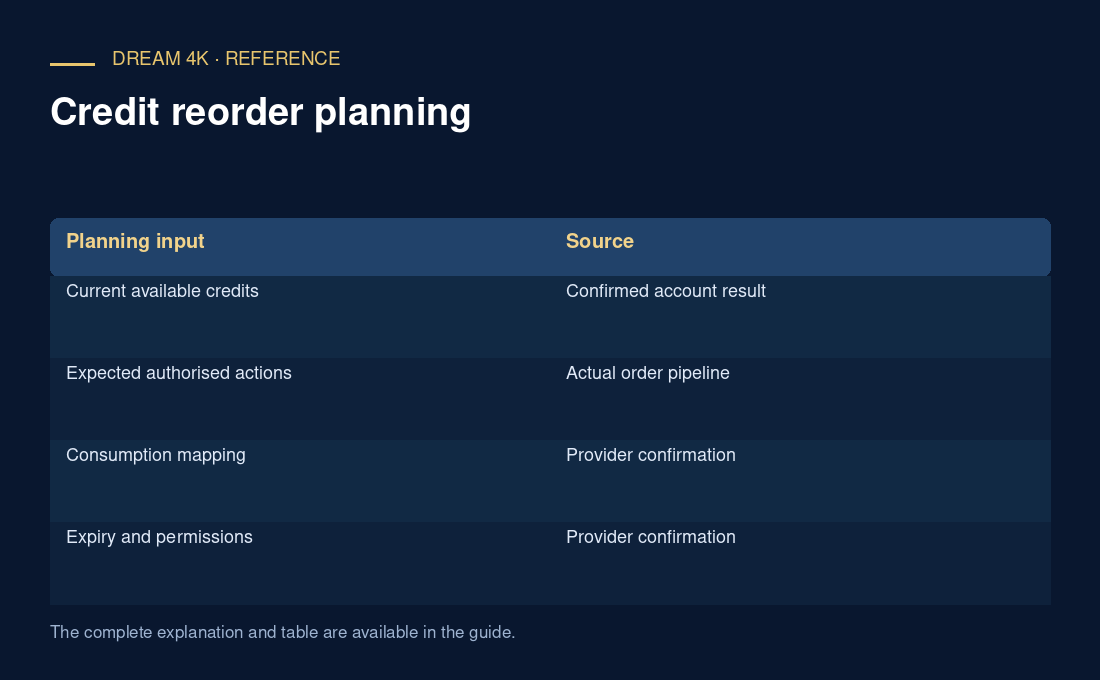
Use actual consumption history and provider answers before deciding when to buy more credits.
Read the guide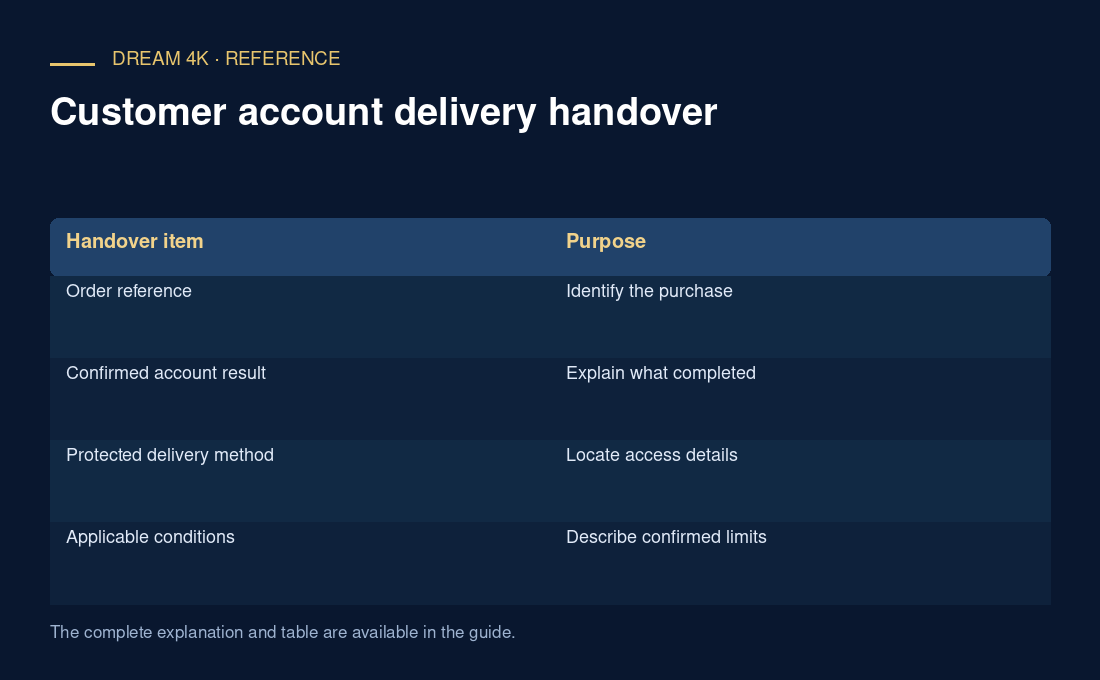
Explain the purchased item, account identity and support route without overclaiming service conditions.
Read the guide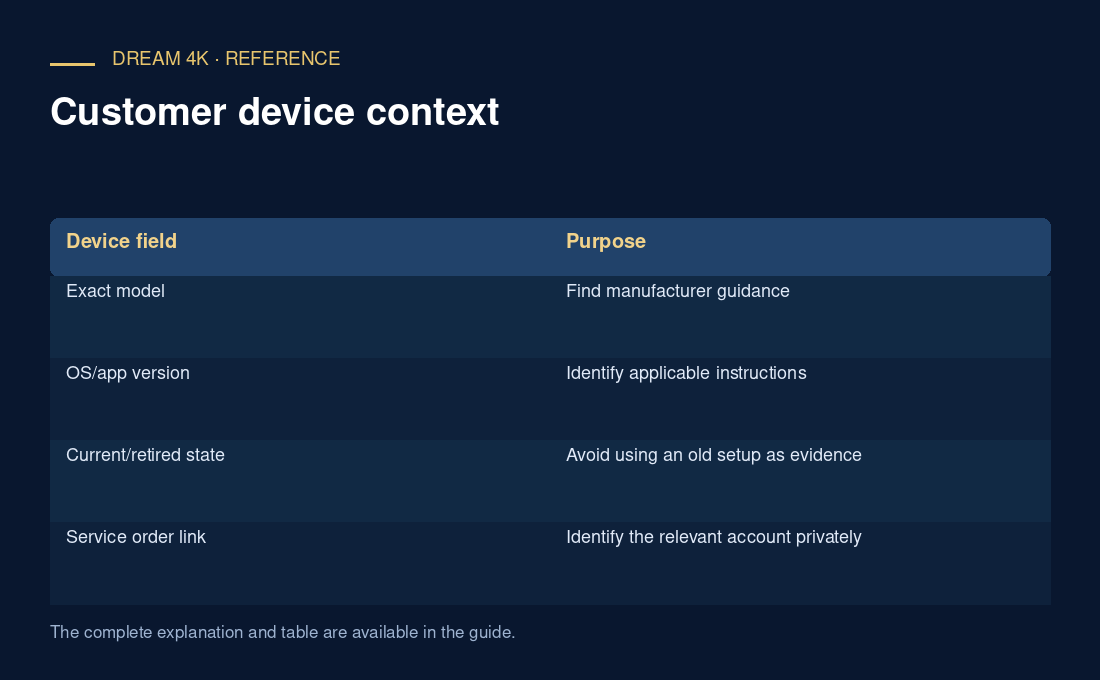
Record the device facts that change support guidance without treating an inventory as a connection allowance.
Read the guide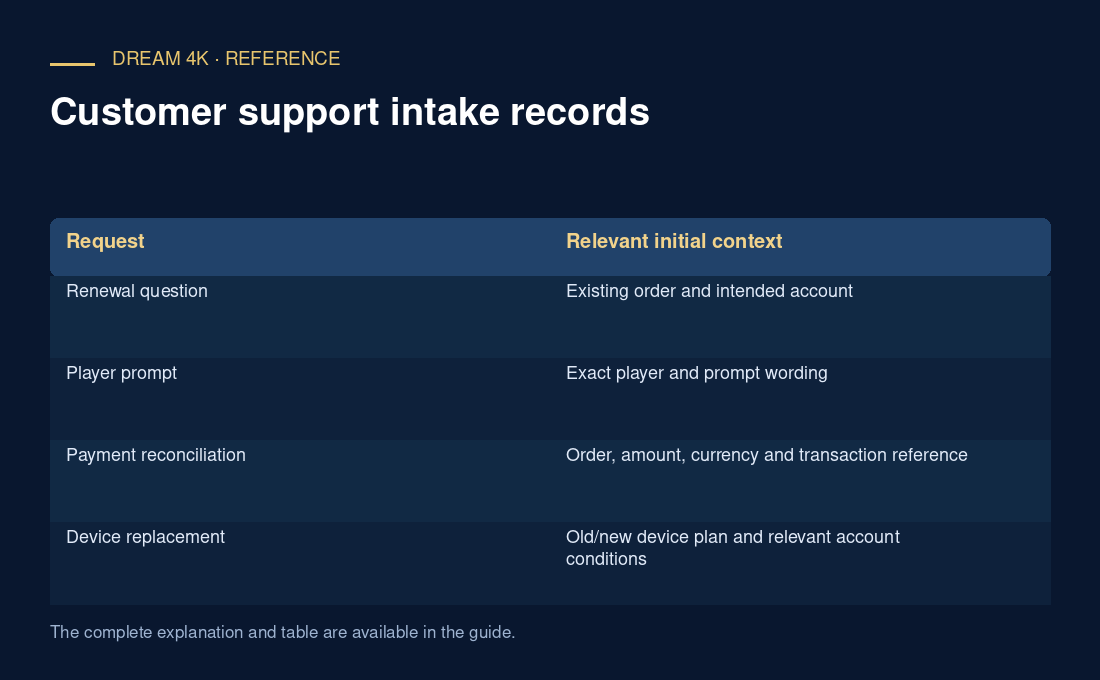
Collect the minimum order context needed to route a support or fulfilment request.
Read the guide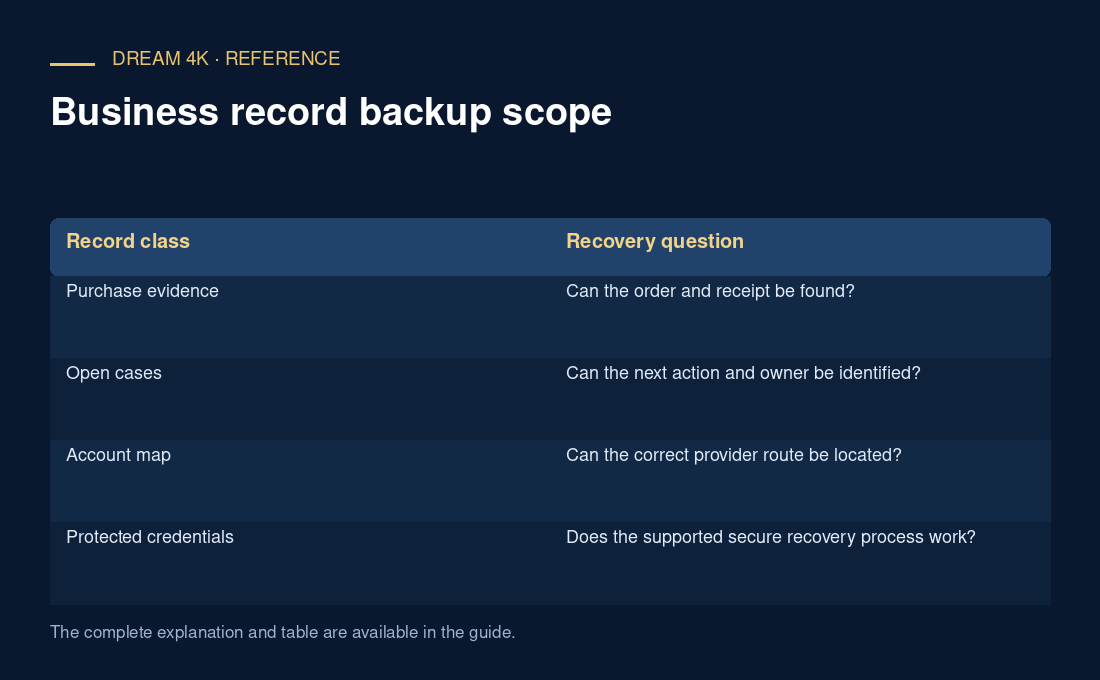
Identify the records needed for continuity without preserving unnecessary secret copies.
Read the guide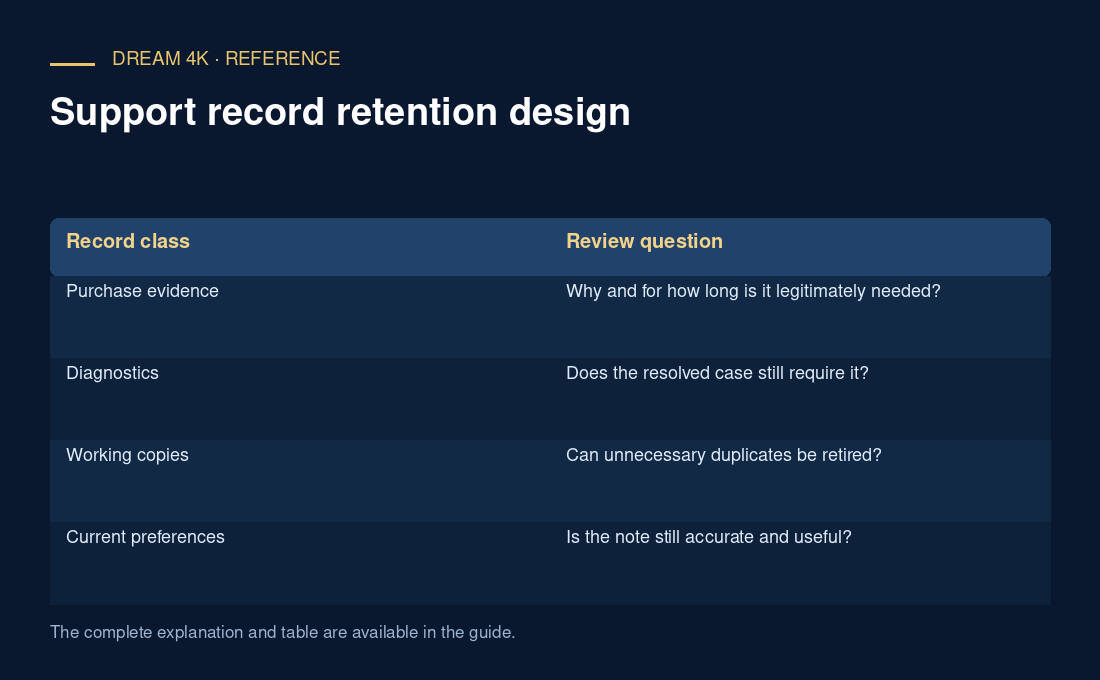
Decide why each record remains useful before setting an actual retention and disposal process.
Read the guide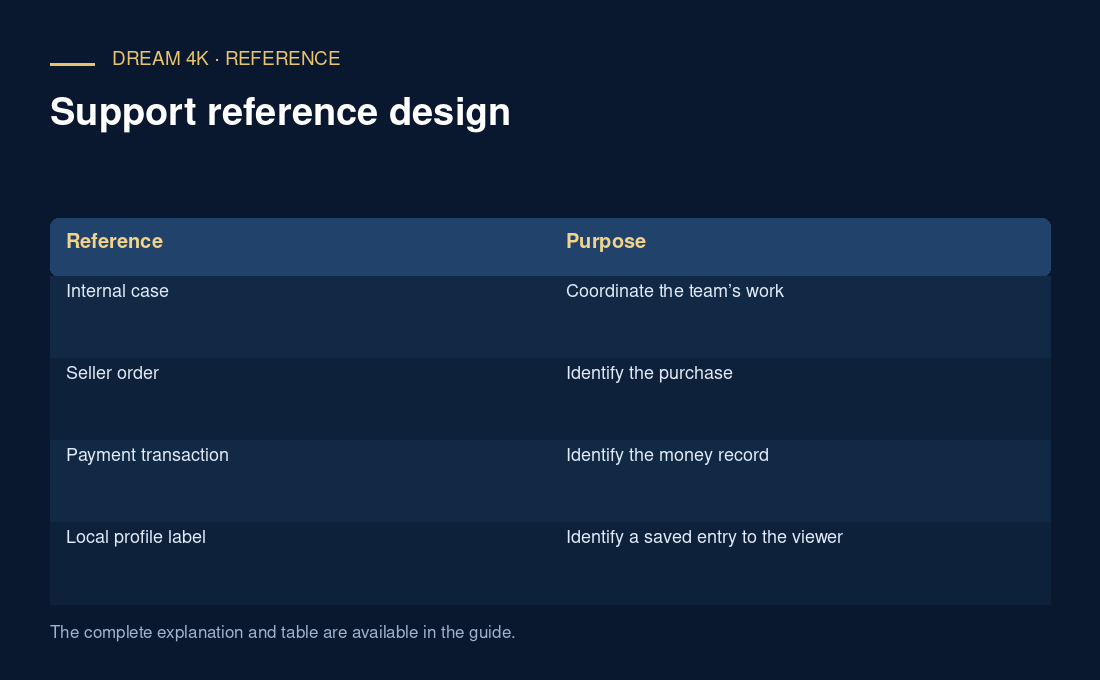
Use internal case identifiers that help trace work without embedding account secrets or unnecessary personal information.
Read the guide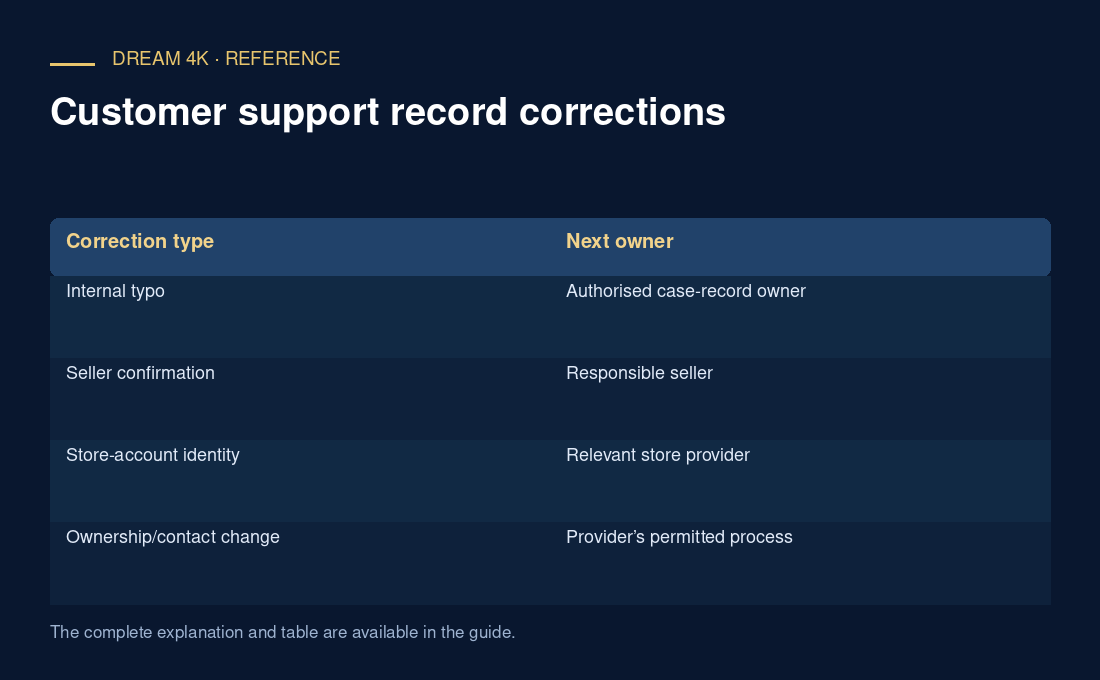
Route a factual record correction to the right owner while preserving the original order evidence.
Read the guide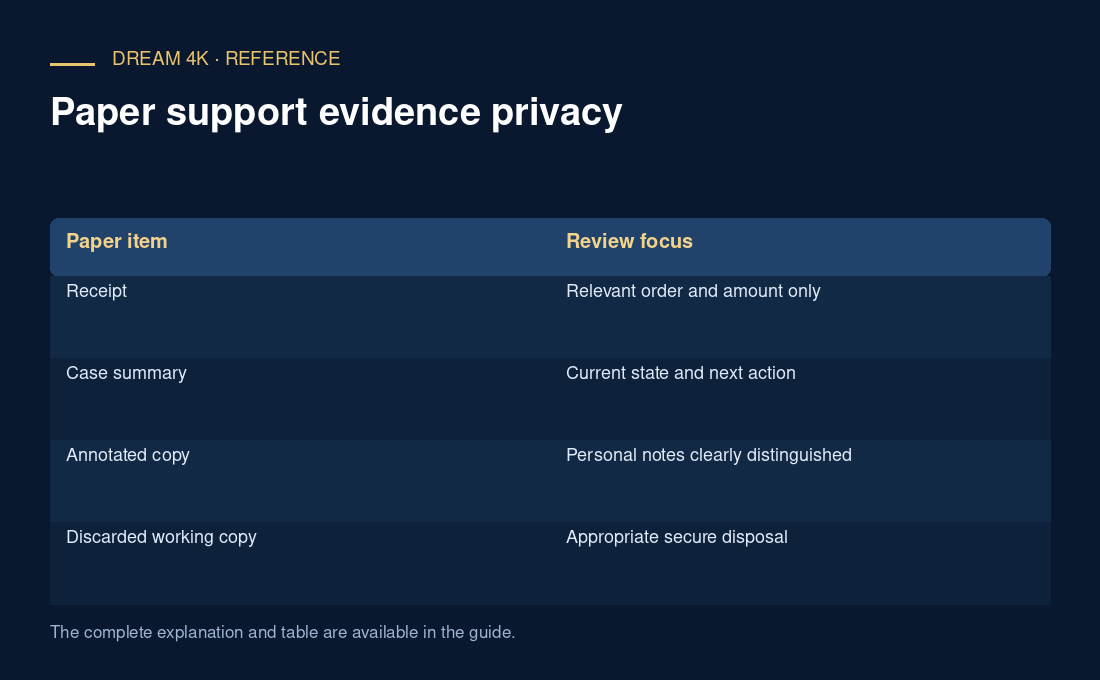
Protect paper receipts and case notes with the same purpose and access discipline as digital records.
Read the guide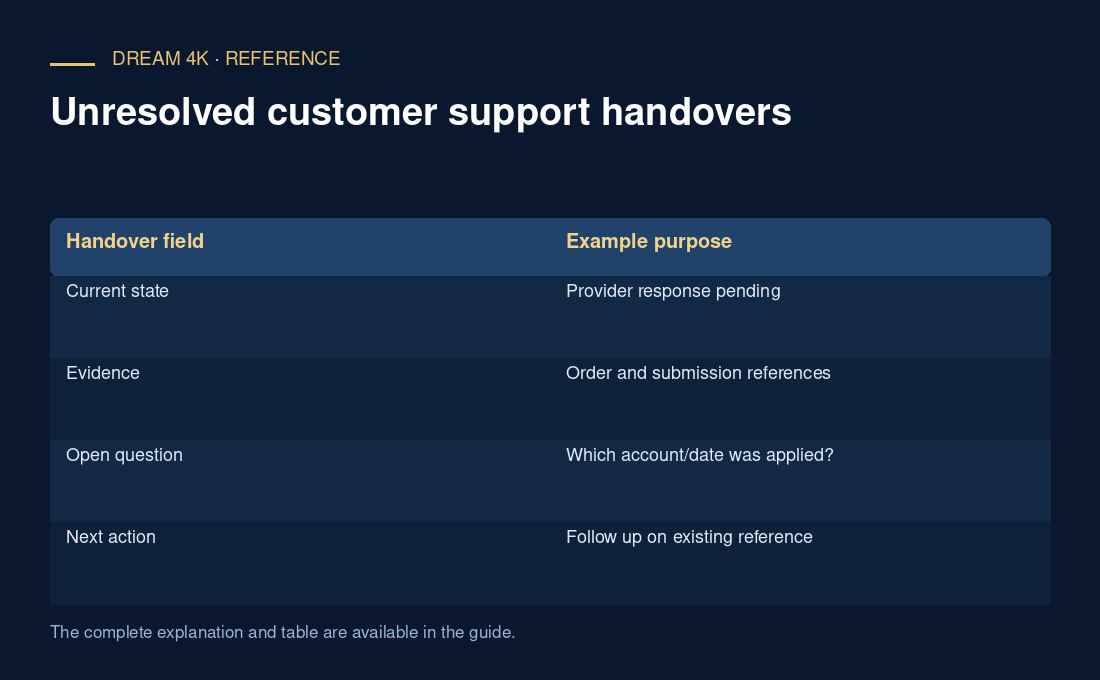
Give the next agent a concise evidence summary and one clear next action.
Read the guide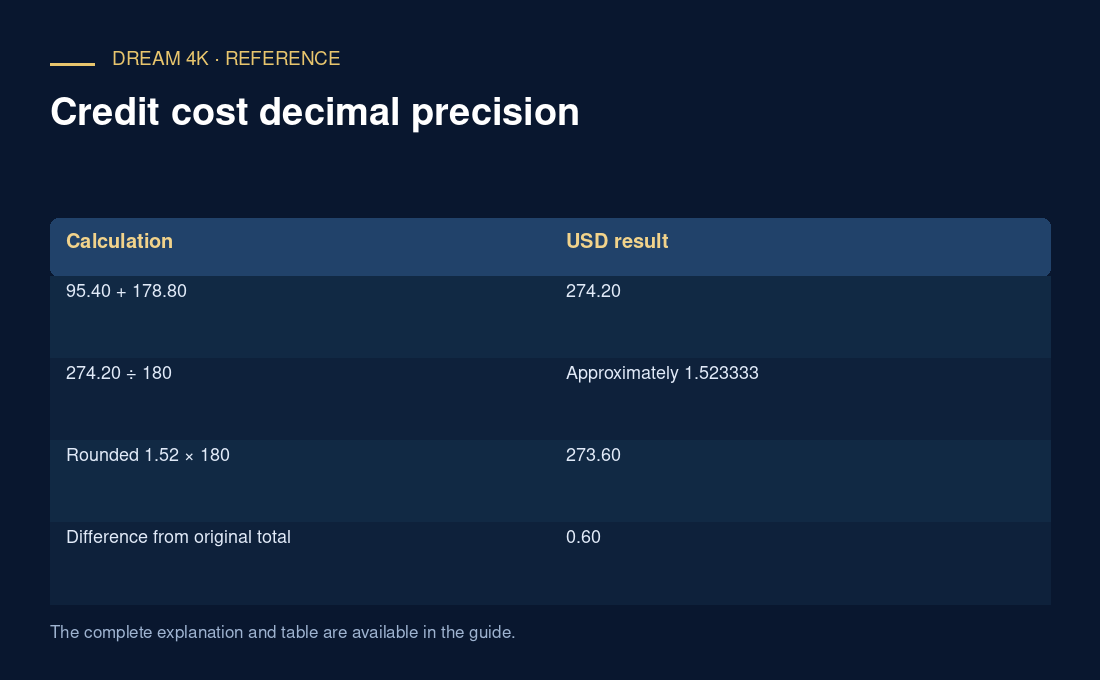
Preserve exact package totals and label rounded averages so calculations remain reproducible.
Read the guide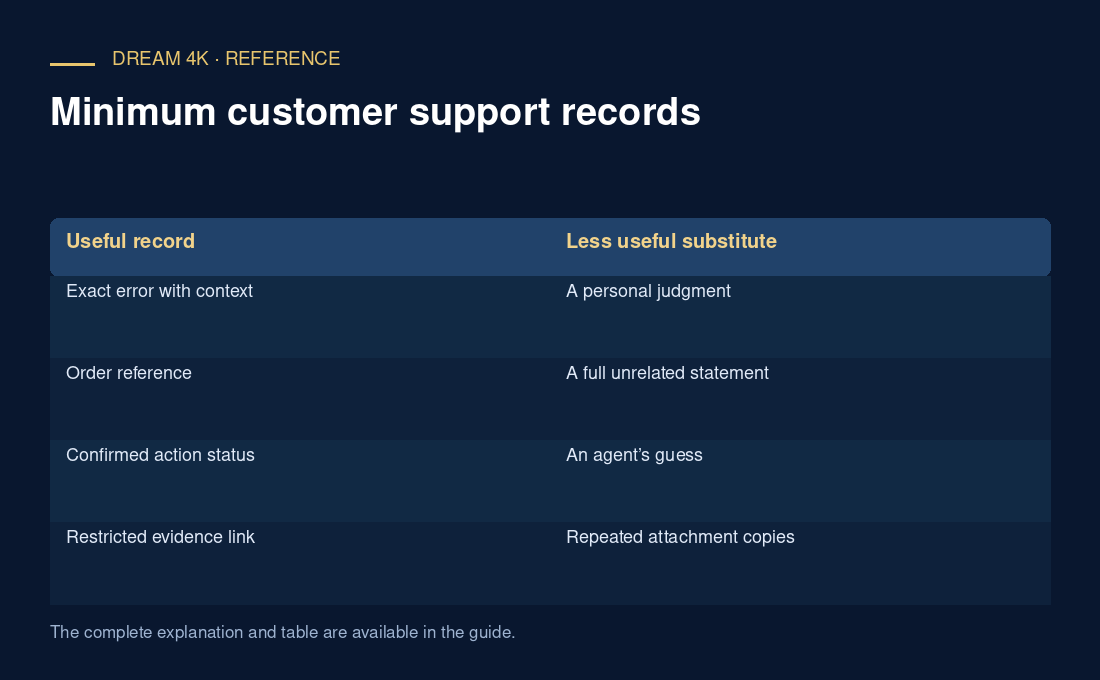
Keep a case useful while limiting personal information and secret exposure.
Read the guide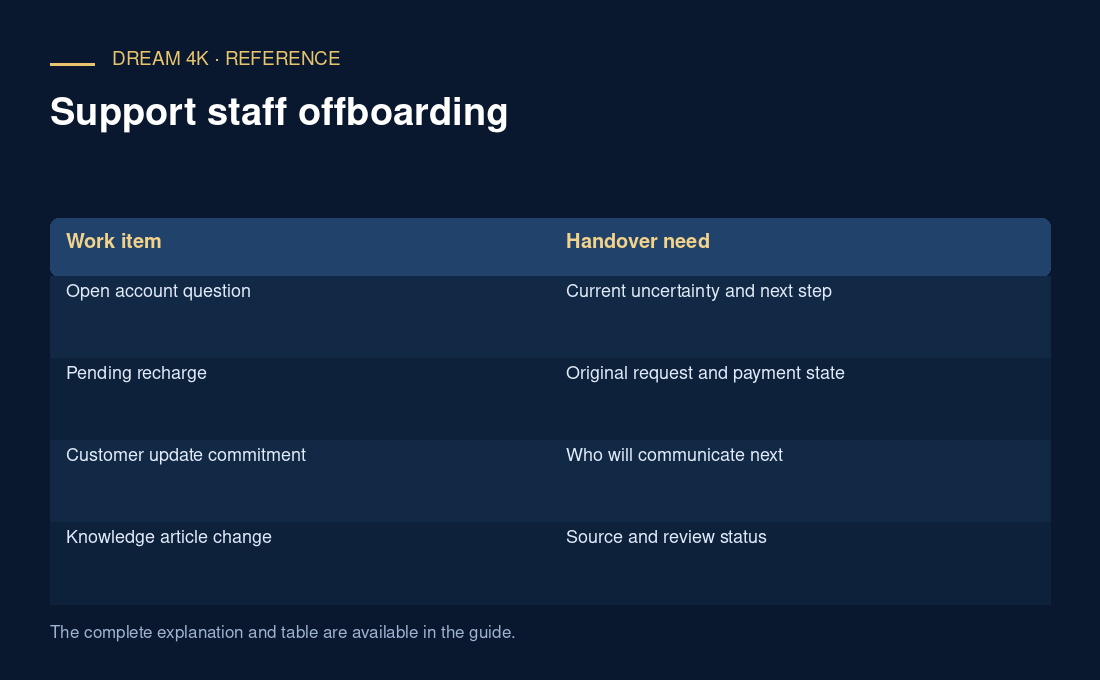
Transfer active work and review access when a colleague no longer has the same support responsibility.
Read the guide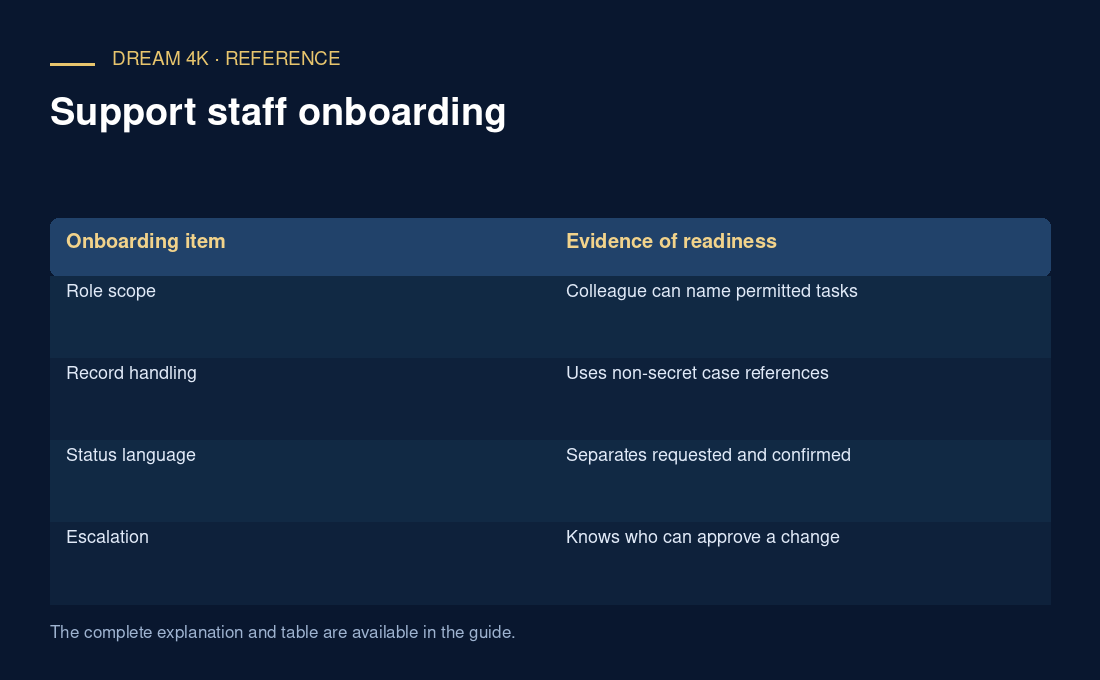
Give a new colleague the knowledge, limited access and escalation route needed for the assigned tasks.
Read the guide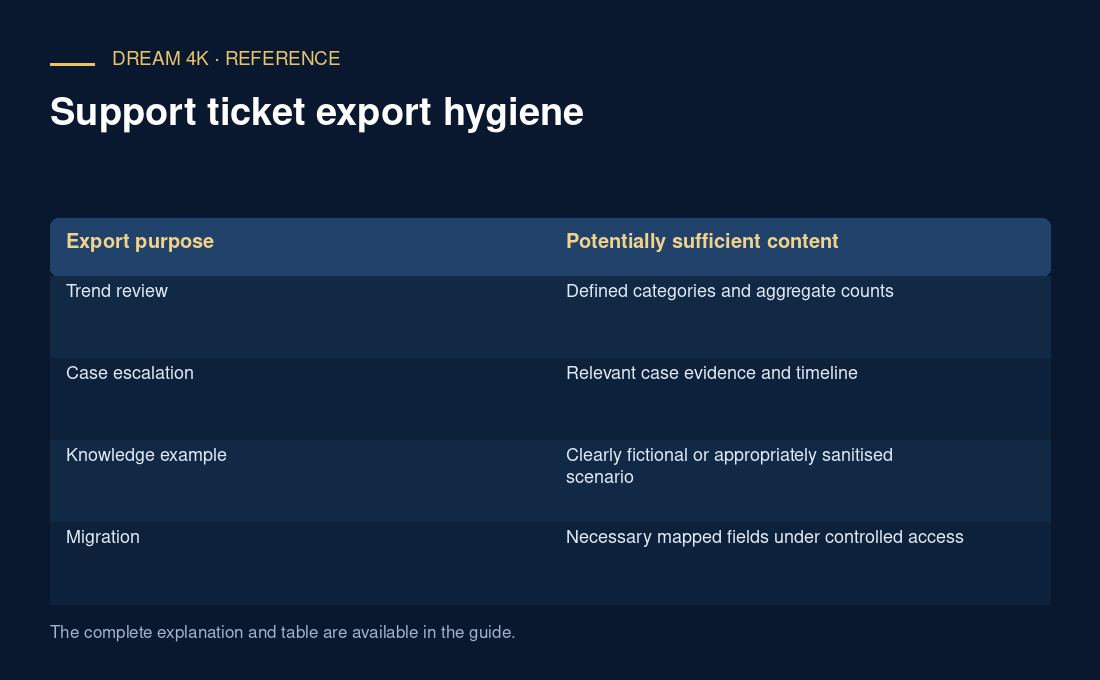
Review purpose, audience and sensitive fields before moving case records into another tool.
Read the guide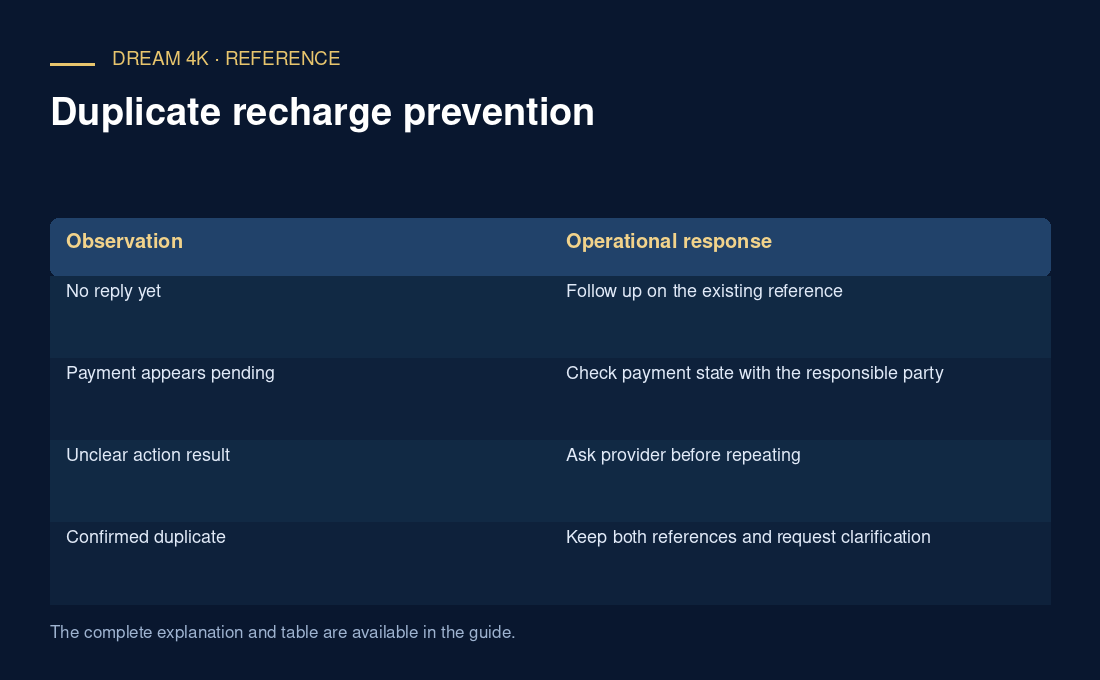
Use one request reference and explicit states when a payment or credit action may already be in progress.
Read the guide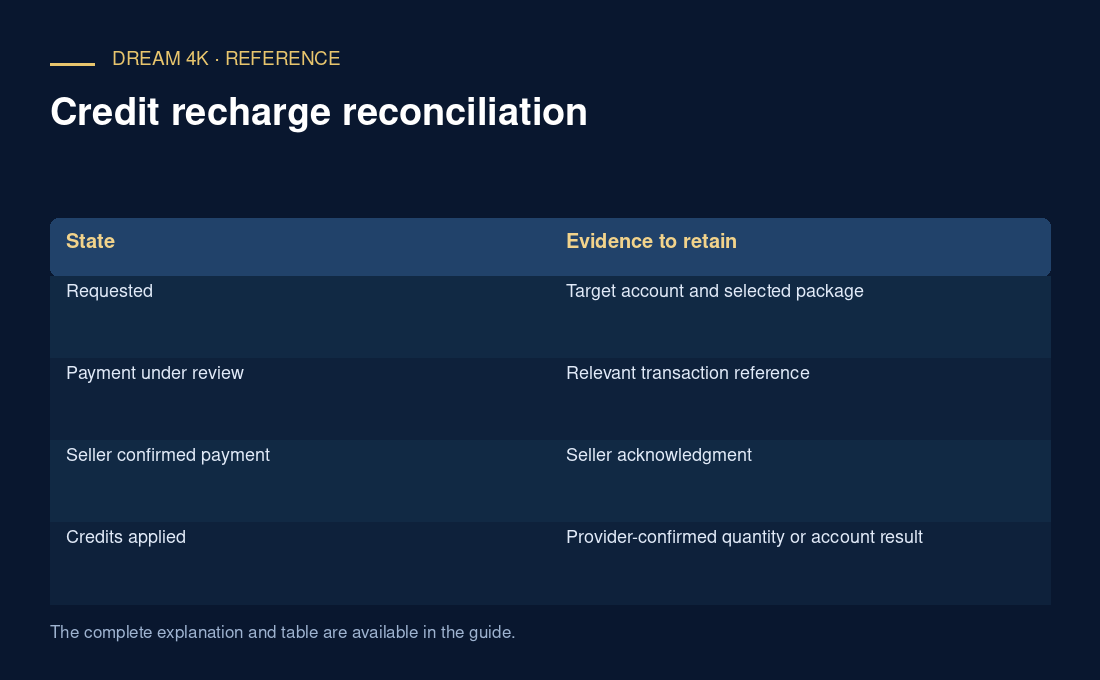
Bring payment evidence, recharge request and resulting balance into one traceable case.
Read the guide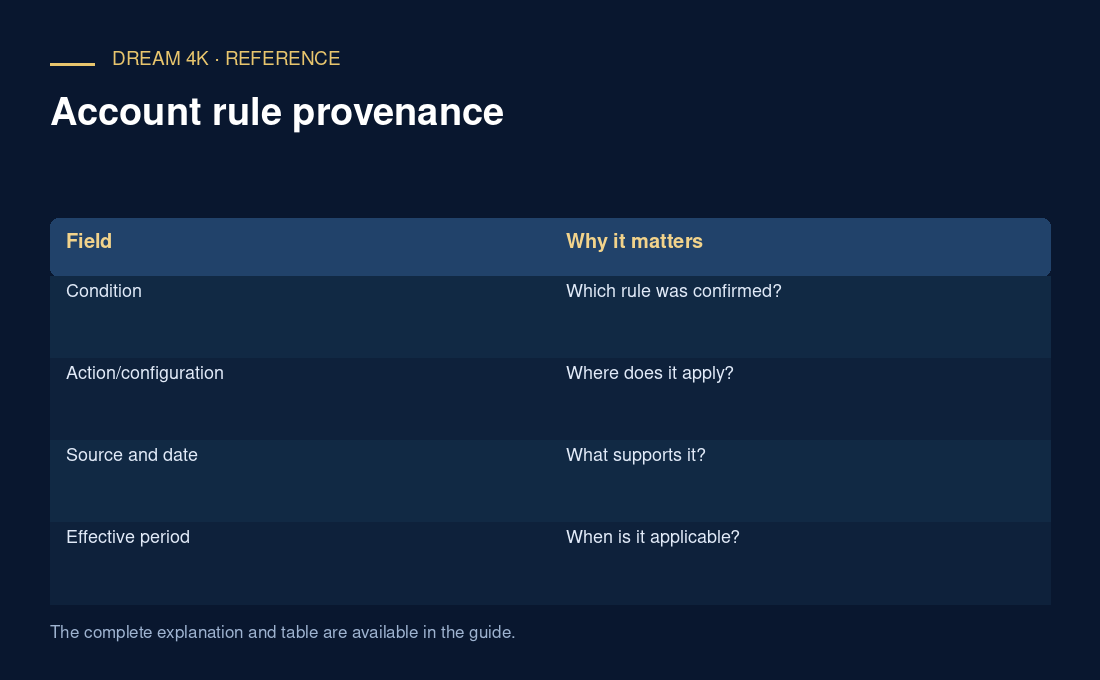
Keep provider-confirmed rules tied to the action and period they actually describe.
Read the guide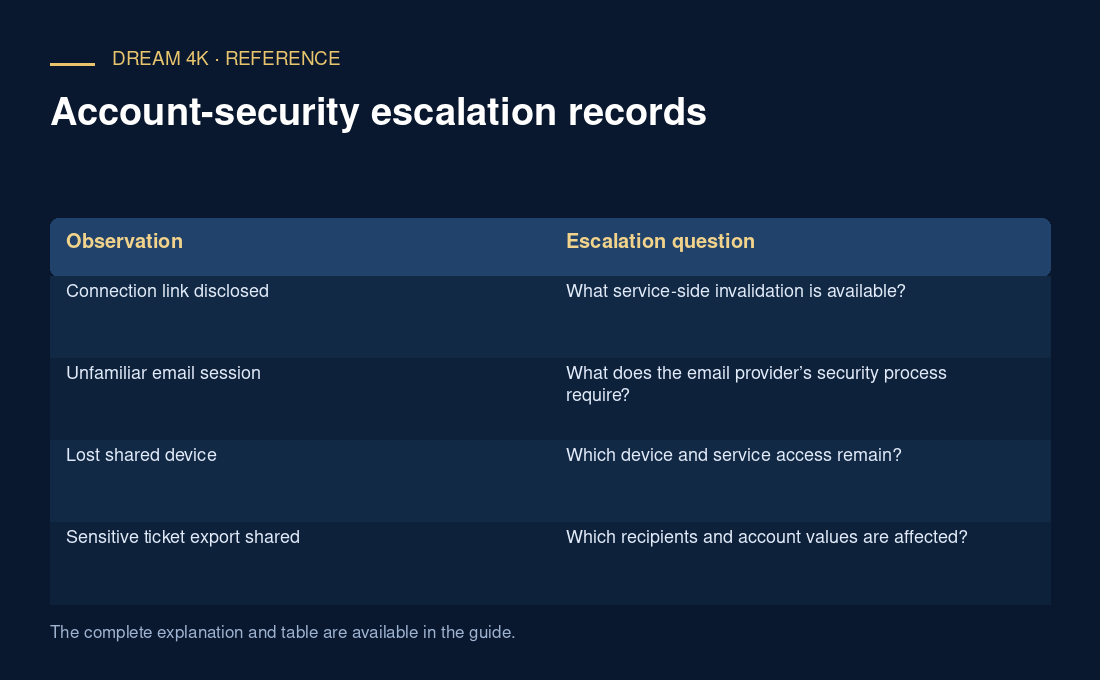
Give the responsible specialist or provider the exposure facts and containment question without spreading the secret.
Read the guide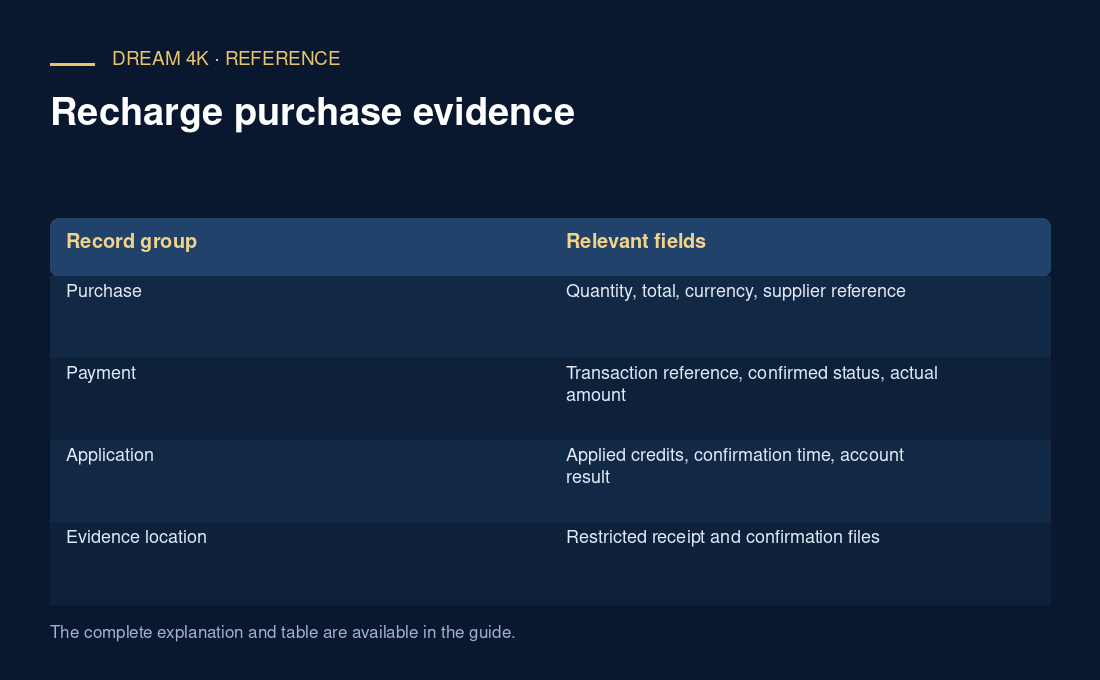
Keep money evidence and credit-application evidence connected while protecting payment information.
Read the guide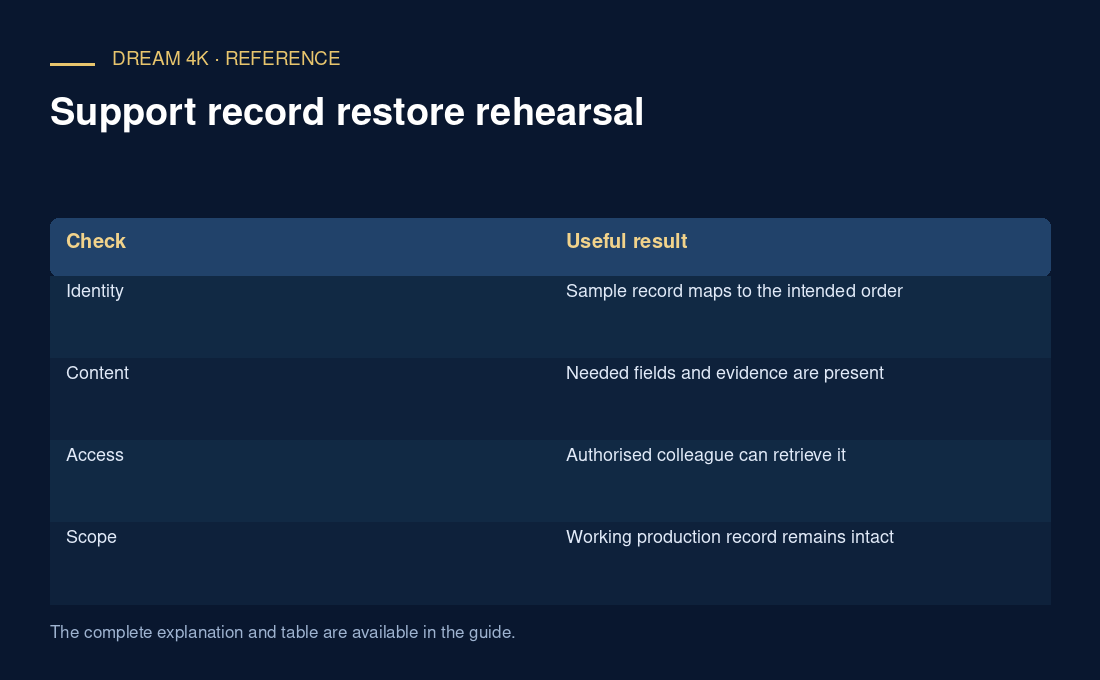
Use a clearly authorised sample to learn whether a backup can restore the information needed for work.
Read the guide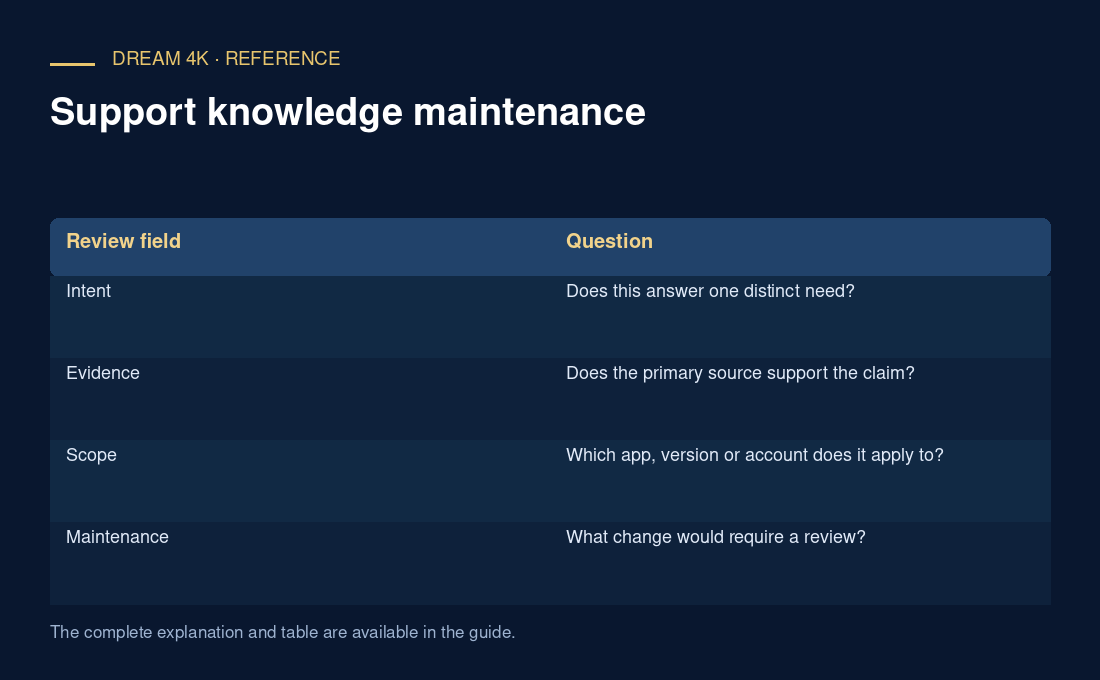
Keep help instructions tied to a distinct task, current primary evidence and a clear maintenance trigger.
Read the guide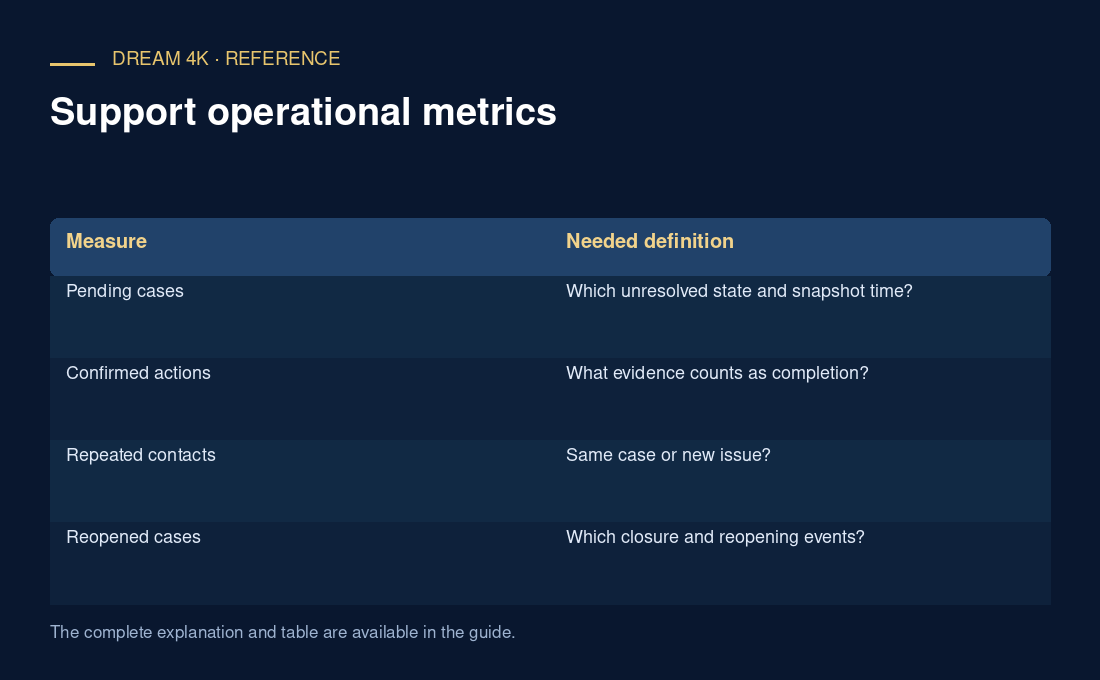
Use clearly defined operational measures without turning case counts into unsupported performance claims.
Read the guide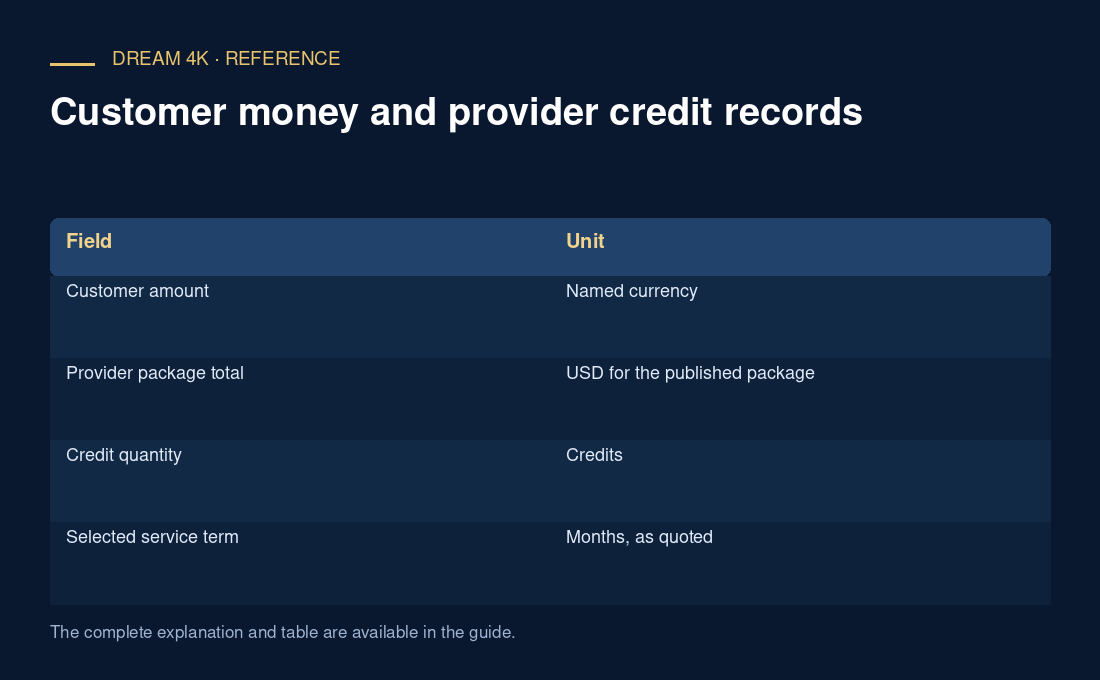
Keep customer payments, provider credit purchases and account actions in different ledger fields.
Read the guide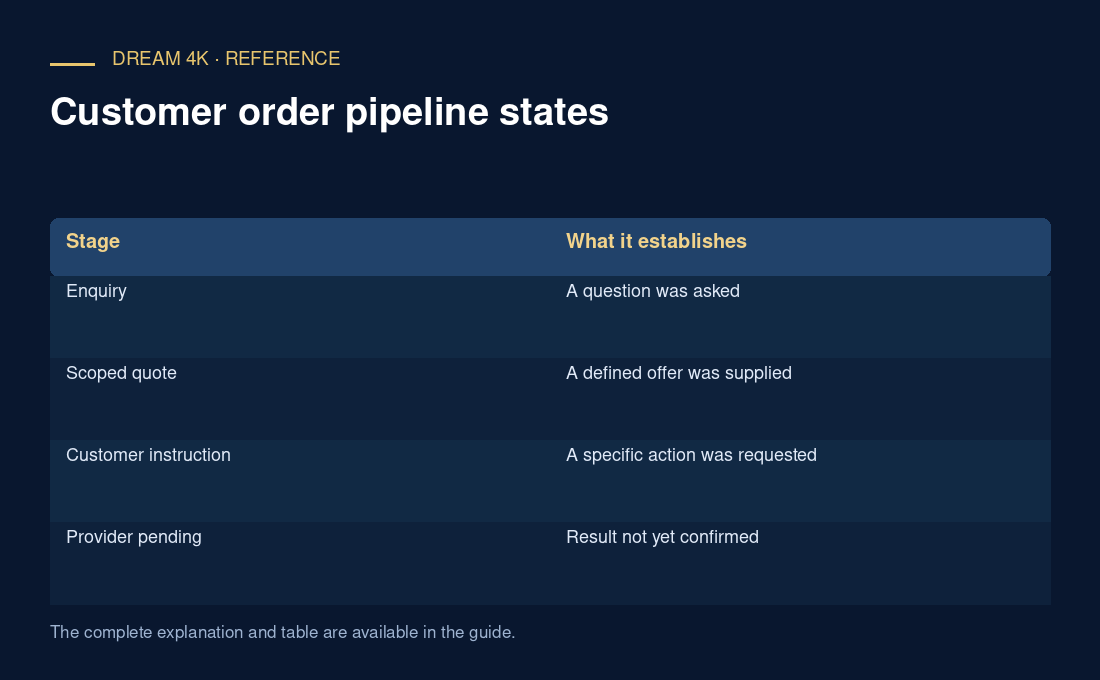
Review enquiries, approved orders and completed actions as different planning states.
Read the guide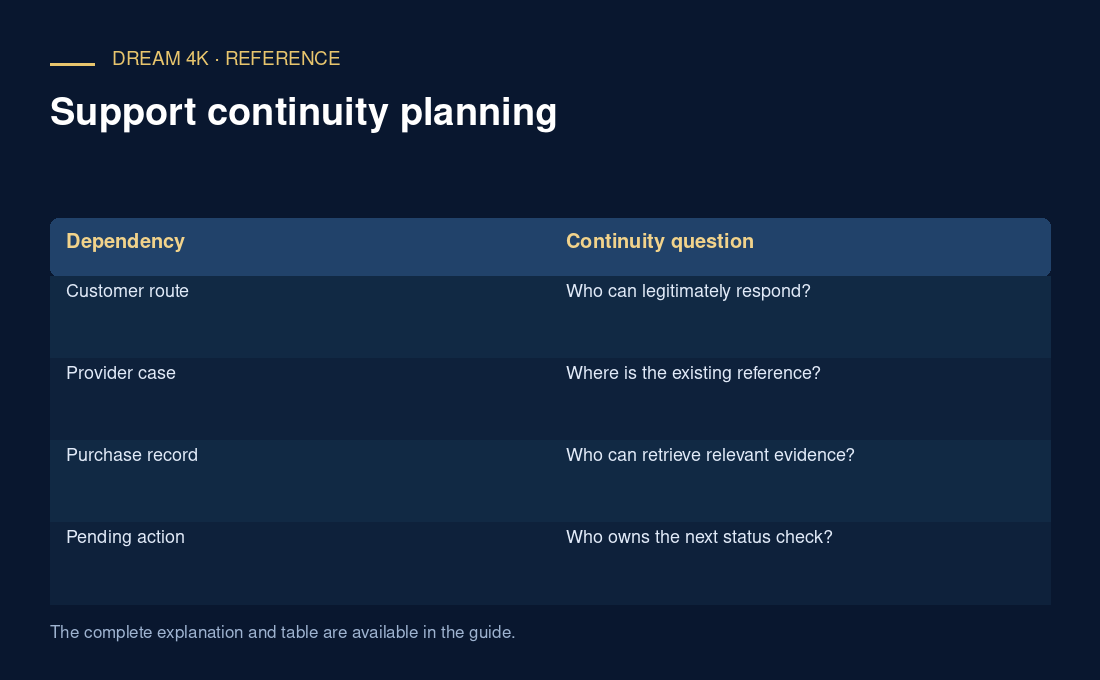
Keep active cases and legitimate business records reachable when the usual agent is unavailable.
Read the guide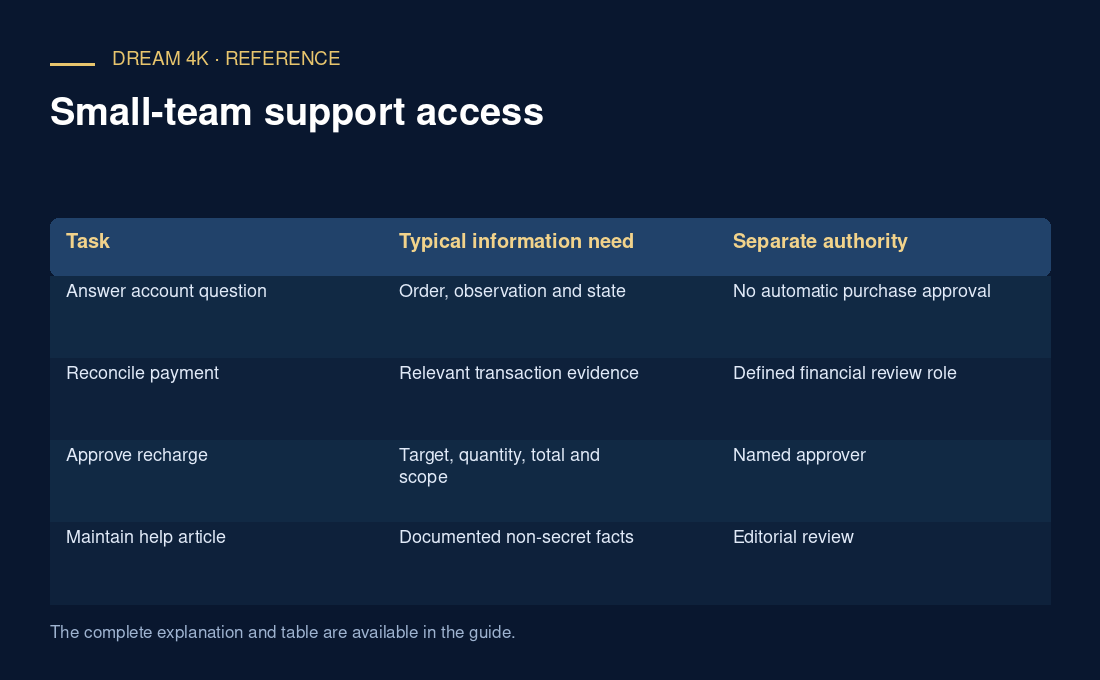
Match access to actual tasks rather than giving every colleague every receipt and credential.
Read the guide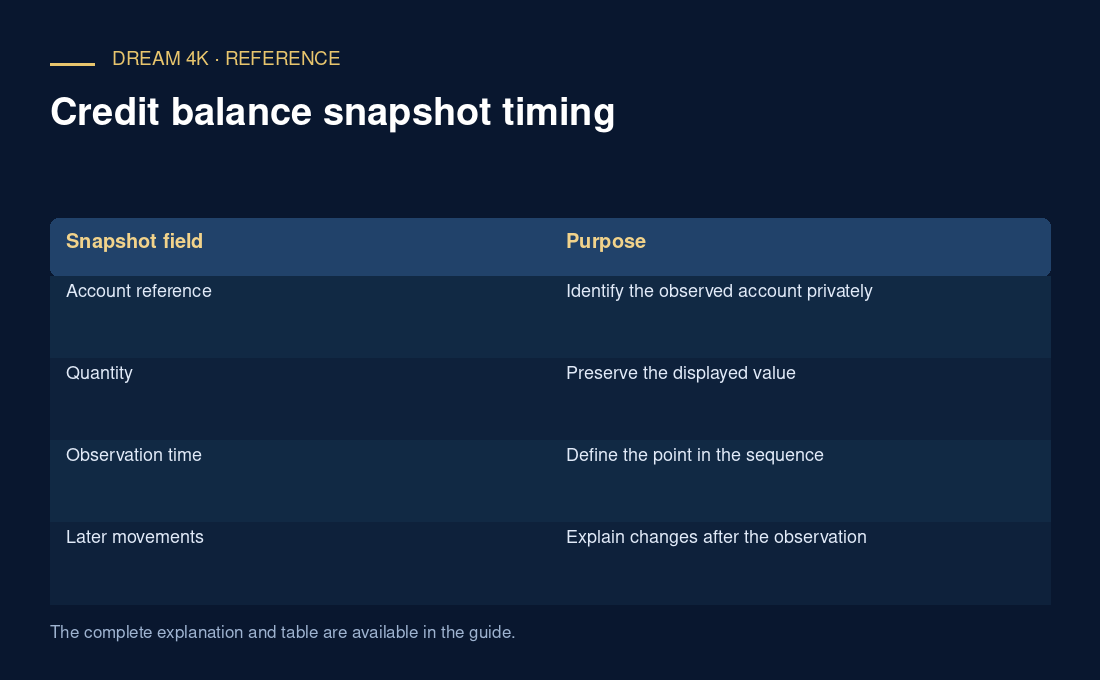
Keep a balance observation tied to its time and intervening confirmed movements.
Read the guide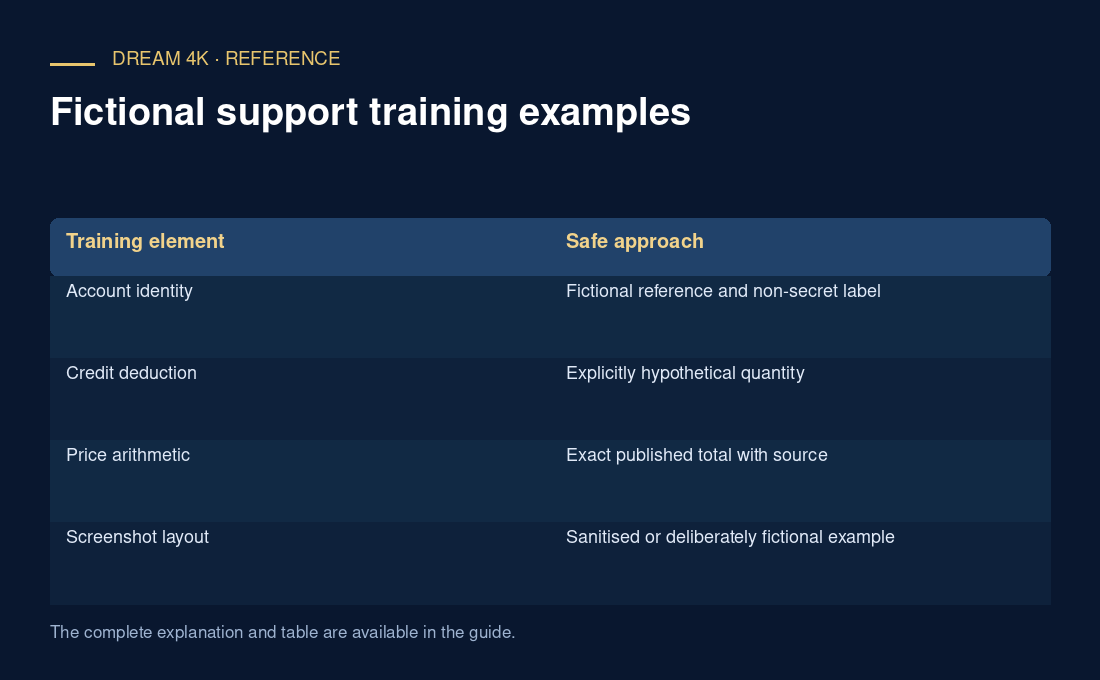
Teach account and payment workflows without exposing real customer access material.
Read the guide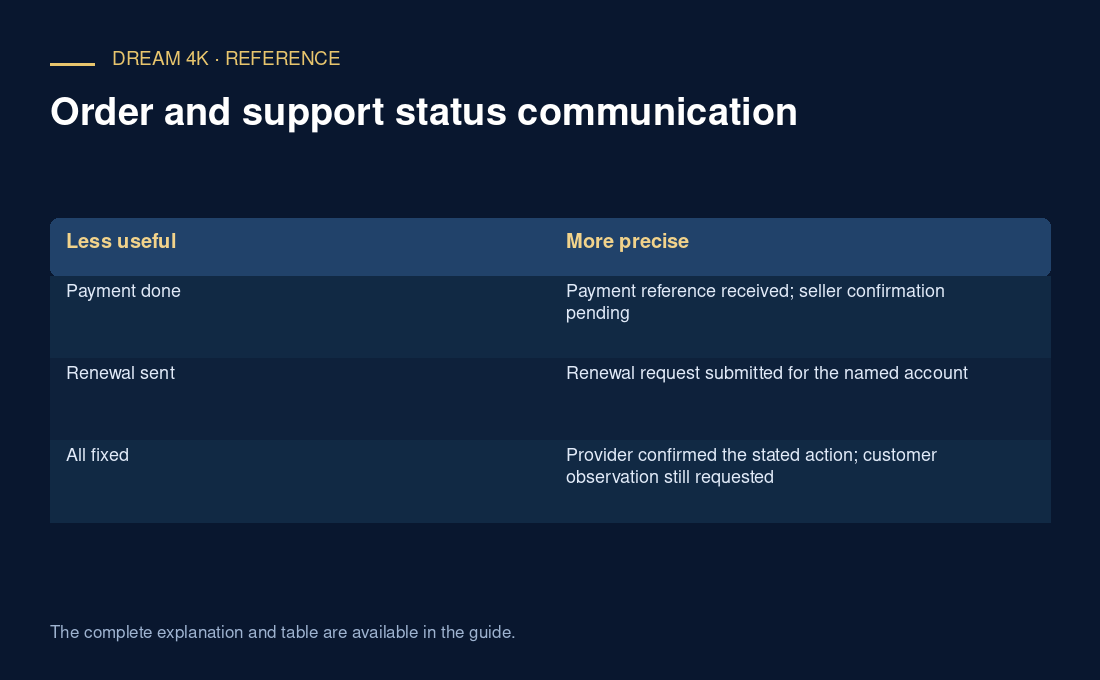
Use evidence-based status language for customer orders, payment checks and provider actions.
Read the guide