
In this guide
Identify the error typeRecord the correction and reasonSeparate provider adjustmentsReview downstream effectsA wrong number in a credit ledger should be corrected without hiding why the old balance changed. Keep the provider’s actual result separate from an internal entry mistake. A transparent correction lets the next reviewer reproduce the balance rather than trust an unexplained final number.
Identify the error type
Check whether the issue is a duplicate internal row, a transposed quantity, a missing confirmed movement or an unresolved provider action. These problems need different responses. Do not label a provider action incorrect merely because the internal sheet differs; first compare the source references and states.
Record the correction and reason
For a hypothetical internal mistake, an agent entered a 120-credit recharge twice. The internal ledger would be overstated by 120 credits. Keep the original entries, add an explained correction or mark the duplicate excluded according to the record’s design, and point to the same recharge reference. This example does not describe a provider credit reversal.
Separate provider adjustments
If the provider confirms an adjustment, record its actual quantity, date and reference as a distinct movement. Do not fabricate an adjustment to make an internal sheet agree. If the provider’s result remains unclear, leave the discrepancy open and ask for reconciliation.
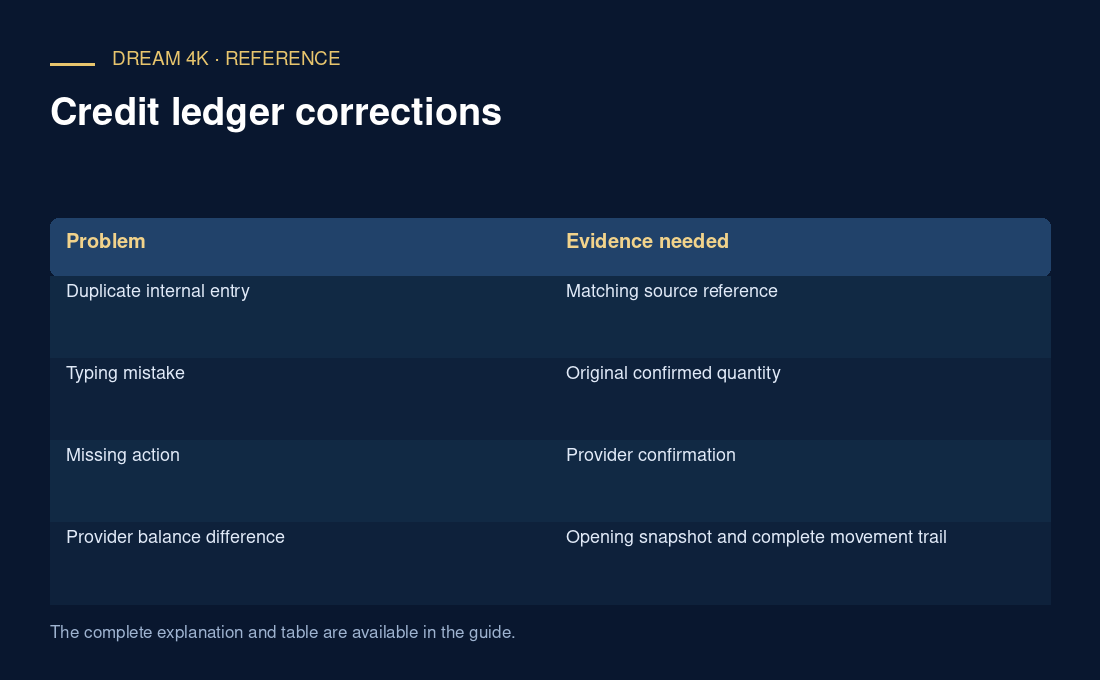
| Problem | Evidence needed |
|---|---|
| Duplicate internal entry | Matching source reference |
| Typing mistake | Original confirmed quantity |
| Missing action | Provider confirmation |
| Provider balance difference | Opening snapshot and complete movement trail |
Review downstream effects
Check whether the error affected a reorder decision, customer quote or other internal calculation. Correct those records with a clear note where necessary. The aim is to stop the mistake spreading without silently rewriting the case history. This is an operational record procedure, not a mandated accounting or audit standard.
Questions about this guide
Should I remove a row just because the final total then matches?
No. Establish which movement is wrong and why. Matching totals can conceal two offsetting mistakes. Keep a source-based explanation so a later reviewer can tell whether the correction reflects an internal error or a confirmed provider-side change.