
In this guide
Use scoped variablesDocument each inputDo not turn the worksheet into a promiseReview before reusing itAn internal cost worksheet should make missing inputs visible. A package unit rate is only one input to an account action’s direct credit cost. Before calculating a result, confirm the exact action’s credit consumption and define which actual costs the worksheet includes.
Use scoped variables
Let c be the confirmed credits consumed for the exact permitted action and r be the relevant internal purchased-credit cost. Direct credit cost is c × r. Other actual costs can be listed separately. If c is unknown, leave the result pending rather than inserting a familiar convention from another provider.
Document each input
Record the action, selected term, relevant configuration, source, effective date and value. A current provider answer for a new account may not describe a renewal or correction. A historic package receipt should retain its actual purchase amount rather than being rewritten to the newest public rate.
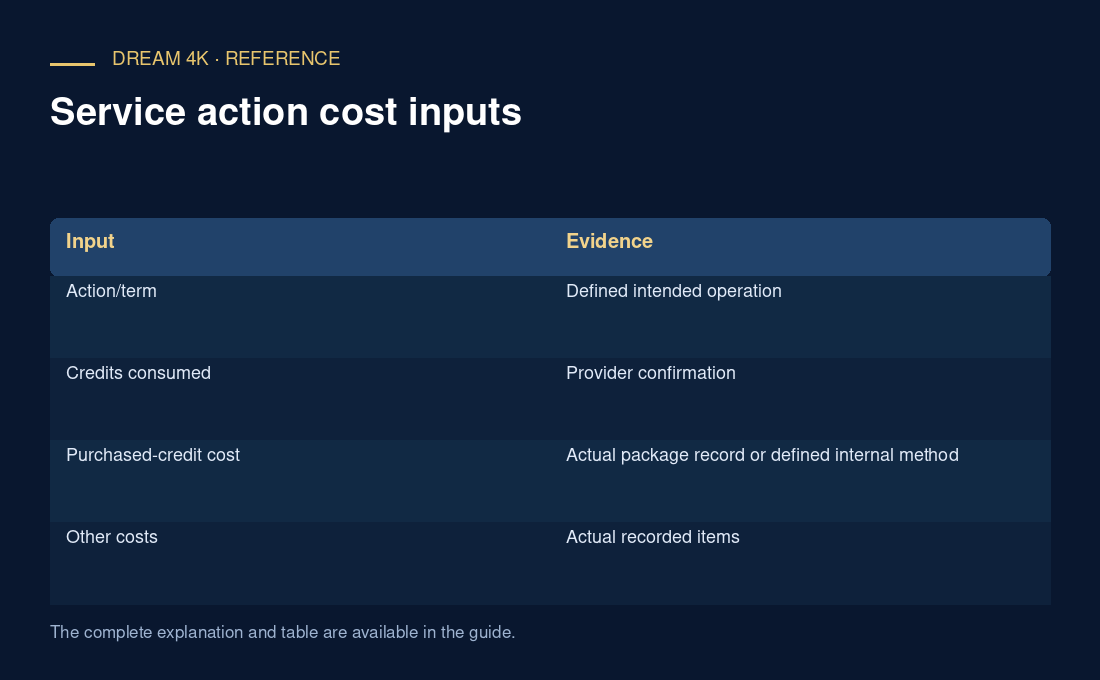
| Input | Evidence |
|---|---|
| Action/term | Defined intended operation |
| Credits consumed | Provider confirmation |
| Purchased-credit cost | Actual package record or defined internal method |
| Other costs | Actual recorded items |
| Result scope | What the calculation includes and excludes |
Do not turn the worksheet into a promise
A direct cost calculation does not establish a customer price, demand, commission or profit. It also does not establish resale permissions. Keep those questions separate and confirm the applicable commercial conditions. A calculated cell should not be described as a guaranteed margin.
Review before reusing it
Recheck scope and source when the provider changes the offer or a different action is proposed. Preserve the version used for a prior quote where useful. This is a practical input structure and arithmetic method, not financial-reporting or investment advice.
Questions about this guide
Can I set the missing consumption value to zero until it is known?
That would create an apparent cost result that is not established. Use a pending or not-confirmed state instead. Zero is a real numeric claim and should be used only when the applicable provider evidence actually supports it.