
In this guide
Define the first responsibilitiesGrant supported access deliberatelyPractise with an illustrative caseComplete a usable handoverA support colleague needs to know how to identify an order, preserve account secrets and communicate a confirmed state. Begin with the assigned role and the actual tools. Do not make broad credential sharing the default onboarding method.
Define the first responsibilities
Explain whether the person handles intake, payment reconciliation, public help or authorised account actions. Show the difference between service identity, player purchase and local profile. Use clearly fictional examples for training so a newcomer does not need live customer access just to understand the workflow.
Grant supported access deliberately
Use named access and appropriate permissions where the tools support them. Protect the colleague’s own work accounts with the provider’s available authentication controls. Do not invent a team role in a provider panel that only supports one account; ask what legitimate staff options exist.
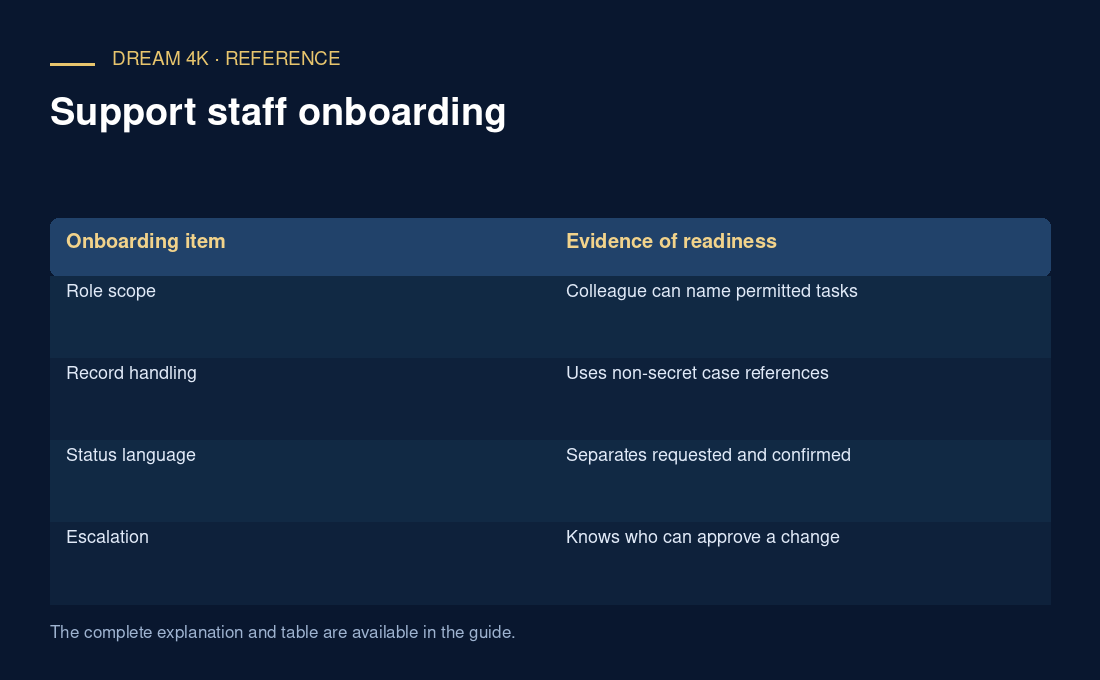
| Onboarding item | Evidence of readiness |
|---|---|
| Role scope | Colleague can name permitted tasks |
| Record handling | Uses non-secret case references |
| Status language | Separates requested and confirmed |
| Escalation | Knows who can approve a change |
Practise with an illustrative case
Give a made-up order and a redacted field-label mismatch. Ask the colleague to select the right next question, not to guess a credit conversion or change a password. Review how they would handle an unknown recharge result before repeating a paid action. Correct the process while no real customer is affected.
Complete a usable handover
Provide current source links and the internal record conventions. Explain how to report an accidental disclosure and how to ask for help. Record the access actually granted and its owner. This is a suggested training workflow; it does not claim Dream has employees, training certificates or a particular support platform.
Questions about this guide
Should a new colleague receive the full historical ticket export?
Only provide the records genuinely needed for their task through appropriate access. A full export may include obsolete secrets or unnecessary personal information. Use a curated training example and relevant current cases instead of broad distribution by default.