
In this guide
List the critical relationshipsSeparate business and personal materialPrepare open-case handoversReview and practise the legitimate routeA small operation can depend heavily on one person’s phone or inbox. A continuity plan identifies how authorised work continues if that person is unavailable. It should preserve the customer’s case context without giving every colleague uncontrolled access to personal accounts.
List the critical relationships
Identify the established customer contact route, provider conversation, case records, purchase evidence and any supported team accounts. Record who owns them and which official access or delegation methods exist. Do not assume a consumer account can be shared or transferred simply because the business needs continuity.
Separate business and personal material
Where the actual tools support appropriate business access, use it according to their terms and controls. Keep personal recovery accounts and unrelated private messages out of team handovers. A non-secret account map can identify the responsible provider and legitimate recovery route without exposing passwords.
Prepare open-case handovers
Each active case needs a current state, relevant references, next action and backup owner. Paid requests with unknown results deserve particular clarity so the backup person does not submit another action.
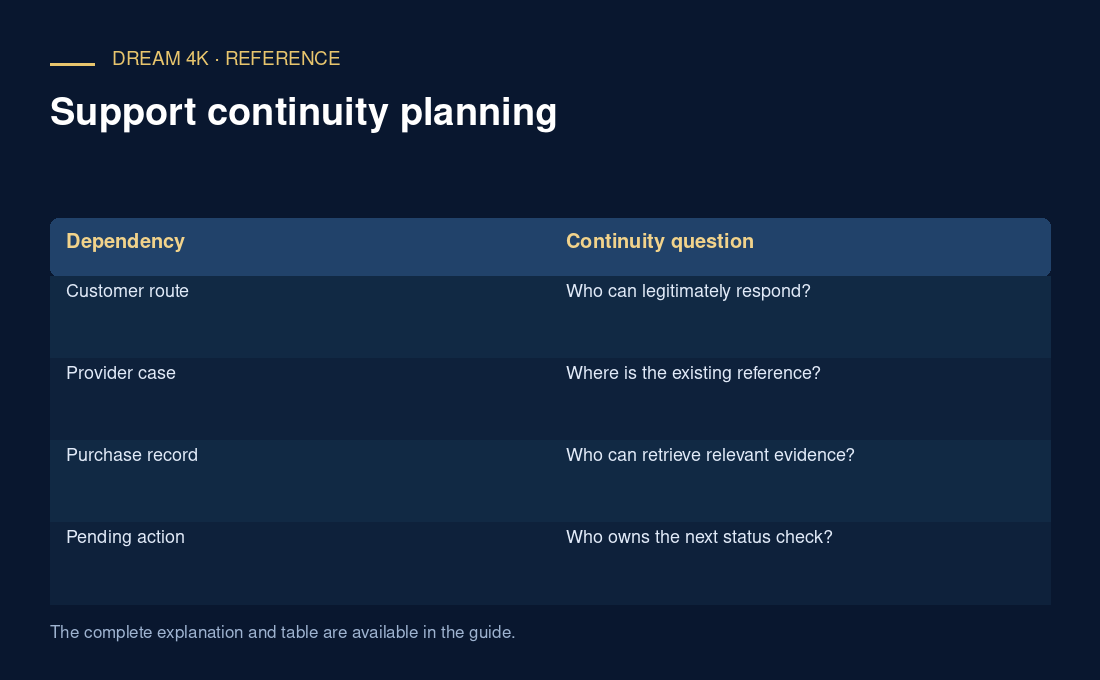
| Dependency | Continuity question |
|---|---|
| Customer route | Who can legitimately respond? |
| Provider case | Where is the existing reference? |
| Purchase record | Who can retrieve relevant evidence? |
| Pending action | Who owns the next status check? |
Review and practise the legitimate route
Check that the backup owner can find a fictional case and the relevant records through supported access. Do not describe an unperformed restore or access test as completed. Update the plan after staff, device or account changes. This guide does not claim Dream has a particular support team or availability guarantee.
Questions about this guide
Should a continuity plan contain every password in one document?
No. It should identify the systems, owners and legitimate access or recovery routes. Keep secrets in an appropriate protected system and use supported access controls. A broadly shared master document can create a larger failure point than the original dependency.