
In this guide
Summarise the request and identitySeparate actions from hypothesesName the next action and ownerClose the handover loopA shift handover should let another authorised colleague continue a case without asking the customer to repeat everything or submitting the same paid action twice. State the current uncertainty clearly. A long transcript without a summary is not the same as a usable handover.
Summarise the request and identity
Record the customer’s intended outcome, case reference and relevant order. Use a masked account identifier where useful. Keep passwords, complete connection links and unrelated personal information out of the summary. Link to restricted evidence instead of copying every attachment into a broad team channel.
Separate actions from hypotheses
List what was actually requested, submitted and confirmed. Put suspected causes in a separate field. If a renewal was submitted but its resulting date is unconfirmed, say exactly that. The next agent should not have to infer from “renewed?” whether a further action would be a duplicate.
Name the next action and owner
State who should do what next and which answer is needed first. Include any customer communication commitment made by the team, without inventing a provider completion deadline.
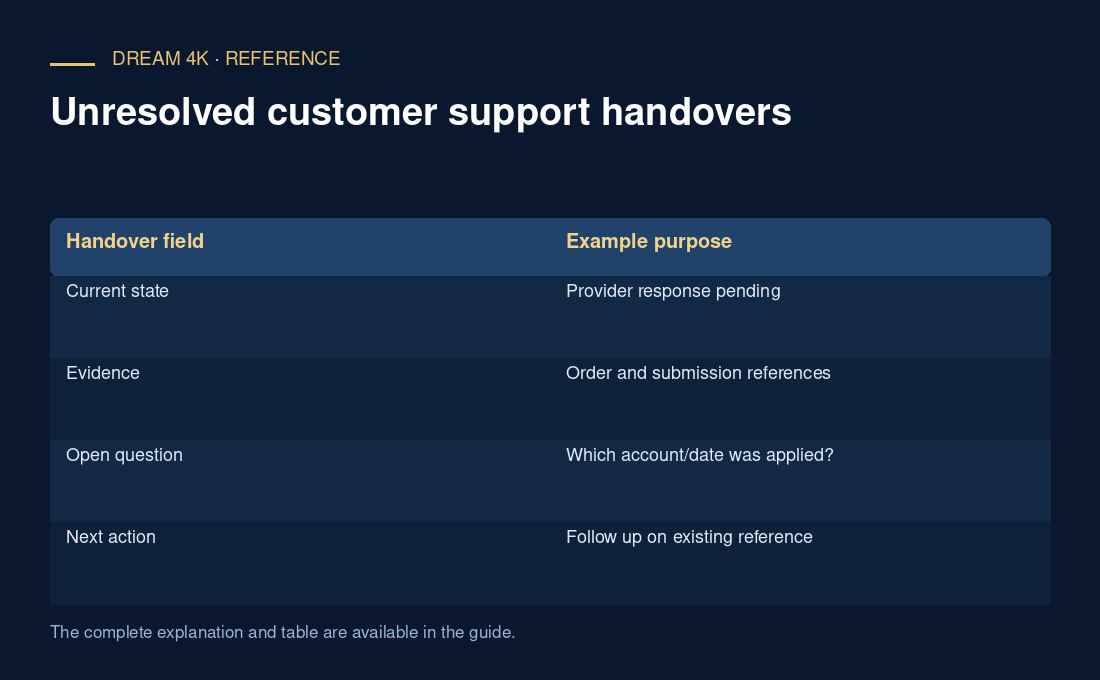
| Handover field | Example purpose |
|---|---|
| Current state | Provider response pending |
| Evidence | Order and submission references |
| Open question | Which account/date was applied? |
| Next action | Follow up on existing reference |
| Owner | Named authorised team role |
Close the handover loop
Have the incoming owner acknowledge responsibility in the case system or record. If the case escalates, preserve the existing reference. Add the final confirmed result when it arrives so the next shift does not reopen a completed action. This procedure describes a possible team workflow; it does not claim Dream uses a particular staffing model or support tool.
Questions about this guide
Should every case be escalated at shift change?
No. A change of owner is not automatically a technical escalation. Escalate when the issue requires another authority or capability. Otherwise hand over the confirmed state and next action so routine follow-up can continue within the team’s actual process.