
In this guide
Identify the source behind the playerLook for authorisation that matches the useUse an evidence ladderKeep private and public use distinctHandle unclear claims with a precise questionUnderstand what the check can concludeIPTV refers to television and related media delivered over IP-based networks. ITU standards describe a managed-network form of IPTV; consumer offers also use the term broadly. The delivery label alone cannot establish the legal status of a particular source. The relevant questions concern who supplies the content, what permission applies, where it applies and how it will be used. UK IPO guidance distinguishes legitimate uses of streaming devices from illicit content distribution.
A useful answer therefore examines evidence for the specific service and use. This overview provides general information from copyright authorities. It does not certify Dream or another provider’s content rights, decide a dispute or give jurisdiction-specific legal advice.
Identify the source behind the player
A television device, player app and content provider are different parties. An app can be a tool for opening separately supplied sources. Its store listing, licence receipt or compatibility documentation does not establish the rights of every source entered into it. Record the actual seller or distributor, official domain, content description and applicable viewing terms. Avoid treating a familiar channel logo or a working stream as a complete rights record.
Look for authorisation that matches the use
WIPO explains that use of protected works generally requires authorisation, subject to the relevant law and applicable exceptions. UK guidance describes licences that may be limited by purpose, time and place. The practical question is whether the evidence covers the intended title or channel, territory and use. A statement that a company is a reseller, a payment receipt or a long subscription term does not, on its own, answer that question.
Use an evidence ladder
Start with information published by the rights holder, broadcaster or authorised distributor. Check whether its official viewing information identifies the service and region. Read the seller’s applicable terms and ask a specific clarification when needed. Keep the date and source. A document or claim supplied by a seller should be assessed for its issuer and scope; the presence of the word licence does not tell you which right it covers.
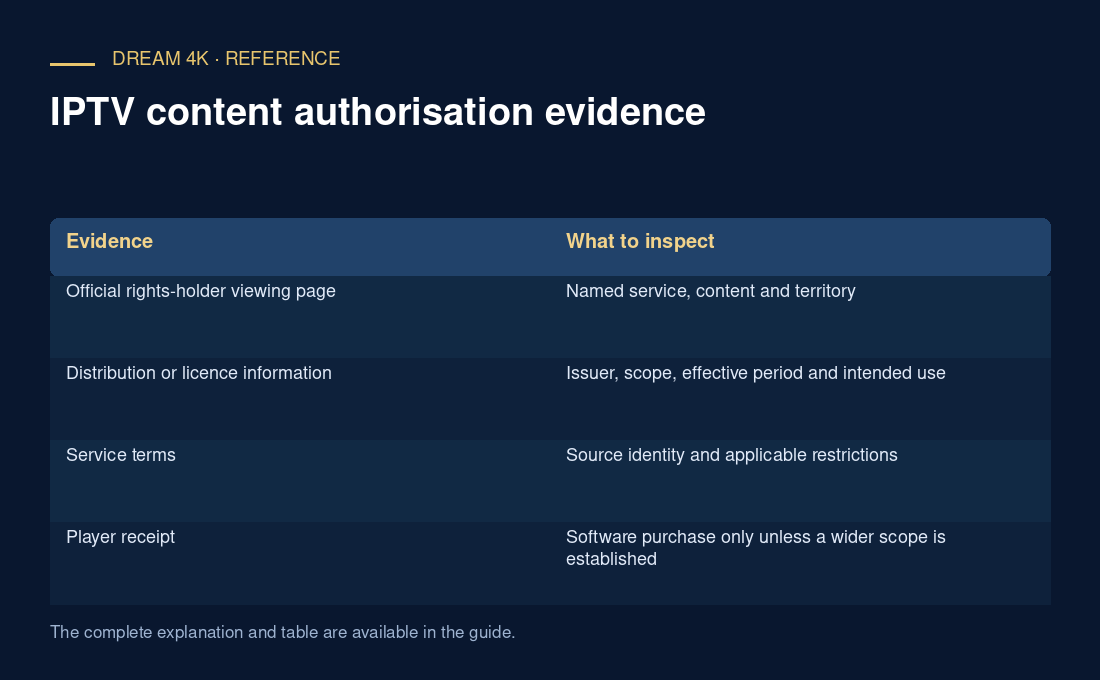
| Evidence | What to inspect |
|---|---|
| Official rights-holder viewing page | Named service, content and territory |
| Distribution or licence information | Issuer, scope, effective period and intended use |
| Service terms | Source identity and applicable restrictions |
| Player receipt | Software purchase only unless a wider scope is established |
| Logo or playback screenshot | Branding or a local observation, not complete rights evidence |
Keep private and public use distinct
A home-viewing arrangement should not be assumed to cover a café, hotel, workplace or event. As a UK example, GOV.UK’s public-showing guidance says the required permissions depend on what is shown and where, and distinguishes copyright permission from other requirements and commercial subscriptions. The applicable position elsewhere must be checked through the relevant authorities and rights holder. Do not extend a personal service receipt into a public-screening permission.
Handle unclear claims with a precise question
Ask who authorises the relevant distribution and where the intended use is covered. If a seller cannot provide a clear applicable answer, the uncertainty remains; a lower or higher price does not resolve it. Use the broadcaster or rights holder’s official route to establish an authorised option for the specific content and location. Do not seek a workaround to a regional or access restriction as a substitute for permission.
Understand what the check can conclude
A documented review can identify the source, applicable terms and evidence still missing. It cannot produce a worldwide legal assurance from the generic word IPTV. Copyright rules, exceptions and remedies vary, and a claim about a specific service requires specific evidence. The U.S. Copyright Office also treats permission and exceptions as questions tied to the actual work and circumstances. For a consequential unresolved use, seek advice from an appropriate professional in the relevant jurisdiction rather than relying on a marketing label or this overview.
Questions about this guide
Does a subscription receipt establish copyright permission?
It establishes evidence about the transaction and its stated purchase scope. Content authorisation is a separate question requiring applicable rights and distribution evidence. Inspect the actual issuer, content, territory, period and intended use rather than inferring them from payment.
Does this article confirm that Dream has rights to every title or channel?
No such confirmation is made. The review has not inspected content-licensing agreements or verified individual catalogue rights. Ask the responsible provider and relevant rights holder for evidence applicable to the specific content, location and intended use.